The former Port of Melbourne Authority Building, built between 1929 and 1931, at 29-31 Market Street. To enjoy the full, immersive experience of the ficción, be sure to use headphones to listen to the track below.
Market Street was quiet at that late hour. He stood casually at the corner of Flinders Lane, waiting for the lights to change. The darkness and the muted rumours of the traffic in Collins and Flinders Streets gave this corner of Market Street, between them, a peaceful air, like an isle of repose cleaving the strong current of a river.
The lights changed, but he did not move.
He held himself in readiness to cross, but, like a mannequin, he did not break his pose of relaxed attention, as if he could not hear the staccato chatter of the walk signal beside him.
It cut out abruptly, settling back into its quiet, regular cluck. He hit the call button again and continued to wait, as if he had only just arrived at the pedestrian crossing.
Across the street, the doorway of the Port Apartments was a tall, golden rectangle unblemished by the telltale shadow of human movement. He gave no sign of being aware of this fact as he gazed around, turning his head regularly in both directions, as if cautiously preparing himself to take the negligible risk of stepping off the sidewalk and crossing the empty street. Nevertheless, he was conscious of the flight of marble steps inside the heavy bronze streetdoor leading up to the foyer, across whose regular, foreshortened recession of greyish, horizontal shadows no oblique, concertina’d form passed.
One could also see, from that angle, the left-most margin of the foyer door, a column of translucent squares rendered triangular by the bronze diagonals dividing the lights, smaller versions of the diamond muntins that graced the windows of the old Port Authority Building’s ground floor. Through that dark lattice of crisscrossing lines, as through the organic volutes springing obliquely from a potted fern before it, no movement marred the subdued but warming yellow of the foyer within.
The 58 tram, snaking its way towards West Coburg, passed before the Port Apartments like a curtain drawn across its doorway. Warning the empty night of its turning manœuvre with a double clang of its bell, the tram slithered around the corner into Flinders Lane, trailing a wake of noisy lights.
Like the agitation of a curtain in a window, through the strobing double panes glazing the trailing second carriage as it swung away, he saw the penumbrous edge of a slender silhouette, elegant in its curvature, briefly mar the crisp gold border of the doorway as it slipped away into Market Street, the soupçon of fugitive movement masked by the departing tram. The staccato click of heels rang in rapid report from the opposite sidewalk, making off in the direction of Flinders Street.
He started after it, crossing the street diagonally at something faster than a jog, gathering momentum as he reached the tramtracks. The urgent sound of his footsteps was swallowed in the mounting rumble of a City Loop train charging across the Viaduct in Flinders Street.
The engine of the silver BMW roared to life beside the Immigration Museum and its wheels screeched forward, pawing asphalt. Two lights like crosshairs blinked briefly against the dark granite of the Port Authority Building’s plinth as it passed. Accompanying them, the cough of muffled gunfire.
In this prose poem from The Spleen of Melbourne, Dean Kyte takes a nostalgic flânerie up the so-called ‘Paris End’ of Melbourne’s Collins Street as he reminisces about his last night in the Ville Lumière.
‘The Paris End’:—it’s one of those magick phrases which evoke the sweet life of flâneurial streetlife for me. And whenever I treat myself to a flânerie up ‘the Paris End’ of Collins Street, like someone raising and lowering their shades, I shuffle the rosetinted souvenirs de Paris over les scènes melburniennes before my gaze.
When I saw the rougetainted Regent Theatre lit up to fête Moulin Rouge!, like le coup d’un souvenir enfoui, the farded façade dans la place Blanche floated up, suddenly unballasted, and I remembered standing on the little asphalt île de la place on my dernière nuit à Paris. Then I knew what the phrase ‘the Paris End’ meant to me; it meant ‘la fin de Paris’.
—Dean Kyte, “The Paris End”
Last Monday night as I was hiking up Foveaux Street to The Carrington Hotel (your Melbourne Flâneur’s Sydney ‘office’, his lubricated lieu de l’écriture in the barbarous Harbour City), puffing hard as I approached the lip of Riley Street, Conte before me glowing redly in the dusk, I realized with a thrill of satisfaction so rare in my life that my whole relationship with France and the French language has undergone a quantum change in the last two or three years.
As I laboured up the hill, in my mind’s eye I saw myself more than a year ago frequently taking this flânerie up Foveaux Street to The Carro, the 1,300-page Gallimard edition of Jean-Patrick Manchette’s complete Romans noirs cuddled to my breast.
In a moment of expensive madness I had acquired the Manchette for a portrait of Monash upon discovering Sydney’s Abbey’s Bookshop and its feast of foreign-language books on the first floor some months before. I knew nothing of M’sieu Manchette; I was literally judging this hundred-dollar book by its cover—a print, by Gérard Fromanger, of the Parisian café Le Paillard rendered in an inky blue with the red silhouettes of some hinky flâneurs fogging up the boulevard des Italiens before it.
Manchette, I suspected, would be un type sympa—or at least, he would be a writer sympathetic to my cause of a Melburnian literature flâneurially evocative of Paris, of the nouveau roman written under the guise of the roman noir.
My mission on those nights, as on this, was to enjoy a good dinner and a Guinness at The Carro, masticating my Manchette over my parma and pint, and then, my wits sufficiently elevated by the brew, to debrief my brains of the day’s doings in my journal.
And now as I was grappling up the escarpment of Foveaux Street over a year later, another wad of dough freshly blown on bloody French books from Abbey’s, the red neon and the green bricks of Conte burning provocatively—like the Negroni they serve there and the Absinthe they ought to—in the sympa Sydney dusk, that small, irrational feeling of bien-être the flâneur occasionally feels when there’s no objective reason for contentment with his ennuyé life now descended on me.
Ah! comme la vie est belle!
I’m not quite sure why Conte should bring this feeling of the flâneurial merveilleux out of me: Did it, in its ‘italienneté’, recall Fromanger’s depiction of the boulevard des Italiens on the cover of the Manchette?
Or, in its position à l’angle, on the plateau of Riley Street, ahead of me as I marched the martyrizing hill of Foveaux Street as I had once climbed steeper streets in Montmartre, throwing its deep red and green over the corner, did it recall to me my beloved Cépage Montmartrois, the ‘sein d’or’ whose catalyzing golden light upon the rue Caulaincourt I immortalized in my first book Orpheid: L’Arrivée (2012), the golden bosom where I went to write every night in Paris over a demi de bière—indeed, where I learned this Parisian habitude, which has served me so well en Australie, of writing in bars and cafés?
Or was it simply that, one night, diverted from The Carro and into the boisterous bosom of Conte, I had, with my Manchette, sat at the bar, swooning over my Negroni and a piatto di prosciutto beneath the Italian movie posters, looking as keenly up at the red one-sheet for Blowup (1966) over the bar, hypnotized by it as if it were the movie itself?
Je ne sais pas.
What I know is that something has fundamentally changed for me in my relationship with France and its language during the last few years.
I’m hard pressed to put a date to it, and I only became conscious that a major phase shift had occurred in January this year, on my forty-first birthday, when I found myself sitting in Chloe’s Room, at Young & Jackson, arguably ‘the nation’s pub’, writing my first poem in French, moved by the French muse who holds court in this very Australian bar.
It’s a connection still very much buried to the eyes of my countrymen.
While the British colonial influence still lies on the surface of everyday life in Melbourne, with the lion and unicorn of the Royal Coat of Arms gracing everything from the portico of the Immigration Museum to the masthead of The Age, the French connection lies at a deeper, subtler stratum—deeper even than the Chinese, Greek and Italian influences on Melbourne life.
One has to dig back into the literature of the nineteenth century, when Paris was indisputably the capital of the civilized world, or the first half of the twentieth, when it was still coasting on a century of accumulated cultural prestige even after World War II, to perceive where and how Melbourne owes a subtle debt to French culture.
The clues to that subterranean French influence upon our civic life are buried in plain sight: they’re in the mansarded roofs of various town halls and the oblique allées of public gardens, the stone quays which pen the Yarra and the plane trees lining Collins Street.
Indeed, the eastern end of Collins Street, between Spring and Swanston, just barely retains into the twenty-first century its nineteenth-century designation as ‘the Paris End’, the prestigious address of doctors during the marvellous period, then, in the twentieth, with all the connotations of fashion that the magic name of Paris had conferred upon it, the favoured address of milliners, couturiers and cosmeticians.
Everyone important in the monde de la mode from Helena Rubinstein to Helmut Newton has either hung out their shingle or just plain hung out in ‘the Paris End’ of Collins Street, the most fashionable thoroughfare in this nation for nigh on two centuries.
To see these chthonic clues to the French influence upon our civic life, one has to have a constant eye to Paris: she must forever be in one’s consciousness, as she is in mine, for one to perceive these subtle analogies between the Mecca of modernity and her cultural colony at the nethermost ends of the earth.
Paris is always ‘devant mes yeux’, perhaps now more than she ever was, even when I was writing daily of my remembered experiences in her streets in Orpheid: L’Arrivée.
She has truly become the ‘moveable feast’ promised and prophesied by Hemingway as the eternal boon of the man lucky enough to have walked her streets, sat in her cafés, and loafed in her parks in his youth.
Doubtful that I will ever lay eyes again upon this city more beloved by me than any woman I have ever known, somehow the longer I have lived in exile from Paris in the country of my nativity, the more subtly French, the more subtly Parisian I have become.
It is a fact that certain writers and artists can live a very great deal on their memories, and in the exile of return to their homelands, the places of their actual experience are subtly, albeit marvellously transformed—as the façade of Conte momentarily was—by analogy with Paris.
Edward Hopper, for instance, though a painter, was no mean expert in French poetry, keeping abreast of literary developments in France even after he had ceased to go there for the living tutelage that the streets of Paris provide the artistic student of life.
Condemning himself to his native New York, Hopper had absorbed enough of the French spirit of life to infuse his visions of the local scene with some curious quality, apprehended at first as a weird novelty by his fellow countrymen, but later recognized as an authentic vision of American life in the first half of the twentieth century.
C’est très bien de copier ce qu’on voit, c’est beaucoup mieux de dessiner ce que l’on ne voit plus que dans sa mémoire. C’est une transformation pendant laquelle l’ingéniosité collabore avec la mémoire. Vous ne reproduisez que ce qui vous a frappé, c’est-à-dire le nécessaire. … Voilà pourquoi les tableaux faits de cette façon, par un homme ayant une mémoire cultivée, connaissant les maîtres et son métier, sont presque toujours des œuvres remarquables.
It’s all very well to copy what you can see, but it’s even better to draw what you can no longer see, except in memory. A transformation is worked upon the base material of actuality in which genius collaborates with recollection. You only reproduce what has struck you, which is to say, that which is essential to the image. … That is why paintings made in such a manner by a man with a cultivated memory, one who knows both the Old Masters and his trade, are almost always remarkable works.
—Edgar Degas (my translation)
Such artists hold themselves aloof from the circumambient culture of their countries and yet are more in the vital current of the nation’s life than their fellow countrymen, for the gift of the supple, subtle French language gives them an alternative grille through which to view the humdrum actuality before their eyes.
In the days when I wrote my first book, I did everything to keep myself insulated from the common life of Australia, to focus only on my memories of Paris, terrified that I would lose some detail which was, as Degas says, ‘essential to the image.’
Probably the work which marks the climax of my jeunesse, I still think Orpheid: L’Arrivée is a ‘remarkable’ tableau of the rue Caulaincourt in Degas’s sense, almost Rousseauian (by which I mean le Douanier, not Jean-Jacques) in the naïveté of its ‘weird novelty’, but I think the approach of hermetic insulation from the common life de l’Australie was wrong to take, though perhaps necessary and inevitable for a young man still learning his métier.
In those days, I needed my eyes and ears to be blindfolded and plugged against the actuality of my prosaic surroundings with media that reminded me of the poetry of my life in France. I couldn’t take on any new sensual experiences in these climes until I had gotten the results of the Parisian experiment in flânerie down on paper in a form I was substantially satisfied with.
But one grows, and the harder one works in youth to master the craft of writing, the more the RAM expands and the wider one’s capacities grow to register and retain those ‘essential traits’ of life which Degas says mark out the remarkable works of the artists of genius—for as Proust is at pains to impress upon us, the greater part of artistic genius lies in memory.
One is more able to take into oneself the poetic riches that lie in prosaic banality and the material conditions of one’s life are marvellously transformed by their analogy with the places and experiences of memory.
At mid-life, reconciled to my exile in the country of my birth, I now carry a bit of Paris, a morceau of its moveable feast, about with me as I sweep my fashionable path through Melbourne’s streets, unnoticed by my countrymen except as novel spectacle.
How do I do it? How do I subtly maintain the flâneurial ethos I acquired in Paris here en Australie?
The simple answer is the language, which provides me with a point of view, one of critical removal upon the currents of cultural life around me.
I think it’s fair to say that if one comes to a foreign language much beyond the age of easy acquisition in childhood, one will always be a ‘student’ of it to some extent, the more so if one comes to a foreign language in adulthood, as I did to French.
As Henry James—whose prodigious command of the language had been easily acquired in his Continental childhood—once wrote to a young French author, enjoining diligence upon him in his study of English: ‘One’s own language is one’s mother, but the language one adopts, as a career, as a study, is one’s wife, and it is with one’s wife that on se met en ménage [“one makes a common life”].’
I’ve been an earnest ‘student of French’ now for about two-fifths of my life, but it seems that at some point in the last few years, I became substantially less of a ‘student’ than I had been: having joined my life to the French language some quinzaine d’années ago, somehow my ‘wife’ and I have truly become one, body and soul, only lately in our marriage.
More than half my reading diet these days is composed of books in French, and when Abbey’s Bookshop isn’t getting a substantial tranche of cash out of me for crisp, virginal volumes like the Manchette, I’m on the hunt in thrift stores and secondhand bookshops for old books that have been passed around as once I prowled the booklined quays of Paris for saucy finds.
And just as, ‘in my day’, the bouquiniste on the quai des Célestins used to be a good place to go for a disreputable pute of a book, in Melbourne, if you like to get your tongue around a little French, certain lieux in the City of Yarra and the City of Darebin can be depended on to furnish an encounter with a vieille fille ‘on the shelf’.
Though I have largely given up the fetishistic desire which possessed me in my youth to acquire new books, I find at mid-life a resurgence in that desire when it comes to French literature: to have a naughty French novel in my satchel to whip out at an idle moment in my flâneries, to be able to momentarily set a bit of Paris before my eyes as I sit on Melbourne’s Metro, puts me simultaneously in the swim of two cultures.
To be able to excavate my copy of Camus’s L’Étranger (1942)—another Abbey’s trouvaille—from my Commie officer’s mapcase recently made the interminable trajet on the Lilydale line more bearable. At least I could fill the time by substituting Meursault’s ennui for my own.
Then too, in place of consuming much local media, I listen to a great deal of Radio France and watch French movies. I think I was partly inspired to write my first poem in French on my birthday after seeing Coup de chance (2023) at Palace Kino, in the Paris End.
Having failed to quite catch Woody Allen’s Whatever Works (2009) in Paris, posters for which frequently tantalized me in my flâneries through the Quartier latin, to immerse my eyes and ears in—of all improbable things—two of my favourite things in the world combined, a Woody Allen movie and a French film, probably helped to inspire me after a morning of frittering my fric away on Balzac, Chateaubriand and Adamov.
Listening to the world through the medium of a language where one is perpetually the amorous student is actually more fruitful for a writer than paying attention to his own media.
It is not merely that, in training the ear trumpet far afield and listening to what is going on in the Francophonic world, ignoring what is going on closer to hand in Australia, I hear a perspective on global events that is not parochially Anglocentric, but when I do happen to tune in to a few minutes of Australian media, I’m often surprised at the comparative puerility of what the media is propagandizing as ‘mainstream’ Australian culture.
The one exception to this is Australian cinema. I find I’ve been getting a lot of value lately out of revisiting the Aussie films I reviewed twenty years ago as a film critic on the Gold Coast, and this engagement with an aspect of our culture that has always struggled (under the Anglophonic imperium of Hollywood) to be ‘mainstream’—even domestically—supports my diet of French cinema.
In the interplay between French and Australian films, I find the questions I ask myself as a writer, with respect to literature, even more keenly put: Does Australia have a ‘national cinema’ that is equally an ‘art cinema’ the way that the French have a proud national cinematic tradition? Have we yet produced a stylistic storyteller who has written the national myth in images?
The films that represented us at Cannes in the years I was writing for magazines—the domestically decorated Somersault (2004), for instance—now seem to me interesting and instructive failures, fruitful clues for a writer and filmmaker embedded in the subterranean stream of his society and yet able, via the supple and subtle French language, to view the mainstream trends on the surface of Australian life with some critical distance.
In some significant sense, the prose poems of The Spleen of Melbourne project in their visual form, as hybrid Super 8 and video ‘cinepoems’ like “The Paris End”, constitute my own practical attempts to wrestle with those theoretic questions.
And what becomes clear to me as I begin to show and perform pieces from The Spleen of Melbourne is that, like the epiphany in Foveaux Street, what is felt by the flâneur walking the streets of this country as an inward experience of total sensual derangement à la Rimbaud is outwardly experienced by his fellow countrymen as ‘surrealism’: the supple and subtle French language putting a gloss of romance upon places familiar to Melburnians renders these recognizable places ‘new’ to their eyes.
Thus it is that I’m in the swim of two cultures at once. Becoming less of a student and more of a master of French in the last few years has allowed me to see a subterranean dimension of Australian life and bring it to the surface of my country’s vision.
And it could well be that, like Edward Hopper with respect to New York, in seeing what is quintessentially ‘Parisian’ about Melbourne, I am seeing something that was always there as a chthonic layer of our culture, but that only future eyes will recognize as an authentic vision of Australia’s present.
There are now nearly forty pieces in The Spleen of Melbourne project and I’m getting on towards the next iteration of the collection as a thematically navigable Blu-ray Disc of films and videos. You can support me in that endeavour by purchasing the soundtrack of “The Paris End” for $A2.00 below—or by naming your own price at the checkout, if you feel more generous.
The advantage is that by purchasing the soundtrack to the video, not only do you get access to unlimited streaming and/or high-quality download in your choice of audio format, but you can also opt in to become one of my fans on Bandcamp, where I occasionally post new pieces from The Spleen of Melbourne project which don’t have an audio or video component, as well as other photos and prose poems from my flâneries around this country exclusively for my fans on the Community tab.
An amnesiac’s nightmarish return to consciousness coincides with the mood of one of Melbourne’s hidden laneways at night in this nouvelle démeublée noire from The Spleen of Melbourne project.
When I came to, I found myself in a black square. My head was ringing, but nothing shook loose.
I listened for a clue: The hour was so early that the gulls had drifted in to colonize the briefly abandoned city, and yet it was so late that even the last tram had retired.
I couldn’t shake that static. Then I realized it wasn’t in my head: I had tuned in to an empty channel.
Footsteps behind me—getting closer.
Were they coming to help or hurt me? To these and other questions I framed to myself—who? what? where? why?—my mind drew a blank.
Out here, inside myself, something shattered in a scream.
—Dean Kyte, “Kulinbulok Square”
No matter how intimately familiar you are with Melbourne’s Hoddle Grid, that geometric intersection of major thoroughfares and their accompanying ‘little streets’ still has the capacity to occasionally surprise you.
Every now and then in a flânerie through the city, confidently navigating by dead reckoning through laneways, backstreets, arcades and passageways as I traverse, at apparent random, the most disparate parts of the labyrinth, a new turning reveals a street as yet unmet with.
That was the case with Kulinbulok Square, a dog-leg turning off Queen Street, opposite the Queen Victoria Market carpark.
I’m not quite sure now what exactly I was up to when I captured the raw footage that forms the basis for today’s video on The Melbourne Flâneur vlog, whether I was on a mission to collect sound assets for my proposed podcast or simply laden with cameras and equipment on a late-night hunting expedition in search of ‘the wonder’.
In any event, what I do remember is that I was coming to the end of that late-night flânerie and was making my way back to The Miami Hotel—a bit ‘shagged and fagged’, as Alex DeLarge would have it. It was well-after midnight—after 1:00 a.m., even, in that privileged lacuna of time when, for a few brief hours in Melbourne, you cannot hear the music of the trams, their ghostly rumour, their squeals and chimes.
Footsore and fagged out, I was marching with the clack of my English heels up Queen Street as fast as the getaway sticks would carry me, heading for Victoria Street and bed, when a light and a street sign, a brick wall, steps and an aluminium handrail arrested me at the end of an alleyway I was surprised I hadn’t noticed before.
I had to stop and set up the camera for just one more shot of the night, for this was one of the images which speak to me, wordlessly, of ‘the Spleen of Melbourne’:—the place and the hour when the poetry of the city’s banal prose is marvellously manifest to the flâneur, his senses totally ‘dérèglé’ by the delirium of his dérive.
Bivouaced at Bacchus Marsh earlier this year, I returned to the footage nabbed that distant night, set sounds to it, listened intently, my Montblanc primed, with inward ears as a narration fitfully emerged from that totalizing cinematic image of night and light and 無, and the horror of consciousness—for with me, ‘the cinematic image’ lies even more in the world of sound—and in what is unseen, beyond the edges of the frame—than in anything I choose to shoot.
The prose piece that emerged, “Kulinbulok Square”, lies more on the fictional side of the prose poetry/fiction spectrum of The Spleen of Melbourne project, a deal closer to the nouvelles démeublées noires such as “Office at night” which constitute experimental previews for the fictional offshoot of that project, the proposed Melbourne Flâneur podcast.
Albeit, “Kulinbulok Square” is written in the first person, a pronominal point of view I absolutely eschew in the Jamesian/Robbe-Grilletian style of the nouvelle démeublée I’ve developed to tell the story of the podcast.
I was inspired initially by Alain Robbe-Grillet’s short story “Le chemin de retour”, the only story in his collection Instantanés (Snapshots, 1962) to use the first person.
In that story, written in 1954, three men (including the unnamed narrator) cross an isthmus connecting the mainland to a tiny island at low tide. One of the men, Legrand, wants to take a short, late-afternoon flânerie around the coast over the objections of Franz, who predicts they won’t be able to get back.
Sure enough, the tide rises and the three men find themselves trapped on the island.
The experiment for me in “Kulinbulok Square”, under the influence of Robbe-Grillet’s example, was to see to what extent the brutal chosiste style of the Nouveau Roman could be maintained in the first person and yet still suggest some of the pulpy generic tones of that pronominal perspective—the kind of voice we associate with Hammett at its most objective, and Chandler at its most subjective.
In other words, how much could one conceivably empty a personal account of any abstract reference to the ego, concentrating on the purely material facts of a place and a time, on physical sensations and only the most immediate inferences that a consciousness could make from them—as if the empty Kulinbulok Square of the footage were itself the character of the unfurnished short story?
Tricky task, and it took me more than six months to get the narration down to the blank but pregnant text of the video above.
“Le chemin de retour” was written at around the same time that Robbe-Grillet was working on his second published novel, Le Voyeur (The Voyeur, 1955), and as is often the case with Robbe-Grillet, the most explicitly ‘scientific’ of novelists, the literary ‘experiment’ of one piece of fiction directly influences another written during the same period of his development.
Le Voyeur is also about the flâneurial parcours of a small, unnamed island, and as in “Le chemin de retour”, the ‘intrigue’, from Robbe-Grillet’s perspective, is an abstract kind of suspense he develops purely from description as he builds up an extraordinarily detailed image of the island over the space of a few days.
In Le Voyeur, a door-to-door salesman, Mathias, returns to the isle of his birth on a desperate mission. When the narration takes him up, Mathias is about to step off the ferry between the isle and the unnamed port city on the mainland where he lives. It’s 10:00 a.m. on a Tuesday, and the ferry between the isle and the city operates twice a week.
If he doesn’t want to be stuck on his native isle until Friday, Mathias has exactly four hours and fifteen minutes to dispose of the ninety wristwatches in his mallette—(or 89 to be precise, for he has already sold one to a merchant sailor at the port)—among the approximately 200 inhabitants and be back at the quay by a quarter past four to catch the ferry back to the city.
It’s a matter of some urgency that he gets rid of all his merch today, for Mathias’s financial future, in the short term, depends upon it. He intends to rent a bicycle so as to facilitate his parcours around the island and speed up the disposal of the watches, but even then he knows, with a noirish fatality, that his mission is a bust:—It is mathematically impossible to sell 89 watches to the paysans of this impoverished backwater in just 375 minutes.
So Robbe-Grillet has kindly made of his novel a map and a timetable, providing us with spatiotemporal co-ordinates for every déplacement in Mathias’s itinerary around the island as prescribed by the forced time constraint of the ferry’s departure.
Every moment of his time on the island between 10:00 a.m. and 4:15 p.m. is theoretically accounted for, absorbed in the desperate division of time and motion in the exigencies of the boulot.
And with the incredibly detailed description of the island that Robbe-Grillet builds up as he moves Mathias around the map like a playing piece in a game of Cluedo, we build up a picture of the isle in our minds that is both geographical and topographical, such that we know the general relations between landmarks, routes, the township and various hamlets.
Robbe-Grillet asks us to pay much more attention than is customary in novels, to keep much more information in the buffer of our memory. His description is so detailed that we eventually know not only the layout of houses and shops on the island, but what is contained in closets of individual rooms. We even know what the contents of Mathias’s pockets are, and Robbe-Grillet asks us to bear in mind even what hand he is holding his mallette in from moment to moment.
What makes this strangely compelling is that, in the midst of his flat, inflected narration describing places, times and movements, Robbe-Grillet does something interesting: As we sum up all the data he is giving to us and redraw our mental map and schedule to accommodate the new information, we begin to note that there is a décalage—a gap, lag or lacuna—in the objective account of Mathias’s flânerie.
This gap seems to lie, temporally, somewhere in the region of 11:30 a.m. and 12:30 p.m., and spatially in an area of the island near the farm of Mathias’s old friends the Mareks and some rocky cliffs known to the locals as ‘le trou du Diable’—‘the Devil’s Hole’.
Meutre ou rapt, la situation de tout roman policier est un manque. Il s’agit donc non seulement de transformer l’énigme en récit, mais de circonscrire ce manque, et de le combler. De sorte que le travail de l’écriture et celui du détective sont une lutte contre le silence des objets et le mensonge ou mutisme des personnages.
Whether it is a murder or an abduction, the initial situation of all crime novels is an absence. It is thus a question not only of transforming the enigma into an account, but to circumscribe this absence and to fill it in, such that the work of writing and that of the detective are a struggle against the silence of objects and the characters’ lies or their refusals to speak.
In Le Voyeur, Robbe-Grillet continues his literary investigation of the generic crime novel as the paradigmatic form of the Nouveau Roman which he commenced with Les Gommes (1953), but whereas in the previous novel he took the primary viewpoint of the detective who becomes an unwitting criminal, in this one he takes the perspective of an ostensible criminal who plays detective.
Whereas Wallas in Les Gommes was a singularly ineffectual investigator who retreated into flânerie and consumerism to stave off the insoluble casse-tête of the boulot, Mathias is a ‘special agent’ of commerce who proves to be a singularly ineffective salesman, one who likewise retreats into the ‘enforced leisure’ of flânerie. And as he goes about the island ‘grilling’ les clilles, it gradually becomes clear that he is seeking to establish an alibi of some sort that fills in Boyer’s manque.
He is seeking, in other words, to ‘get his story straight’.
What Mathias’s story is exactly, Robbe-Grillet deftly avoids telling us, despite the sheer mass of objective evidence he piles up. ‘Un trou,’ as the narration ironically states late in the book, ‘demeurait toujours dans l’emploi du temps’—‘A hole would always remain in [Mathias’s] schedule.’
As Roland Barthes, a perspicacious early critic of Robbe-Grillet, would write in a contemporary analysis of the novel, all that can be said with certainty is that ‘the crime’ in Le Voyeur is ‘rien de plus qu’une faille de l’espace et du temps’—‘nothing more than a rupture in time and space’—since the island is nothing other than the physical mapping of a temporal parcours.
Barthes, who was an immensely sympathetic champion of what he called ‘la tentative Robbe-Grillet’—Robbe-Grillet’s ‘project’, but more in the sense of an ‘essay’ or ‘attempt’, an experiment that is not necessarily successful—was the first to perceive that the essence of the project lay in ‘spatializing’ time and ‘temporalizing’ space.
Robbe-Grillet donne à ses objets … une mutabilité dont le processus est invisible : un objet, décrit une première fois à un moment du continu romanesque, reparaît plus tard, muni d’une différence à peine perceptible. Cette différence est d’ordre spatial, situationnel (par exemple, ce qui était à droite, se trouve à gauche). Le temps déboîte l’espace et constitue l’objet comme une suite de tranches qui se recouvrent presque complètement les unes les autres : c’est dans ce « presque » spatial que gît la dimension temporelle de l’objet.
Robbe-Grillet gives his objects a mutability, the process of which is invisible: an object described for the first time at a given moment in the novelistic continuum reappears later furnished with a barely perceptible difference. That difference is of a spatial order, situational; for example, something that was on the right-hand side now finds itself on the left. Time dislocates space and builds up the object as if it were a series of slices, sections that cover one another almost perfectly;—but it’s in that spatial ‘almost’ where the temporal dimension of the object is found.
—Roland Barthes, “Littérature objective” (1954), in “Essais critiques” (1971, p. 35 [my translation])
What Barthes is describing here is a literary equivalent to cinematic montage—more specifically, a version of the ‘jump cut’ that, only a few years later, would become such a conspicuous feature of French Nouvelle Vague filmmaking—especially in the movies of Jean-Luc Godard.
It’s worth noting that Barthes goes on to compare Robbe-Grillet’s discreet, subtle, sectional, sequential treatment of objects in space to the motion of that proto-cinematic device, the magic lantern so beloved of that other novelist who took time as his field, Proust.
It becomes clear, then, according to Barthes, why Robbe-Grillet privileges the visual field exclusively in his writings: sight is the only sense that supports an entire field of subtle yet completed changes in the half-lives of objects:—‘l’homme ne participe jamais visuellement au processus interne d’une dégradation’—‘human beings never take part optically in this internal process of disintegration….’
In Le Voyeur, objects—the indices of ‘evidence’ in the conventional crime novel—mingle with the plot and even, as Barthes argues in the essay “Littérature littérale” (1955), confound themselves with it, overburden it with their sheer oppressive weight, and ultimately devour and destroy it.
Like the famous lead pipe, candlestick, wrench and rope of Cluedo—innocuous objects that, in the discordant context of ballroom, library, billiard room and conservatory, suddenly become surreally surcharged with a criminal significance—we have bonbons, a trio of cigarette butts that haven’t been smoked down quite enough, a length of lacy cord Mathias picks up on the ferry, and a blue cigarette packet.
Robbe-Grillet ‘scrubs’ these objects of any psychological or pathological significance. But their spatiotemporal co-ordination, the permutation of their arrangements in time and space as the narration revises Mathias’s story, gradually conditions the reader to hypothetically infer from their relations the probability of a crime that is never explicitly stated, as if—as Barthes suggests—the elided story of Le Voyeur, the tale that Robbe-Grillet declines to write, must pass through this indexical stratum of ‘things’ like a deductive exercise in pure Holmesian reason.
But, like the newfangled bike Mathias rents from the mechanic-tobacconist which is replete with ‘all the bells and whistles’, in this ‘dernier cri’ of the ‘New Novel’ the ‘typical adventure’ of the roman noir plot Robbe-Grillet appropriates for his experiment in Le Voyeur continually breaks down by the wayside and, as Boyer states, the stranded reader is continually left awaiting ‘un crime, un détective, une arrestation—qui ne viendront point’—‘a crime, a detective, an arrest—none of which will ever arrive.’
A bit like waiting for Godot.
In the end, Robbe-Grillet allows Mathias to ‘get away with it’; to get free and clear of the island of his birth and whatever he has done or dreamt that burdens him with such guilt that he has to fill in the manque of the missing space and time with an alibi that his accomplice—the plot itself—providentially assists him to construct.
For in thinking about the narrational structure of Le Voyeur, it becomes apparent that not only is the island a spatial metaphor for time, as in Barthes’ reading, but that there is a ‘topology’ of salience in how Robbe-Grillet structures the syuzhet of his fabula.
One can almost read Le Voyeur ‘barometrically’, as systems of pressure, or like a heat map where some central point of high salience remains red-hot but unstated, and on which the major structuring images throw some sidelight or oblique perspective.
Thus the central image of the novel is one that appears not during the elision, but before Mathias has even set foot on the island—before the narration has even picked him up that morning, and is retrospectively reported in the early pages of the book.
Mathias is obliged to get up very early to make his ferry, and with no bus available at that hour, he walks all the way from his apartment to the port.
A bit like myself when confronted with the unexpected apparition of Kulinbulok Square—or perhaps like the anonymous narrator of the ficción confronted with its wondrous horror—Mathias sees an image in the dawn that alarms and arouses him:
À cette heure matinale, le quartier Saint-Jacques était désert. En passant dans une petite rue, qu’il pensait être un raccourci, Mathias crut entendre une plainte, assez faible, mais semblant venir de si près qu’il tourna la tête. Il n’y avait personne à côté de lui ; la ruelle était aussi vide en arrière qu’en avant. Il allait poursuivre sa route, quand il perçut une second fois le même gémissement, très distinct, tout contre son oreille. À cet instant il remarqua la fenêtre d’un rez-de-chaussée — juste à porté de sa main droite — où brillait une lumière, quoiqu’il fît déjà grand jour et que la clarté du dehors ne pût être arrêtée par le simple rideau de voile qui pendait derrière les carreaux. La pièce, il est vrai, parassait plutôt vaste et son unique fenêtre était de proportions médiocres : un mètre de large, peut-être, et à peine plus de haut ; avec ses quatres vitres égales, presque carées, elle eût mieux convenu à une ferme qu’à cette immeuble citadin. Les plis du rideau emphêchaient de bien distinguer le mobilier, à l’intérieur. On voyait seulement ce que la lumière électrique éclairait avec intensité, au fond de la chambre : l’abat-jour tronconique de la lampe — une lampe de chevet — et la forme plus vague d’un lit bouleversé. Debout près du lit, légèrement penchée au-dessus, une silhouette masculine levait un bras vers le plafond.
Tout la scène demeurait immobile.Malgré l’allure inachevée de son geste, l’homme ne bougeait pas plus qu’une statue. Sous la lampe il y avait, posée sur la table de nuit, une petit objet rectangulaire de couleur bleue — qui devait être un paquet de cigarettes.
At that hour of the morning, the quartier Saint-Jacques was deserted. In passing through a backstreet he thought might be a shortcut, Mathias believed that he heard a cry, quite weak, but seeming to come from so near at hand that he turned his head. There was no one beside him; the alley was as empty behind him as it was before him. He was going to go on his way when he heard the same whimper a second time, very distinctly, right up against his ear. At that moment, he noticed the window of a ground-floor flat—just within reach of his right hand—in which a light was shining, even though it was already daylight and the brightness outside could not be blocked by the simple net curtain that was hanging behind the windowpanes. The room, it’s true, did appear quite vast, and its only window was of insufficient size—a metre wide perhaps, and a little more than a metre high. With its four equal, almost square panes, it would have better suited a farmhouse than this urban dwelling. The folds of the curtain prevented one from clearly making out the furnishings within. One could only see what the electric light was illuminating with intensity at the back of the room: the frustoconical shade of the lamp—a bedside lamp—and the more indistinct form of a bed torn to pieces. Standing near the bed, slightly bending over it, a masculine silhouette was raising an arm towards the ceiling.
The entire scene remained still. Despite the incompleted aspect of his gesture, the man was as unmoving as a statue. Beneath the lamp was placed, on the nightstand, a small rectangular object, blue in colour, which must have been a packet of cigarettes.
—Alain Robbe-Grillet, Le Voyeur (2013, pp. 30-1 [my translation])
One desperately wants to resist—as Robbe-Grillet would prefer us to resist—a Freudian interpretation of this image, but even if we put Freud firmly to one side and simply concentrate on it as a ‘cinematic’ image, this is the ‘primal scene’ of Le Voyeur, the ‘scene of the crime’.
As Boyer says, Robbe-Grillet has literalized the crime novel’s structural conceit, its necessity to have a secret at its heart which is hermetically closed upon itself—just as Mathias’s primal, voyeuristic vision is enclosed behind the obstructive architecture of the flat—one which it preserves for as long as possible—and for Le Voyeur, with its double 0’s which form figure 8’s, that is infinitely.
And one might say that Mathias’s recursion to this potently cinematic image throughout the book, embroidering or adumbrating it as the needs of the alibi demand, is a kind of ‘self-soothing mechanism’, a comforting scratching at a mental plaie which the return to the isle of his nativity represents for him.
The return to the isle marks a return to the primal scene of his birth after many years, although the primal scene in the quartier Saint-Jacques takes place, in Robbe-Grillet’s syuzhet, ahead of Mathias even setting foot on the quay. Thus, in its embroidery and adumbration, one is never sure how much of what passes across Mathias’s consciousness in the re-evocation of this pregnant image is a ‘screen memory’—not just in a Freudian sense of that term, but also in a filmic one.
What I suggest is that, in the narrational structuring of this novel, which lounges flâneurially coude-à-coude, côte-à-côte with Mathias, Robbe-Grillet takes an alternative approach to narration and perspective, one which is eminently more cinematic than literary.
The plot of Le Voyeur is structured as a group of open-ended, object-based ‘essential images’ which can be perceptually reinterpreted, and which form syntagmatic ‘chaînes de relation’ in their permutational arrangements.
Rather than a classical ‘stream of consciousness’ that owes its influence to Joyce or Woolf, Robbe-Grillet’s literary technique is more like a cinematic montage. There are transitions, jump cuts, flashes, dissolves between these essential images, grouped in syntagmatic chaînes which move us not only forward in time and space, through the parcours identified by Barthes, but laterally, diagonally, at right-angled jumps, like a chess piece.
With these movements around the Cluedo board of the island, Robbe-Grillet demands that we mentally reconstruct the space-time of the fabula in order to identify the co-ordinates of the lacunal blind-spot in the narration, its unwritten centre.
I use the word ‘narration’ here very specifically in place of the more conventional ‘narrative’.
A narrative is something told. It is a story ‘after the fact’, a reconstruction of events.
What I am suggesting is that the ‘narration’ of Le Voyeur is a kind of ‘storytelling machine’. It is very much ‘present tense’. It is an active machinery, a techne for the production of narrative similar to the ‘apparatus’ which Christian Metz identified as the sensemaking machinery of cinema.
More than the technical tools of camera and cutting table, there are whole systems of ideological construction which go into making meaningful narratives in the cinema, and this total ‘cinema-making device’ is the Metzian ‘apparatus’.
Likewise, the Robbe-Grilletian ‘narration’, I posit, is a literary machinery for meaning-making which is directly inspired by the techniques available to the cinematic apparatus.
In the section of his article “The Evolution of Narrative Viewpoint in Robbe-Grillet” (1967) dealing with Le Voyeur, Bruce Morrissette invokes a stereotypical ‘“style Robbe-Grillet” whose objects and other consistent elements (geometrical terms, scientific precisions, deceptive qualifiers, and the like) mark the general “manner” of the author … and are not a style specifically adapted to the character’s mentality.’
I’ll go further and positively state that the quintessential ‘style Robbe-Grillet’, under this specifically cinematic influence, is a ‘non-human regard’ of the phenomenal world such as the filmic apparatus affords us.
As Robert Hughes argues in The Shock of the New (1980), the conditions of the visual field, the ways we actually see under conditions of modernity, changed radically with the opening of the tour Eiffel in 1889.
Only a few balloonists had ever seen Paris from the air before then. ‘There were individual pilots who saw the sight from their planes,’ Hughes says, ‘but it was the Eiffel Tower that gave a mass audience a chance to see what you and I take for granted every time we fly: the earth on which we live seen flat, as pattern, from above.’
As Hughes goes on to argue, the techne of the tour marked a radical shift in human consciousness, a view of our world from a non-human perspective. While the Impressionists had started to break down the visual field into abstract patterns, the opening of the tour was the watershed for all the innovations in modern art which were to follow—including the invention of cinema six years later.
The literary style Robbe-Grillet, I suggest, is this non-human perspective on events from an elevation, howsoever slight, that reduces the human drama which the novel (as a human-allied techne) shows from eye-level, to an abstract pattern. When seen from an unconventional angle, all our pathetic dramas are reduced to flat patterns, to shapes and fields of force, to vectors of movement, as the earth is from the air.
In Le Voyeur, the narration marches alongside Mathias, tracking him like a dollying camera, but it also ‘looks down upon him’ slightly.
Le style narratif, ou point de vue, du récit, c’est—ostensiblement—la troisième personne conventionelle ; mais c’est une troisième personne qui se fond dans la ‘personnalité’ du protagoniste Mathias….
The narrative style, or point of view of the account, is—ostensibly—the conventional third person; but it is a third person that is based in the ‘personality’ of the protagonist Mathias….
While Morrissette identifies the ‘voyeur’ of the title with young Julien Marek, who believes that he sees Mathias behave suspiciously in the neighbourhood of the farm and the trou du Diable, as Robbe-Grillet will more explicitly demonstrate in his next novel, La Jalousie (1957), what might be termed the cinematic ‘regard caché’ Morrissette identifies with Julien ‘indique un centre de structure, un foyer de lignes de force’—‘indicates a structural centre, a common meeting point for vectors of tension….’
But while the voyeuristic, narrational third person is aligned (and allied) with Mathias’s perspective, in its foundation deep in his dissociated being, the ‘hidden watcher’ of Mathias’s incriminating behaviour is not really the super-egoic Julien—whose own motives and behaviours as reported through the third person account from Mathias’s POV are also troublingly illegible.
If we accept that the ostensibly ‘objective’ narration is aligned and allied with Mathias’s POV, and that the regard caché of the hidden watcher is both Julien watching Mathias and Mathias watching Julien, then we have a nexus of narrational ‘regards entremêlés’ altogether more confused than Morrissette’s account suggests, one which points towards the more radical experiment Robbe-Grillet will undertake in La Jalousie, where the singular narrative perspective is entirely elided as a lacunal negative space of positive structuring force.
I use the cinematic term ‘POV’ to describe the Robbe-Grilletian narration for, like the cold, inhuman eye of the camera, this overhead view or unconventional angle on human behaviour which emphasizes the formal geometry of objective relationships as compositional arrangements is a ‘mobile regard’ uncoupled from the human angle of view.
Although it is aligned and allied to Mathias’s perspective, marching alongside him, the Robbe-Grilletian narration is as glidingly inhuman in its tracking gait as the dollying, booming camera we will later see the auteur avail himself of as a descriptive device in L’Année dernière à Marienbad (1961) and L’Immortelle (1963).
So who then is the narrator and who is the voyeur of Le Voyeur?
Milat provides a persuasive ‘family tree’ for the characters of Le Voyeur. According to the Milatian reading, the principal characters such as Julien Marek are actually aspects of Mathias himself. But more than this, even the secondary masculine characters, like the bizarre mechanic-tobacconist or the menacing patron of the café, are distorted versions of Mathias.
While it is obviously the case to the reader that the precociously amorous gosse Jacqueline, that môme with ‘le démon au corps’, is a younger version of her mother, Mathias’s boyhood crush Violette, Milat argues that even female characters like Mme. et Mlle. Leduc have their origin in Mathias’s being as phantasies he tortures himself with just as much as Julien, whose ‘chastising regard’ is a super-egoic check to his libidinous id.
In Milat’s view, all these judgmental external regards which look down on Mathias, these lines of perspectival force which look inward on him, searching his soul and provoking him to lie about his suspicious behaviour, actually come out of Mathias himself.
Thus, Morrissette’s ‘conventional’ third person is complicated by Milat’s pseudo-Freudian ‘condensation’ of characters—both male and female—who have their common root in the superficially unprepossessing Mathias’s surprisingly rich ‘personality’.
Valerie Minogue goes even further. While Milat argues that all the characters surrounding Mathias emerge as distorted, phantasmal aspects of himself, in her article “The creator’s game: Some reflections on Robbe-Grillet’s Le Voyeur” (1977), Minogue situates Mathias’s dissociated, externalized perspective on himself in Robbe-Grillet’s consciousness.
Thus, while the characters he meets and interacts with are externalized projections of Mathias, Mathias is an externalized projection of Robbe-Grillet.
But for Minogue, Mathias, dissociated as he is, is afforded a degree of quasi-autonomy by Robbe-Grillet—like a ‘handicap’; for in her reading of the novel, author and protagonist are locked in a brutal competition.
The supposed lacunal crime that is so terrible that the supposedly objective narration dares not even write it in Le Voyeur has its primal origin in the manque of Robbe-Grillet himself, and the author is as determined to ‘pin the rap’ for his dissociated phantasies on Mathias as Mathias is determined to slip out of the incriminating net that Robbe-Grillet’s text weaves around him.
The rules of the creator’s game, as played by Robbe-Grillet, seem to demand a constant challenging of the creator’s moves. The protagonist himself, as an extension of the creator, is used as a vehicle to question the plausibility, and, above all, the innocence of the text, and thus denounce the creator’s game.
Once he’s achieved his ‘literary destiny’, Minogue says, once Robbe-Grillet has successfully ‘framed’ Mathias, the auteur treats his defeated mannikin generously, indulgently, and, like a good sport, ‘lets him off the hook,’ allowing him to get off the island without anyone—except Julien Marek—suspecting what’s he’s been up to there.
Thus, as both Minogue and Kathy Phillips observe, in Robbe-Grillet’s literary investigation of the generic crime novel, it is language itself that first alerts us to the discrepancies in the ostensibly ‘objective’ account of Mathias’s story.
The very title is a clue. In Le Voyeur, when Robbe-Grillet declines to refer to Mathias by name, he always calls him ‘le voyageur’—‘the traveler’, in reference to his job as a commercial traveler, not ‘le voyeur’. That word never appears in the text.
The gommage of the middle syllable of voyageur, the telling erasure that contracts Mathias’s official designation as traveler and makes him synonymous with the hidden regard of the narrational watcher, is repeated as slippages throughout the text, the most damning of which, as Phillips observes, is the conflation of ‘ficelle’ (cord) with ‘fille’ (girl).
Thus, if we take all these perspectives on and readings of Le Voyeur, we see a triple recursion: Every character Mathias meets with in the novel emerges ex nihilo from himself, and he in turn emerges ex nihilo out of the blank void of Robbe-Grillet.
It is the dissociated narration, the objectivizing and externalizing of his own pathologies by Robbe-Grillet himself wherein the cinematic voyeur hides.
What I have called the ‘regard caché’, the ‘hidden watcher’, is nothing less than the narration itself, the machinal apparatus of this objectified phantasy as Robbe-Grillet takes a cold, hard, clinical look at himself, stalking himself like a camera and constructing, like a montage, in an illusion of ‘continuity editing’, his denial of sado-erotic desires in this book that he will later go on to declaim in future novels and films without alibi or exculpation.
It’s a salutary exercise, both literary and auto-psychological.
Le Voyeur seems to me to be the first book in which a mass of words have been assembled to say as close to nothing as is humanly possible in a novel.
The ‘adventure in reading’ which Le Voyeur represents involves us assisting as spectators at Robbe-Grillet’s assiduous building up of words on a blank page, a voyeuristic audience, through this cinematic narration, to the bravura performance of the auteur constructing his own alibi.
Like watching a building going up, implicated in the alibi-lie, we avidly observe from the shadows, riveted with suspense, as this brutal writer erects a complicated échafaudage, a screen, a veil, a bâche of noisy blankness over the void of the white page. Is this magician walking the cliffs of his virtual isle going to make a wrong move?
The story that emerges from the brutal machinery of the Robbe-Grilletian narration, the ‘intrigue’ of the author’s stabbing self-regard, is never positively stated, merely implied by blank negation—or rather is inferred by the reader as a novel that remains beautifully unwritten for all the ‘là-ness’ of the words Robbe-Grillet actually puts on the page.
The artifactual book, the ‘unwritten novel’ of Le Voyeur, is ultimately a collation of densely blank pages on which Robbe-Grillet has assiduously scrivened nothing—a fiction of nothing which nevertheless imposes itself forcefully on our minds as a concrete fact.
The experiment, though doomed to be unsuccessful by the impossibly rigorous standards of his own tentative, is a magnificent effort, and Robbe-Grillet’s failed experiments as a writer are far more interesting than the conventional successes of any other novelist.
If you found this analysis valuable, I encourage you to help me to write more deep dives into French literature by purchasing the audio track below.
For $A2.00 you can follow me on Bandcamp, where I regularly release the soundtracks of my videos and films as stand-alone ficciones. I also post exclusive flâneurial content for my followers on the Community tab, including other microficciones adjacent to forthcoming Melbourne Flâneur podcast, so drop due dollari on “Kulinbulok Square” and follow me today.
I admit it’s a bit unorthodox to release the single after you put out the album, but you know the Aquarian contrariety of your Melbourne Flâneur by now, chers lecteurs: Whatever the masses are doing, I’ve got to do the opposite.
But, more seriously, I could not have predicted beforehand that, of all the tracks on The Spleen of Melbourne CD, “Office at night” was going to be the one that would intrigue listeners on Bandcamp the most.
On the spectrum between ‘prose poetry’ and ‘fiction’, “Office at night” represents the most extreme pole of the latter on the album.
As an experimental preview for the forthcoming Melbourne Flâneur podcast, written in the Jamesian/Robbe-Grilletian style I call the ‘nouvelle démeublée noire’, I regard it as by far the most merciless application of the style featured on the CD, so I’m very surprised indeed to discover that this track, freezingly cold in its literary voice and brutally ‘objective’ in its treatment of the main character, the anonymous bald, stocky man in the window, should have proved to be so popular with listeners.
In light of its popularity over the last couple of years, I thought that “Office at night” deserved to be released as a single in its own right.
And remembering my misspent teenagerdom as a collector of CDs, I decided to ‘go a bit nineties’ and press it out as a CD single. (I know everyone reading this is old enough to remember what those are.)
The CD, packaging, and booklet are designed by Dean Kyte and feature his photographs shot on Kodak film.
The gang at Implant Media did a great job once again on helping me to realize my vision for the artifact.
Although I couldn’t achieve my initial nineties vision of presenting the CD single in one of those slim plastic J-card jewel cases you’ll remember, I think the glossy card-sleeve is actually a great compromise—one which better complements The Spleen of Melbourne CD, but which also, from a graphic design perspective, better complements the nineties vision I had for this product as a lightweight, portable, low-cost introduction to the fictional side of my literary œuvre on contemporary Melbourne life.
Slimmer than a book, and arguably more interactive than one, quickly consumable yet eminently collectable, I think the card-sleeve format has a certain funky, retro, analogue/digital cachet, as the CD singles of the nineties did. And the “Office at night” single is further enhanced by a four-page glossy sleeve booklet—an added luxury no single I ever bought in the nineties sprang to.
The nineties CD single was a subcultural artifact you could palm discreetly to a mate as a ‘gateway drug’ to a new musical experience, or press, as a volunteer evangelist for an underground band, on a new adherent you were sure ought to be ‘in the know’ of the Fitzroy/Fortitude Valley/Kings Cross scene.
And it’s in that spirit of underground, networkcentric distributivity that the “Office at night” CD single was conceived.
But the CD single was also an analogue/digital artifact that emerged as a transitional media technology during that golden decade which had one foot in the near-past of the vinyl record and one in the near-future of the infinite iPod. It’s an analogue object which records digital music—quite a steampunk little dingus when you think about it.
And with its blend of analogue tangibility and digital abstraction, the CD single is a neat conceptual fit for the bespoke, artisanal methodology which underlies the brand promise of all the books, eBooks, and audiobooks I publish under my own imprint through my Artisanal Desktop Publishing process.
As with The Spleen of Melbourne CD, all the photographs illustrating the “Office at night” single, including the one above which inspired the A-side, are examples of my analogue street photography of Melbourne, shot on Kodak film. In fact, the physical CD itself is designed to form a close-up iris shot, as if you’re sighting through the lens of a camera, of the bald, stocky man on the first floor of Block Court.
The graphic design of the CD itself gives a physical form to the central image of the short story on it.
So you can see how the analogue/digital interface works in the graphic design of the artifact: The analogue photo I took of the bald man is the ‘essential image’ that inspired me to write the story—and it’s that story you’re listening to in the abstract, conceptual, three-dimensional space of the sound world on the CD.
And yet the actual artifact of the CD, its ‘object quality’ as a flat, circular, very nearly two-dimensional design space, replicates as a tangible analogy the hidden perspective revealed at the end of the short story—the ‘plot twist’ which is the key to the enigmatic mystery, the ‘game of perspectives’ that listeners on Bandcamp have found so intriguing about “Office at night”.
Having come of age in the nineties, and working, as a writer, in one of the most analogue artistic media it’s possible to practise, I’m a hawkish chauvinist for analogue culture. And yet, straddling that millennial divide, I actually think there needs to be a practical reconciliation between analogue and digital media, that the digital needs to be ‘incarnated’, ‘embodied’ in some kind of tangible physical form for these abstract bits of data to become ‘real’, as cultural products, to us as human beings.
And in many ways, as a border-dwelling millennial literary artist who comes down hard on the side of analogue, but who has been forced by his semi-nativity to immigrate into—and adapt to—a digital world he regards with scepticism and suspicion, I see myself as a kind of bridgehead to that reconciliation, a new cultural order of life, an incarnated ‘analogue digitality’.
Perhaps more than any other writer working in Australia today, I’m quite sure that I define the term ‘avant-garde’: As a flâneurial writer, an undercover résistant to technological, capitalistic (post)modernity whose literary practice is directly inspired by his idle ambulations around the cities and towns of this country, I’m working at the edge of something that is mysterious even to me.
The two main ficciones on the single, “Office at night” and “The Trade”, deal with this numinous mystery in hard, pragmatic terms.
They’re examples of what I call ‘literary crime fiction’—literary fiction, – fiction, that is, that deals with human beings, with their psychological behaviour and interactions, – from which the melodramatic tropes of generic crime fiction have been largely erased, but which leave their vestigial traces as a ‘felt mood of mystery’, an ambiguous ambiance of vague yet realistic intrigue.
The inferior novelist tends to be preoccupied with plot; to the superior novelist the convolutions of the human personality, under the stress of artfully selected experience, are the chief fascination. Without character it was once accepted that there could be no fiction. In the period since World War II, the creators of what has come to be called the French nouveau roman (i.e., new novel) have deliberately demoted the human element, claiming the right of objects and processes to the writer’s and reader’s prior attention. Thus, in books termed chosiste (literally “thing-ist”), they make the furniture of a room more important than its human incumbents. This may be seen as a transitory protest against the long predominance of character in the novel, but, even on the popular level, there have been indications that readers can be held by things as much as by characters…. The popularity of much undistinguished but popular fiction has nothing to do with its wooden characters; it is machines, procedures, organizations that draw the reader. The success of Ian Fleming’s British spy stories in the 1960s had much to do with their hero, James Bond’s[,] car, gun, and preferred way of mixing a martini.
As I said in my recent post on Alain Robbe-Grillet’s Les Gommes, I also call this style, written under the influence of the French nouveau roman, the ‘nouvelle démeublée noire’—the ‘unfurnished dark short story’.
As an offshoot of The Spleen of Melbourne project, the short stories on the “Office at night” single deal with characters, locales and situations in a more explicitly fictional—as opposed to poetic—story-world that has organically emerged from the prose poems, and which forms the basis for the episodic narrative proposed in the projected Melbourne Flâneur podcast.
“Office at night”, for instance, is an ‘interstitial episode’ in that narrative, taking place halfway along the storyline, while “The Trade” is ‘adjacent to’ the narrative, referencing a major supporting character who steps out of the background to play a leading rôle in “Dreidel”, one of the other ficciones on The Spleen of Melbourne CD.
The literary style of these ficciones is much harder-edged, much less romantic in its vision than the ‘softer’, ‘more human’—‘more feminine’, even—style of the prose poems. In their hard-edged, more masculine and pragmatic style, they owe something to generic crime fiction in the hardboiled pulp style, but much more to French crime fiction, and even more still to the French nouveau roman.
And I’ve noticed that the audience for these ficciones which cast oblique and intriguing side-lights on what is now a very dense and precise story-world that has emerged organically in my mind over the past three years—a purely internal, fictional Melbourne of people, places and events that maps in incredible detail to the external, actual Melbourne we all know—is largely men.
While female listeners appear to prefer the ‘softer’, more romantic treatment I give the city in my prose poetry, male listeners have shown a preference for the brutally ‘objective’ style of literary crime ficciones such as “Office at night” and “The Trade”, these so-called nouvelles démeublées noires which ‘objectify’ their characters, treating them ruthlessly as ‘things’ in a world of yet more things.
I’ve been gratified to discover through my on-going market testing for this podcast that, although I have consciously removed and erased almost all the generic tropes of popular crime fiction, leaving only their traces as a felt sense of unease and ambiguity, a lot of people who have either listened to these tracks on Bandcamp or have heard me read the ficciones aloud in live performance—particularly men of my own age and older—have sensed the ‘density’ of this larger narrative they can only grasp obliquely in these interstitial and adjacent fragments.
They can sense that, like an iceberg, there is a significant and detailed story-world, one that maps accurately to the objective actuality of Melbourne, in back of these mysterious and intriguing ‘shards’ of a story—precise details I am choosing not to furnish the listeners with in the text, but whose presence they can feel.
So the “Office at night” CD single is not only a low-investment introduction to one end of my literary œuvre as represented on The Spleen of Melbourne CD, but it’s also an entry-level introduction into the dense and detailed story-world I’m building for the forthcoming Melbourne Flâneur podcast.
I’d also like to build the prospective audience for that serial, so to inaugurate the release of the “Office at night” single, I’m offering a special Christmas deal for the next two months: If you’re looking for a unique Christmas gift for someone you feel would be intrigued to enter my world, my dark and surreally Parisian Melbourne, I’d like you to introduce them to my writing.
Using the sales form below, you can purchase a copy of the “Office at night” single together with a copy of The Spleen of Melbourne CD and save 25% off the album’s usual price.
Keep one for yourself and give the other away to a friend who you think would be a ‘good fit’ for my style. Do me a favour and press me, like a secret handshake, into the palm of someone you think will be intrigued by my æsthetic philosophy of flânerie and help me to build a prospective audience for the larger narrative of which “Office at night” and “The Trade” are mere tasters.
Of course, all my products come autographed and wax-sealed as a mark and a guarantee of their artistic authenticity, so whichever CD you keep and whichever one you give away, there’s some added artisanal value attached to the artifact for both you and your mate: You’re getting something that comes directly from the author’s hand, but, more crucially, the entire tangible artifact you’re holding is a palpable realization of my inner vision:—it’s leapt directly from my brain to my hand and into yours.
Plus, of course, every CD I sell comes personally gift-wrapped in suitably Melbourne-centric apparel for an unparalleled unboxing experience.
“Office at night” [CD single]
Personally signed, sealed and gift-wrapped by the author. Price includes postage. Purchase the physical CD and get bonus MP3 versions of all the tracks absolutely free!
A$18.45
“Office at night” [MP3 single]
Get the main story plus 2 bonus B-sides and a 4-page PDF booklet featuring Dean Kyte’s noirish Melbourne street photography! Worldwide delivery within 24 hours.
A$4.95
“Office at night” and “The Spleen of Melbourne” [2 CD combo]
Buy the “Office at night” single and get 25% off “The Spleen of Melbourne” album! Price includes postage. Each CD comes personally signed, sealed and gift-wrapped by the author.
As I say in the video above, I love St Vincent Gardens because it has a sort of ‘place des Vosges’ feel about it with its rows of Victorian terrace-houses boxing in the leafy square. In a moment of splenetic nostalgie leaning back against les bancs in the park, I can imagine myself back in my beloved Paris in those days of heroic flânerie when the productive indolence of walking and writing was my sole occupation.
It’s therefore the perfect Melburnian setting in which to introduce you in-depth to The Spleen of Melbourne project, which unites the most Parisian city on Australian soil with the first city of flânerie.
One of the key characteristics of my flâneurial literary style as a poet in prose on The Spleen of Melbourne CD is geographical precision: I want the listener to walk alongside me in my flâneries, to see exactly in his or her mind what I have seen with my eyes, to hear what I have heard, to share with me the full sensory experience of a real place in his or her imagination.
But as flânerie is a praxis for inducing in oneself an altered state of consciousness, I also want the reader to equally walk with me through a networked conceptual landscape—almost platonic in its forms—which the built urban environment educes from me.
In other words, I want the reader to also experience the thoughts and feelings I have as I flâne about Melbourne.
This geographic precision about the Melbourne of my prose poems is in distinct contrast to the approach that Charles Baudelaire takes with respect to the Paris of his own collection of prose poems, Le Spleen de Paris (1869). For, curiously, there is a conspicuous lack of geographic specificity in Le Spleen de Paris. No streets are directly referred to—not even the inescapable Seine.
This is a curious oversight since Baudelaire is the premier poet of modernity, the first to trade in the sublimity of Nature for the marvellous spectacle of the modern urban scene. As Carol Clark says in her introduction to the Selected Poems (1996), Baudelaire is the first versifier to introduce the ‘indecorous’, ‘improper’ subject of the modern city into French prosody—and the modern city, of course, is Paris, Walter Benjamin’s ‘Capital of the Nineteenth Century’.
Far less than Les Fleurs du mal, the Paris of Le Spleen de Paris, which takes as its ostensible subject this ‘Mecca of Modernity’ whose profane empire of taste has stretched around the globe to intimately influence every city—even far-flung Melbourne—is hardly there as a unifying ambiance, an organizing theme that lends coherence to the collection.
Il est un point par lequel la nouvelle a une supériorité, même sur le poëme. Le rhythme est nécessaire au développement de l’idée de la beauté, qui est le but le plus grand et le plus noble du poëme. Or, les artifices du rhythme sont un obstacle insurmontable à cette développement minutieux de pensées et d’expressions qui a pour objet la vérité.
There is a point through which the short prose account achieves a superiority, even over the poem. Rhythm is necessary to the development of the concept of beauty, which is the greatest and noblest end of the poem. Now, the artifices of rhythm present an insurmountable obstacle to that minute development of thoughts and expressions which has truth for its end.
I don’t entirely agree with this statement, for ‘truth’—the absolute vérité—can only be expressed in its wholeness, and that is the purview of poetry. But one must step a great deal back and see things at a lower level of resolution in order to see them in their totality.
Baudelaire is correct in noticing that prose, uncorseted from the straitjacket of rhythm, has a distinct advantage over poetry in being able to report the superficial detail which makes up that totality at a high level of resolution, but this is not necessarily ‘truth’—only the factitious parts of it seen in close-up.
This is the reef against which the analytic, prosaic sentiment founders. A poet pur-sang like Baudelaire, having a holistic, totalizing vision and world-view, sees the harmonious repetition of a beautiful order—its rhythm—throughout the cosmos.
A natural prosateur like myself, by contrast, sees the discordant disjunctions, juxtapositions, enjambments and adjacencies. The lines of logical thought may ‘flow’, as a set of premises to their conclusion, but not with the harmony of rhythm. Each premise as sentence or paragraph must be ‘developed’, like a musical theme, or a leitmotiv. It must be planed and turned and set into the logical architecture only once the prosateur is certain that it can bear the logical load of the next idea to be set upon it.
Thus the Melbourne of the prose poems on The Spleen of Melbourne CD is a very ‘concrete’ city: that built environment of conceptual forms which are consubstantial with actual things the contemporary flâneur will encounter in Melbourne is explicit.
And on the other hand, the Paris of Baudelaire’s Le Spleen de Paris is far less concretely delineated than my Melbourne. It is an implicit city.
Of course, Le Spleen de Paris is a largely ‘posthumous’ work: Published two years after Baudelaire’s death, we know that, at fifty completed pieces, he only achieved half of his projected vision for this collection before the paralyzing stroke which rendered him mute and immobile for the last year of his life.
Having translated about a dozen of the prose poems in Le Spleen de Paris, I’m not sure myself whether many of the pieces in the collection genuinely qualify as being ‘musical without rhythm or rhyme’.
I’m not flattering myself to say that this discordant intellectual ‘music’ is something I regularly achieve in the prose poems which comprise The Spleen of Melbourne project: I’m a prosateur, and I have a more natural sense of the musical possibilities of the sentence—the sound that is linked directly to concrete sense—than Baudelaire, who more naturally inhabits the much stricter form of verse.
Moreover, the three titles that Baudelaire meditated for the collection complicates the issue of his ultimate artistic intent. Though first published—and equally known—under the title of Petits poèmes en prose (“Little Poems in Prose”), at a certain point early in the composition Baudelaire intended to call the collection “Le Rôdeur de Paris” (“The Prowler of Paris”), which sustains the view that the modern city of Paris, as a unifying subject and theme, is central to a global interpretation of the work.
I think we have to conclude, as a working hypothesis, that if as careful and precise a poet as Baudelaire declines to make explicit references to the contemporary urban scene in his prose poems (which comprise a form which lends itself more easily to explicit geographical precision than restrictive rhyming verse), then this is a deliberate æsthetic decision rather than a clumsy oversight on his part.
If, in a poem like “Le Cygne”—perhaps Baudelaire’s single greatest work in verse—as in the “Tableaux parisiens” section of Les Fleurs du mal more generally, he can find a way to make clear and explicit geographic references to the colossally disrupted Paris being pulled down and put up around him by Baron Haussmann within the restrictive straitjacket of the alexandrine, then there is no reason why he could not have taken the same high-resolution approach within the freer form of the prose poem—a form Baudelaire was essentially inventing.
Even if we allow that the corpus of prose poems Baudelaire has ultimately bequeathed to us in Le Spleen de Paris is only half-complete, there are simply too many of the fifty pieces that make some reference, however vague and anecdotal, to contemporary life in Paris under the Second Empire, for us not to provisionally conclude that his vagueness is an æsthetic strategy of some kind, though to what end it seems difficult, in light of the ‘inachevé’ nature of the work, to say.
Thus, while the Paris of Les Fleurs du mal is paradoxically ‘explicit’, clear-eyed, sharply defined, and high-resolution when it would seem that the extreme brevity, condensation and restriction of the verse form would call for a ‘softer’, more global and holistic vision of the modern city, the Paris of Le Spleen de Paris is ‘implicit’: it has this softer, vaguer quality where the freeness of the prosaic form would easily allow for cleaner lines and a sharper delineation of detail—an altogether more remorseless and unsentimental approach.
And without explicit geographic signifiers to orient us in space, Baudelaire’s mid-nineteenth-century Paris might, with a little mutatis mutandis, be any modern city anywhere.
Which leads me to propose, as I do in the sleeve booklet accompanying The Spleen of Melbourne CD, that Baudelairean Spleen, that ‘bilious melancholy’ and ‘choleric sorrow’ which Baudelaire perceived as a specific quality of modern Paris, is a mood of ‘sinister tristesse’ that attends every modern city everywhere that has been touched by the corrupting tentacle of that ‘empire of taste’ which had its Holy See aux Tuileries—including Marvellous Melbourne.
In reading Baudelaire’s tableaux parisiens redux in Le Spleen de Paris, with their hermetic discontinuity from each other, I am often reminded of those beautiful Japanese screens depicting scenes from The Tale of Genji, the salient ‘images’ of Lady Murasaki’s great novel, the high points of emotion in her long, story-like chapters being separated from each other by labyrinthine clouds of gold ground.
As I have written in one of the novelistic chapters of my Orpheid, my experience of Paris (particularly Montmartre) would be something like living in a Japanese screen where the discreet scenes of one’s existence, the high prosaic moments of flâneuristic exploit and artistic heroism dans le quotidien, were separated from one another by dense, serried hedges of cloud, as though one were wandering through a labyrinth that took in tout Paris.
One descended into the misty maze of the Métro at Lamarck-Caulaincourt and popped up again, by mysterious shifts onto other lines and arrow-led leggings through white-tiled corridors communicating between them, at some other point which had no visual continuity with it, prowled around in that milieu, learning its secret byways, how blocks, streets, whole neighbourhoods connected up with one another, and then re-descended to some other part to do the same again.
And yet somehow, a holistic sense of Paris, of the totality of its detailed organization, emerged by this flâneuristic means of random randonnée just as, in the letter to Arsène Houssaye which prefaces Le Spleen de Paris, Baudelaire proposes the ‘vertebral’ discontinuity of his work as its chief and unique virtue:
Mon cher ami, je vous envoie un petit ouvrage dont on ne pourrait pas dire, sans injustice, qu’il n’a ni queue ni tête, puisque tout, au contraire, y est à la fois tête et queue, alternativement et réciproquement. Considérez, je vous prie, quelles admirables commodités cette combinaison nous offre à tous, à vous, à moi et au lecteur. Nous pouvons couper où nous voulons, moi ma rêverie, vous le manuscrit, le lecteur sa lecture ; car je ne suspends pas la volonté rétive de celui-ci au fil interminable d’une intrigue superfine. Enlevez une vertèbre, et les deux morceaux de cette tortueuse fantaisie se rejoindront sans peine. Hachez-la en nombreux fragments, et vous verrez que chacun peut exister à part. Dans l’espérance que quelques-uns de ces tronçons seront assez vivants pour vous plaire et vous amuser, j’ose vous dédier le serpent tout entier.
My dear friend, I send you a little work of which one is not able to say, without being unjust, that it has neither top nor tail since everything in it is, on the contrary, top and tail simultaneously, alternatively, and reciprocally. Consider, if you please, what admirable convenience such a combination offers to all of us—to you, me, the reader. We can slice it and dice it as we please—me, my reverie, you, the manuscript, the reader, his reading; for I do not keep the restive attention of this latter hanging from the interminable thread of some super-fine plot. Take away a vertebra and the two pieces of this tortuous phantasy will merge together again effortlessly. Chop it up into numerous fragments and you will see that each of them can live on its own. In the hope that some of these sections are lively enough to please and amuse you, I take the liberty of dedicating the entire serpent to you.
—Charles Baudelaire, “À Arsène Houssaye”, Le Spleen de Paris (2000, p. 5 [my tranlsation])
Of course, there was no Métro in Baudelaire’s day, so he is proposing in his work, by a prophetic fantasy, the Ouroboran organization of the modern city Paris will become as a circular snake. Somehow the linear network of discreet vectors which compose the modern city of Paris as designed by Baron Haussmann form a recursive maze which feeds endlessly upon itself.
Thus, in place of geographic specificity in Le Spleen de Paris, we get a proto-Benjaminian catalogue of prototypical things commonly encountered in the implicit city—Paris in this instance, but it could be any modern city touched by Paris’s influence—repeated from prose poem to prose poem.
There is the theme of ‘the streets’ which crops up again and again as the principal linking vector. We are led from the streets back into ‘the room’ in prose poems like “La Chambre double” and “À une heure de matin”. Equally, there is the recurrent theme of ‘the park’ in “Le Fou et la Vénus” and “Les Veuves”, common ground for mutual civic enjoyment of the urban spectacle. And this theme segues into communal fêtes of marvellous spectacle, as in “Le Vieux Saltimbanque”.
A thematic organization of Le Spleen de Paris has not, as far as I know, been attempted along the Benjaminian lines of The Arcades Project (1927-40), but I’ve detected at least a dozen discreet urban themes into which the prose poems can be classified and re-classified.
And as per Baudelaire’s boast to Houssaye, if a thematic parcours of Le Spleen de Paris were attempted, one could create a conceptual city—perhaps an almost infinite number of conceptual cities—based upon the combinatorial and permutational arrangement and re-arrangement of the prose poems.
‘Commerce and fashion’, ‘urban types’, ‘the revolutionary spirit’, ‘sounds’, ‘food’, ‘animals’, ‘crowds’, ‘women’, ‘cafés, libraries, shops’:—In these content niches, into which the prose poems of Le Spleen de Paris can be endlessly categorized and re-categorized, Baudelaire prototypes an implicit modern city from the specific parts of his experience of Paris in the middle years of the nineteenth century.
The implicit Paris of the prose poems is one which we can still recognize today, wherever in the world we are. It is perhaps no coincidence that in the last line of the last prose poem on The Spleen of Melbourne CD, “Milton, when a youth”, I invoke ‘the labyrinthine banality of my habitual solitude as a flâneur in the grand green maze of a great city in the late afternoon.’
Melbourne is not invoked specifically in that line, and indeed, in the prose poem, set in the Carlton Gardens, I disturb my female companion by volubly evoking passionate memories of afternoons passed idly in Paris’s Tuileries Gardens: The two places and times merge momentarily for me, and in ‘the grand green maze’ of time and space linking the suburbs of my life across a universal city in two hemispheres, the city of Paris is implicit in the explicit city of Melbourne.
Paris, as Hemingway said, is ‘a moveable feast’: if you’ve had the good fortune to live there as a young man, you carry it with you wherever you go for the rest of your life.
And thus, Baudelairean Spleen—le spleen de Paris—that ‘bilious melancholy and choleric sorrow’ that modern urban life engenders in us, is equally, for the Parisian flâneur displaced to antipodean climes and damned to walk, as a refugee, down-under in search of his heart’s home, ‘the spleen of Melbourne’, the most Parisian city on Australian soil.
It is urban spleen tout court.
You can purchase your own copy of The Spleen of Melbourne audiobook below. As I say in the video, every copy of the physical CD comes personally signed, wax-sealed as a guarantee of artistic authenticity, and gift-wrapped by yours truly. If you choose to purchase the digital album, you’ll also get a bonus track not on the physical CD itself.
“The Spleen of Melbourne” [CD audiobook]
Personally signed, sealed and gift-wrapped by the author. Price includes worldwide postage. Purchase the physical CD and get bonus MP3 versions of all the tracks absolutely free!
A$31.95
“The Spleen of Melbourne” [MP3 audiobook]
12 MP3 tracks downloadable onto any device plus bonus trailer. 24-page PDF booklet featuring Dean Kyte’s evocative street photography of Melbourne. Worldwide delivery with 24 hours.
824-8 Lygon Street, Carlton North, a typical example of nineteenth-century Melburnian row architecture. Beyond it, to the left, is the hall of the Società Isole Eolie Melbourne, an art déco gem dating from the period when Carlton was the Jewish, rather than Italian, quarter of Melbourne.
When Alizée turned north into Lygon Street out of Fenwick, she saw him wandering slowly in the opposite direction past the Eolian Hall. His head was turned towards the creamy déco pile, evocative, in its Mediterranean blancheur, of her homeland as it shimmered faintly in the midday heat. The bottlegreen brim of his Fedora described a gloomy arc of shadow which just veiled his eyes, further occluded by the bluish haze of smoke from his Candela, as he tacked past the hall in a not altogether steady drift, whether dreamily attracted by its magnetism, or faintly oppressed by the rising heat, it was difficult to say at that distance.
He had adjusted his wardrobe to the weather and was wearing the limegreen dress shirt, its French cuffs folded back and cinched together by gold links which matched the garters hitching up his sleeves. The skyblue waistcoat hung open, exposing a suggestion of suspender where the book, hugged loosely to his breast, pushed back the edge of his vest. The dark green patterned bowtie was a little askew, its jaunty angle mimicking the rakish slant of the Fedora’s brim. He wore the checked, mustardcoloured slacks, the breaks of which bounced gracefully over the tan, brogued wingtips of the derby boots along with his slow, loping gait as he sauntered past the hall, regarding it abstractedly and yet with a set to his mouth, around the butt of the green cigar, which implied contentment with life.
Alizée quickened her pace until just before he passed the Eolian Hall completely and turned his head back to twelve o’clock. When he seemed on the verge of noticing her, she slowed up abruptly to match his casual saunter, raising her right hand, encumbered, as always, with the iPhone, and waved it at him.
—Buongiorno! she greeted him enthusiastically as they closed the distance.
He took the Candela out of his mouth and saluted her with it as he approached.
She came on with her habitual onslaught of high energy, running into him just before the triple row of terraces under the creamy, partly mutilated cornice which dominated this block of Lygon Street, its mascarons, jutting from corbels, projecting from ends of plaster, gazing fixedly into the green wastes of the General Cemetery across the street, stoically ignorant of the exuberant display of affection to their collective left. For Alizée did not hesitate to kiss him fully on the lips as she flung her arms around his neck, rocking him back a little in his centre of gravity with the collision of her lips as he returned the embrace more equivocally, resting the free fingers of his right hand lightly, briefly on her flank.
—Una bella giornata, vero? she enthused. Che sole! che cielo! For once, Melbourne seems like home—though not, I should say, a Natale!
—Sì. I think we’re past winter now, he admitted coolly as he stepped back from her embrace, returning the green cigar to the corner of his mouth for a quick drag.
He turned his head a little to the right, blew a plume of smoke politely to one side of her, but his hard grey eyes remained firmly fixed ahead, on Alizée, as they took the measure of her very quickly through the veil of smoke. In an instant, his cool manner had softened a little. Though the eyes lost none of their probing, assessing quality, they seemed to smile at her.
—You’re not in your shop today. What are you up to? he asked with amiable brutality.
—Faccio del shopping, she said, holding up the green Woolies bag depending from her left hand. The bag was very light—empty even. E tu? What are you reading?
Without waiting for a reply, she grasped the book, a slim paperback, not rudely, but with a certain proprietorial familiarity, the fingers of her left hand curling around the pages until they were against his shirtfront. His face wore a faint, wry expression which might have signified amusement or annoyance as he let her take it away from him.
She flipped her wrist back to reveal the front cover. It was a French giallo. The cover showed a young brunette, slim with attractive, pointed features—not entirely dissimilar to Alizée herself—in a silk slip with spaghetti straps—rather like the green cotton playsuit she was wearing—squeezing her small tette together and regarding the graceful shadow between them with the proud absorption of feminine possession. The photograph had been solarized so that the lowlights of the brunette’s skin were weirdly purple and the bronzy slip had been rendered garish and fauvistic. The title was Le facteur fatal, by an author—a Belgian perhaps—calling himself Didier Daeninckx.
The left corner of Alizée’s mouth made a small reflexive moue.
—Tu lis d’trucs comme ça?
He shrugged Gallically, the end of the Candela sketching a volute of smoke—like a question mark—with the sprezzatura of the gesture. He gave an impression of being bored by the conversation.
—I just found it in an opshop in Brunswick Road, he said, jerking his thumb back over his shoulder, indicating the direction he had come. With the vertical movement of the cigar, the question mark crossed itself out.
—Je l’ai acheté pour lire du français.
With a slight inclination of his head,—like a very reduced bow,—he proffered his left hand, palm upward, to her, his eyes, fixed on hers with a polite insistence which seemed, simultaneously, to mock the courtliness of the silent request for repatriation.
Alizée returned Le facteur fatal to him.
There was a brief vacuum in the conversation filled only by the circulation beside them as they regarded each other for a moment of doubtful comfortability, their eyes palpating faces that were still inscrutable to each other even after six weeks. Alizée broke the pause cautiously.
—I haven’t seen you around for a couple of weeks, she essayed hesitantly;—not since the day we went to Williamstown together. I thought you must have gone somewhere to see your family—per Natale, perhaps?
His face lost none of its pleasant inscrutability, his eyes seeming to glitter as they squinted through the last puff of smoke he took from the Candela. He took his time dropping the fuming butt to the asphalt and heeling it out with his derby. He toed the flattened cylinder towards the bluestone gutter with what seemed a thoughtful bunt of his boot.
—I had to go to… Sydney per una settimana – o giù di lì.
—Ancora una volta? You were in Sydney last month as well.
Alizée’s eyes acquired a cautiously roguish twinkle.
—Ton métier de flâneur te porte loin.
His eyes searched her face for a halfbeat, and then:
—We never sleep.
Their eyes smiled at each other and her face flushed attractively beneath the Mediterranean tan, although the smile, on his side, did not quite reach his lips.
He broke eye contact with her after a circumspect interval. A southbound Route 1 tram was passing them, slowing with a screel of its wheels. It braked in the long perspective of Lygon Street under the petrified falaises of the City skyline erupting through the green amoncellement of trees that stood sentry along the fenceline of the General Cemetery. He watched as it drew to a stop at the corner of Fenwick Street, the train of southbound traffic pausing deferentially in its wake, and three passengers alighted from the B-class, going their several ways with caution.
One of the typical denizens of Yarra, this one an arts student who fancied herself a feminine John Lennon, with dark, round, silverrimmed sunglasses, a loud, mannish shirt and thin black jeans, the hems of which were rolled up to reveal her Doc Martens, passed them bearing a canvas tote over her shoulder, an obnoxious slogan against the government stencilled on the side of it. He looked down at his brogues and let the girl pass before speaking. When he did so, it was with an experimental essay at confidence that seemed scrupulously mindful of not appearing too forceful in pressing its suit, too inconsiderate of the manifold reasons Alizée might have for rejecting the proposition.
—Look, he said, I know you have no family in this country, but I understand that you might have other… engagements on Monday.
He paused momentarily. Alizée declined to take advantage of this fenestration in his speech as an opportunity to rise to the bait it implied.
He went on a deal more softly, and his eyes, though still sharp, still probing, still assessing her visage minutely as he spoke, almost gave an impression, as they narrowed slightly, of having hit upon a happy inspiration couched in the proposition his voice was rehearsing, one he himself had not previously divined.
—Would you perhaps like to take a cheeky avventura with me on Christmas Day? un picnic, perhaps? to an undisclosed location to be advised when your eyes are looking at it?
At the word ‘avventura’, the blue jets in Alizée’s silver eyes flared up appreciably.
—I don’t think it’s going to be as hot as this on Monday, he added as an afterthought, an additional justification to the good; an exculpation of Melbourne’s unbankable weather, of the debatable antipodean pleasure of passing a blazingly hot Christmas Day outdoors more generally—if she needed it.
Alizée did not. Her face broke into broad enthusiasm at the idea.
—O, un’avventura sounds brilliant! And if the weather isn’t fine, we will adventure anyway!
A soupçcon of roguish sidelight entered her eye briefly once again as her bangs shook with the enthusiastic upward movement of her head in a jerkish nod—or perhaps it was the sun alighting on her forehead as those parenthetical twin curtains moved briefly aside from their usual halfdrawn position occluding her features.
He seemed a little taken aback by how well this proposta had been received and watched her access of enthusiasm from those removes, the cool depths of assessment, with the wry indulgence of a parent giving a delightful child its head.
—Buono, he said in the next second, when she had settled down. Then I will make i preparativi. I’ll go to Rathdowne Street now and pick up a few things.
—Hai bisogno che porto qualcosa?
—Del vino, perhaps. I’ll leave it to you. Whatever you like.
—Allora…
—Allora.
His voice had acquired a seductive firmness and his mouth now joined his eyes, as they held hers gently in parting, in a very definite smile.
—A lunedì, he said softly.
—A lunedì—Ciao, caro!
She launched her lips at him again and he took the collision more gracefully this time, though he still demurred to linger long in her embrace.
—Ciao, he said, giving her one gentle pat on the derrière en passant and slipping smoothly past her to continue his southward flânerie, with more purpose in his stride this time.
He made the corner quickly, and when he had rounded it into Fenwick Street, he stopped abruptly just inside. His eyes were turned down to the pavement and, with the gravity of his reflections, his face slowly resumed its habitual cast of dour pensiveness as his eyes scanned the asphalt for something that was within himself. His posture seemed to relax of its own accord and he leant his shoulder to the white plaster wall of the house on the corner as he thought.
The persistent passage of traffic and trams behind him did not seem to reach him.
Then, rolling suddenly around, he turned, voltafaccia, towards Lygon Street and the grille of the General Cemetery. He moved stealthily forward two steps until he presented the narrowest possible profile to the street and, transferring the book to his other hand, reached into the left pocket of his waistcoat. He produced the small rectangular hand mirror and, holding it down at his hip, angled it back up Lygon Street until, in its arc, it caught the profile of the Maltese ragazza in the olive playsuit with the embroidered bodice.
Alizée had not advanced very far from where he had left her. She was standing in front of the Eolian Hall and was studying it intently. Her head turned from left to right, not in the big movements she had used with him, but in small ones, as if she were looking for something—a clue, perhaps, or something she had lost.
Then, as he watched her in the angle of the mirror, his face devoid of expression, she raised the iPhone and took a photo of the pile.
A park, an overpass, and a Pinteresque dialogue in a Melbourne suburb: a humorous failure of communication turns into a brief comedy of menace in this poetic short story by Dean Kyte.
—Look, you either have it or you don’t. If you don’t have it, that’s O.K. We can take it out in trade.
—In trade? What trade? I don’t have that either.
—You don’t have what?
—Anything to trade. I told you; I haven’t got it.
—You haven’t got it.
—No, I haven’t got it.
—Well, it’s no big deal. Spag is not unreasonable. If you haven’t got it, you haven’t got it. If it can’t be gotten one way, it can be gotten another. We’ll take it out in trade.
—But I haven’t got a trade.
—Look, I think we’ve got a failure of communication here. You say you haven’t got a trade.
—That’s right. Can’t you give me more time?
—Look, we’ll come to that in a minute. I just want to be sure we’ve got each other. You say you haven’t got a trade.
—Yes, I haven’t got anything to trade.
—Right. That’s where we’re not getting each other. If you’ve got nothing to trade, we can’t get it from you.
—But if you give me more time; a week, say—
—Look, we’ll come to the time element in a minute. Where we’re failing to get each other is on the trade issue. Now look, Spag’s not an unreasonable fellow. If you haven’t got it to give and we can’t get it from you, we can get it another way. We’ll take it out in trade.
—But I don’t have a trade—
—You don’t have a trade, but I do.
He showed the other the pistol.
—You’re out of time. Spag told me to get it from you. You haven’t got it, so now I’m going to give it to you.
—Dean Kyte, “The Trade”
The Architecture of my secret planet
In The Life and Work of Harold Pinter (1996), theatre critic Michael Billington quotes G. K. Chesterton: ‘There is at the back of every artist’s mind, something like a pattern or type of architecture. It is a thing like the landscape of his dreams; the sort of world he would wish to make or in which he would wish to wander; the strange flora and fauna of his own secret planet.’
On The Melbourne Flâneur vlog, in the ‘flânography’ of my videos, films, and photographs, I have given you, chers lecteurs, more than intimate access to my ‘secret planet’. As a flâneurial writer and filmmaker, in my dreamy dérives around Melbourne, I’ve shown even those readers who know the city as well as I another side of it, hitherto unsuspected—a dark, bleak world of urban ruin.
It’s the sinister vision of ‘friendly menace’ featured in the “Melbournoir” spread of The Melbourne Flâneur zine; it’s equally the vision of absolute nihilism and despair which pervades the black-and-white photographs I’ve chosen to illustrate The Spleen of Melbourne CD.
You can get an intimate sense, therefore, of ‘the strange flora’ (for there is no fauna, nothing living in these post-diluvial liminal spaces) on my secret planet: as a flâneurial artist who finds his heaven in the hell of the city, I live in an arid, calciferous, petrified forest, a mental desert of shattered crystals, the standing stones of an urban wasteland.
Is the desert so very bad? It is no worse than our cultural deserts, which we call cities.
—C. G. Jung, Black Books, Vol. III, January 1914
The kind of world I would wish to make, or in which I would wish to flâneurially wander, is, as the dream-Melbourne of my videos, films and photographs gives ample evidence, an Eliotian Waste Land.
Like David Lynch, who claims to love factories and nude women about equally, as an artist working in words and images, two obsessions seem to cut across my writing and image-making in every medium: I love architecture, and I used to love, but now have a distinctly ambivalent relationship to women.
The flâneurial investigation of urban landscape as much as the interrogation of the shifting sands of women’s moods and appearances seem equally to have a hold on my psyche. In those mysteries, the calamity of our times appears most evident to me.
The video above is in the first category, and certainly “The Trade” will feature in the next iteration of The Spleen of Melbourne project, when it takes on its second incarnation as a collection of short videos and Super 8 films.
As my good friend—and a good friend of this vlog—Hermetrix once observed on our Bellingenian jaunt last year, architecture means a great deal to me. The subjects of my photographs, the ‘actors’ in my films and videos are buildings and bits of shabby urban architecture, like the florid pedestrian underpass in Watsonia North which provided me with a photogenic subject for what would become “The Trade”.
Tripping past this cavernous maw, with its three teeth and its concrete face totemically tattooed with graffiti, shortly after we were released from our epic second lockdown in 2020, the Aragonian frisson de photogénie was activated in me and I knew I had a videographic subject for a future entry in The Spleen of Melbourne project.
The affinity I have for architecture is obvious in my visual œuvre. What is less obvious is that ‘the first art-form’—(for the necessity to construct a formally functional shelter is even more fundamental to human beings than their ability to communicate with each other through language)—should be deeply linked to my writing.
The knot between them is Gordian and can’t be separated. You could cut out the obsession with women more easily from my literary œuvre than the love of architecture.
Track 11 of The Spleen of Melbourne CD, the ficción“Office at night”, which I discussed in my post on Edward Hopper’s flâneurial art, is entirely a ludic jeu de perspectives architecturales in which I play a game with the listener, setting them the puzzle, à laRobbe-Grillet, of determining where they are in space with respect to a ‘verbal blueprint’ of Block Court and its immediate environs.
In the material symbol of the concrete architectural form, therefore, I see the analogue in space for my own intellectual concetti.
In the grisly face of this unremarked coin of the Greensborough Bypass I perceived something which excited me, some symbolic structure of thought, some reef in my unconscious against which my intuition instinctively barked itself, recognizing another clue to the æsthetic mystery of life I am tracking and trailing through the streets of Melbourne, and which, some eighteen months later, would slowly resolve itself, as the waters gradually receded, into the ambiguous ‘image’ of the video and the dialogue of “The Trade”.
It follows “Office at night” as another development in the literary crime I am plotting. The Godot-like ‘Spag’ referred to in “The Trade” is actually a character in one of the ficciones on The Spleen of Melbourne CD, although I’ll leave it to you, chers lecteurs, to determine which one.
As a sub-project of The Spleen of Melbourne, while I delineate the lineaments of the literary mystery that is slowly being carved, as an architecture of thought, out of the fog of my unconscious, when I find myself in a vicolo cieco of that imaginary Melbourne which maps to the actual one of my flâneuristic experience, I find it a useful activity to occasionally write a ficción exploring some aspect of the labyrinthine intellectual architecture I am groping my way blindly through.
And in “The Trade”, I was interested in exploring the voices of two characters who have lately come to extrude themselves, buttress-like, from the stony mass of Melburnian mystery as salient excroissances in that abstract cathedral of my thought—and at least one of whom is speaking in the short story. I was interested in learning how these characters speak, and my intuition (which is my only guide in mapping out this postmodern mystery of contemporary Melbourne life I will set before your ears in due course) eventually told me that there was a ‘Pinteresque’ quality to their speech—one that was, ambiguously, both humorous and menacing at the same time.
Pinteresque, adj. (and n.): Of or relating to Harold Pinter; resembling or characteristic of his plays….
Pinter’s plays are typically characterized by implications of threat and strong feeling produced through colloquial language, apparent triviality, and long pauses.
—Oxford English Dictionary
And a shout-out to another good friend of The Melbourne Flâneur vlog, Mr. Glen Available of Scenic Writers Shack in Brisbane, who, upon listening to the soundtrack of the video on Bandcamp, was kind enough to drop me a line and say that it both intrigued him and gave him a few chuckles. This was unexpected feedback gratefully received;—for although I thought I had probably got the atmosphere of ambiguity and menace I saw in the image of the underpass right, I wasn’t so sure about the humour.
The fact is, although your Melbourne Flâneur has a sense of humour, chers lecteurs, I don’t think I’m a ‘funny person’. With my saturnine nature, I’m quite dour. I live on the dark side of life. I’m exceedingly comfortable with ambiguity, obscurity, veiled threat. In the puzzling dark, I see the rending horrors of our time vaguely sketched.
I’ve since read the dialogue of “The Trade” at the Alternatives Bookshop in Bellingen, with the public health warning attached that I’m not at all certain, despite Mr. Glen’s good will, that the piece is ‘funny’. It did, however, gouge ‘a few chuckles’ out of the audience, and if there’s any humour at all in the ficción, it’s a kind of ‘technical’, poetic humour that relies on the constant emphasis and rhythmic repetition of a few simple words—‘give’, ‘got’, and, of course, ‘trade’, the ambiguous double meaning of which, as both verb and noun, supplies whatever ‘punchline’ there is.
I think I was perhaps influenced by Mr. Pinter’s short revue sketches, written in 1959, when the exotic name of ‘Pinter’ was first sending a frisson of apprehension through the British theatrical establishment. This was the year before Messrs. Bennett, Cook, Miller and Moore revolutionized British comedy with Beyond the Fringe, and as Mr. Billington tells us in his biographical study of the Pinter vie et œuvre:
Revue, in those pre-Beyond the Fringe days, tended to come in two sorts: the glitzy kind, which invariably seemed to feature an Apache dance outside some ill-lit Parisian boîte, and the more intimate variety specialising in inbred, sophisticated camp. But the form was subtly changing under the influence of writers like Peter Cook … and was leaning towards cryptic studies of the irrationality and inconsequentiality of human behaviour. Indeed, Cook … and Pinter … have always struck me … as artistic blood brothers.
What is striking about Pinter’s revue-sketches is the way they examine the same kinds of themes as his plays: the strangeness and solitude of the human animal, the subjectivity of memory, the use of language as a weapon of domination or a means of maintaining contact…. As he himself told The Times in November 1959:
In both [revue-sketches and plays] I am primarily interested in people… In many British plays I find myself put off by the spectre of the author looming above his characters, telling them [the audience] at every stage just what they are to think about them. I want as far as possible to leave comment to the audience; let them decide whether the characters and situations are funny or sad.
—Michael Billington, The Life and Work of Harold Pinter, p. 107
I agree with this intention, for certainly with “The Trade”, I was not seeking to write anything that was either funny or threatening. I was just trying to get an amiable conversation down, the most banal and unenlightening conversation possible, the kind of unilluminating snippet of conversation you might catch a snatch of walking through a suburban underpass. It would be up to the viewers to decide what they made of it, since I had no more information about the characters than that both of them are well-acquainted with the mythical Spag.
In that technical focus on the ‘mechanics of language’, how the ‘machine’ of a dialogue moves, with the escalating, accented repetition of key words acting like cogs and gears to advance a very simple, vestigial plot, I might have been thinking of Mr. Pinter’s sketch “Trouble in the Works”. As a parody of technical language, with its highly suggestive names for obscure machine parts, it escalates to a pitch of hilarity ending in a single word with a punning double sense. And in its overtly comic intent, of all Mr. Pinter’s revue sketches, “Trouble in the Works” is probably the most in-line with traditional English music-hall comedy pre-Beyond the Fringe.
The music of language and silence
But more characteristic of his style (and more interesting to me as a writer who takes a rather grim view of life) are short duets like “The Black and White” and “Last to Go”, which are not really ‘funny’ as such, but rather ‘wry’, and even melancholy. We know from the report of Mr. Pinter’s friends and girlfriends that he was great flâneur of London in his youth, that he loved ‘the caffs’, like the Black and White Milk Bar in Fleet Street, that he felt a great affinity for tramps and other gentlemen of the street, and in a way that is sui generis to Mr. Pinter as one of the foremost comic playwrights in modern English, these short, poetic sketches of la vie londonienne scribbled in muted tones possess a kind of dry, wry humour which is derived from two characters sadly singing a duet in the music of language and silence.
Sir Jeremy Isaacs: There’s words and there’s silence between words.
[Pause]
Harold Pinter: Yes.
Mr. Isaacs: And is there silence within the words?
[Long pause]
Mr. Pinter: Oh yes, I think so; I think that… there’s a silence… beneath the words very, very often. In other words, our words—it seems to me—quite often… hide… are actually… performing a rôle, a function, which is to… hide or tarnish, or to tarnish upon the silence that exists. I mean this silence, I’d like to be more precise about what I mean by that word silence in this particular connection, which is … I understand, a silence of fear, a fear of being known, a fear of knowledge, really. Fear of not only being known, but of knowing other people; that fear of intimacy.
Mr. Isaacs: And we use words to protect ourselves from that—
Mr. Pinter: —To cover it—to protect ourselves; yes, that’s the word I was actually looking for. To protect ourselves, yes.
And as you can see in this Pinterish transcription of the grilling he underwent on the BBC’s Face to Face program, that ‘music of language and silence’ I’m referring to was not a literary affectation on Mr. Pinter’s part designed to confound and infuriate critics, or to bore and bamboozle audiences, but an eminent characteristic of his own speech patterns, full of smug evasion, groping hesitation towards the truth, awkward constructions of sentences and clumsy, colloquial Anglicisms.
Unique among English writers, he had an ear, as has been tirelessly reiterated, for ‘the way people talk’—the way they really talk; which is to say, how they say nothing.
As Mr. Pinter said in “Writing for the Theatre”, his famous address to the National Student Drama Festival in Bristol in 1962, ‘It is in the silence—[the place where the characters are silent and in hiding]—that they are most evident to me,’ and he went to make the distinction between two kinds of silence:—‘[o]ne when no word is spoken’, and the other ‘when perhaps a torrent of language is being employed’ to tarnish upon this void.
It is the chief characteristic of Modernism to find the Void in all the art-forms—the blankness in painting, the silence in music, the emptiness in architecture, the invisibility in photography, the stillness in cinema. Where that Void is, God is absent, and the modern artist in the West seeks to raise the alarm to his fellows, to point, to gesture towards the God-shaped hole, to scream out in halting, garbled tongues and alert the masses that we have murdered our Highest Value—the Source of all our values—and are dancing, revelling in His blood.
In the theatre, Mr. Pinter found the silence between the words spoken by human beings confronted with this implacable and terrifying Void; the silence within the very words we speak to tarnish over the Abyss; the silence beneath that very sound and fury signifying Nothing.
The celebrated ‘Pinter pause’, that unnerving ventilation of his plays, that silence and stasis between the lines spoken the actors, is itself actually a crucial line of dialogue, the hiding place where, for Mr. Pinter, human beings are most evident, most naked in their fear.
It was for this reason that he was awarded the Nobel Prize for Literature in 2005;—for his revolutionary apprehension that silence itself is a major term in the English language—as in all human language—that we, as writers, the scientists and explorers of human speech, are yet to come adequately to grips with and incorporate into our literary lexicon; for his experiments on the stage in ‘uncover[ing] the precipice under everyday prattle’, and his penetrating investigations, ‘forc[ing] entry into oppression’s closed rooms’.
Mr. Pinter’s utterly unique, therefore, among comic writers, whether for the theatre or more generally in English letters, in that there is nothing ‘comedic’ in his lines—nor, for that matter, is there anything ‘menacing’ in them, despite his early and lasting reputation as the writer of ‘comedies of menace’.
The Pinter line, broken, clichéd, grossly banal, both pregnant with meaning and utterly devoid of it, simply is as everyday English speech is. And into this void of ambiguity, in the face of this uncomfortable confrontation with the fractured poetry of our own tongue, we are forced to bark out a nervous laugh and let off a shiver simultaneously as we recognize our own tics and foibles and foolish verbal strategies in singing over this gulf of silence that separates us from the person in the next seat.
The desire for verification on the part of all of us, with regard to our own experience and the experience of others, is understandable but cannot always be satisfied. I suggest there can be no hard distinctions between what is real and what is unreal, nor between what is true and what is false. A thing is not necessarily true or false; it can be both true and false. A character on the stage who can present no convincing argument or information as to his past experience, his present behaviour or his aspirations, nor give a comprehensive analysis of his motives is as legitimate and as worthy of attention as one who, alarmingly, can do all these things. The more acute the experience the less articulate its expression.
—Harold Pinter, “Writing for the Theatre”, Plays One, p. 11
The literary architecture of Sleuth
The rôle of architecture, and its relevance to literature, is pertinent here. As a thoroughgoing homme du théâtre, the most influential actor-dramatist in English letters since William Shakespeare, architecture, both concrete and abstract, is as relevant, I will contend, to Mr. Pinter’s art as it is to mine.
The architecture of a stage as the setting for a drama; the architecture of a room, that battlefield of verbal violence, power and domination in his comedies of menace; and the asymmetric, pyramidal architecture of power itself as manifested in domestic space: this is, to revert to Mr. Chesterton, ‘the pattern or type of architecture’ on Mr. Pinter’s secret planet, ‘the landscape of his dreams; the sort of world he would wish to make or in which he would wish to wander….’ And as Mr. Billington goes on to say:
That makes it sound romantic-idealist, but Pinter’s own secret planet turned out to be a cratered paradise destroyed by the serpent of sexuality and the desire for domination.
—Billington (1996, p. 26)
He neatly summarizes for us the key motifs of the Pinter world we find time and again repeated in his plays and screenplays—‘a room, a space, a territorial battle, a triangular encounter between two men and a woman, a reversal of power.’
That summary not only sets the stage, but it tells us in one sentence the entire plot of almost every Pinter play and screenplay. And curiously, it’s the motif, startlingly present and clearly delineated, as Mr. Billington tells us, in Mr. Pinter’s first surviving piece, written in 1949, when he just nineteen, and his last script, for the film Sleuth (2007), nearly sixty years later. It shows how much his work was of a piece.
But despite the award of the Nobel Prize two years before the release of Sleuth, I suspect that by 2007 Mr. Pinter had become somewhat of a ‘fabled figure’, one of those writers of the 1960’s, like his contemporary M. Robbe-Grillet, whose truly revolutionary impact on literature and film had been so thoroughly absorbed and digested by the popular culture that subsequent generations, X-ers and Millennials, could no longer truly appreciate how unique and original literary stylist he was, and what a gift it was to have this final film, written virtually on his deathbed, from the hand of one of the great writers of the previous century in our own.
Given that it recapitulates in a postmodern form the lifelong themes, motifs, concerns and abstract architecture of one of the landmark dramatists of high, literary modernism, Sleuth seems to me an elegant demonstration as much as it is a culmination and a summation of Pinter, the man and his world.
Anthony Shaffer’s play Sleuth (1970) is, without putting it pejoratively, the absolute opposite of Mr. Pinter’s theatre. It’s theatre as spectacle, an absolutely first-rate entertainment, as is the 1972 film adaptation written by Mr. Shaffer himself and directed by Joseph L. Mankiewicz.
And with respect to the two film versions of Sleuth, I don’t think the usual criticism about the original being better than the remake obtains in this instance: the original Sleuth is an absolutely first-rate entertainment, but the remake, directed by Sir Kenneth Branagh, transcends the original material and improves considerably upon it.
This is largely thanks to Mr. Pinter’s script, which shears away ‘the fat’ of theatrical spectacle, the convolutions of the plot which give Sleuth I its scopic pleasures as both play and movie. Sleuth II is slightly more half the length of the original, and at less than eighty minutes, is considerably shorter than most movies made even in 2007, when the taste for bloated two-and-a-half-hour spectacles had not yet quite taken hold of commercial cinema.
As we will see further on in this section, this ‘stripping away’ of the commercial ‘fat’ of theatrical spectacle to reveal the lean essence of human drama is eminently characteristic of Mr. Pinter’s approach to screen adaptation and central to his conception of the ‘architecture’ of a piece, both abstractly, as a written blueprint on a page, and concretely, as enacted theatre.
In spite of Mr. Branagh’s bristlingly cinematic treatment of the Pinter script, Sleuth II is even more of a ‘play’ than the original Shaffer script; which is to say that Sleuth I is a theatrical entertainment, while Sleuth II is theatre: it is Art.
As a point of comparison, note the architecture in Sleuth I. The baronial estate belonging to mystery writer Andrew Wyke (Sir Laurence Olivier) is a space of intrigue reflective of the man: we—and Sir Michael Caine’s Milo Tindle—discover Wyke dictating his latest locked-room mystery in the cosy midst of a labyrinth beside his mock-Gothic pile.
The space of his Wiltshire manor (designed by the great Ken Adam, so we know this ‘bad interior design’ is no mistake) is ‘busy’ with gewgaws, automata, and all manner of mechanical gadgets and games. This overwhelming and unsettling baroque encombrement of the frame is but itself a busy frame for the similarly baroque performance of Lord Olivier. As Mr. Caine said of his performance, Lord Olivier plays Wyke as a ‘dangerous English eccentric’: his mania for games and puzzles, theatre and play-acting sets us immediately at a remove. Consummate stage actor that he is, we ‘enjoy’ Lord Olivier’s performance, and thus the piece as theatrical spectacle.
Even the film’s title sequence, zooming in on a diorama, alludes to its origins on the stage as a ‘play’, a game of counterfeit appearances into which we, the audience, willingly enter, and self-consciously sets up a mise en abyme effect: house, hedge-maze, game, puzzle—all elaborate visual metaphors for a nested, ludic text, a casse-tête of multiple layers, like sliding panels, the pleasure of which, for the viewer, resides in rearranging the overlapping surfaces of recursive lies until they lock into place and this rebus forms ‘the picture’ of what is really going on—the ‘truth’, the ‘solution’ to Sleuth’s game of theatrical Cluedo.
This is why I say that Mr. Shaffer’s original conception of Sleuth is an absolutely first-rate ‘entertainment’. We are not plunged too deeply into the eccentric nightmare Milo finds himself in as he must navigate and extricate himself from the labyrinthine toils of Wyke’s dangerous game, but remain at a remove, entertained and not involved.
We know, since the detective story is a genre of fiction whose commercial value, as entertainment, is strictly linked to technocratic capitalism’s assumption of a rational symbolic order, that there must be a rational ‘solution’ to Wyke’s apparently irrational game, and only rationality can get Tindle out of his predicament.
These are the capitalistic assumptions of crime as a genre of commercial entertainment, and the concrete architecture of Sleuth I reflects a rational order beneath the surface disorder of apparent ‘busyness’, a belief that the foundations of reality are as firm as an English country house, the lineaments of which can be eventually divined beneath the ivy-covered walls.
Compare this architectural vision to Mr. Pinter’s in Sleuth II. I’ve already quoted Mr. Pinter’s famous credo given at Bristol, that he believes ‘there can be no hard distinctions between what is real and what is unreal, nor between what is true and what is false’, and that, moreover, a thing ‘can be both true and false.’
This radical scepticism about reality, apart from being another key feature of modernism in art, is incompatible with the capitalistic assumptions of the commercial crime genre. Mr. Pinter, in his early comedies of menace, as in his end-of-life adaptation of Sleuth, is writing what I call ‘literary crime’: As an artist, as a researcher who is earnestly investigating, through the medium of written words, our modern confrontation with an existential Void that lies beneath our language, Mr. Pinter is not possessed of any received assumptions, any commercial certainties about a ‘solution’ to our global problems, about what is real and what is unreal, about what is true or what is false.
In that world of ambiguity and radical scepticism which is Mr. Pinter’s secret planet, the concrete and the abstract architecture of his interpretation of the Sleuth plot strips away the baroque busyness of Mr. Shaffer’s play to its essence: ‘a game with a knife and a gun’, a contest, a competition between two men, a naked power play between Andrew Wyke (now played by Michael Caine, graduating to the Olivier rôle) and Milo Tindle (now played by Jude Law).
Michelangelo, great sculptor, but equally a great architect, said that sculpture (which I would contend is directly derivative of architecture) is unique among the art-forms in that is an art of subtraction rather than addition: the sculptor reveals the form within the stone by taking away.
Non ha l’ottimo artista alcun concetto
c’un marmo solo in sé non circonscriva
col suo superchio, e solo a quello arriva
la man che ubbidisce all’intelletto.

The greatest artist hath not any idea
Which the rude block, circumscribed by its excess,
Does not first contain in itself; to free the captive
Is all the hand which obeys the intellect can do.

—Michelangelo Buonarroti, “Non ha l’ottimo artista alcun concetto” (my translation)
Compare this to Pauline Kael’s remark that, in contradistinction to most screenwriters, who add (often infuriatingly) what is not there to the material they adapt, ‘Pinter’s art is the art of taking away.’ Dirk Bogarde, who had the benefit of interpreting two Pinter scripts for the screen, The Servant (1963) and Accident (1967), co-signs Ms. Kael’s statement, saying that ‘addition was a very rare event because you just don’t find writers of his calibre in cinema.’
There’s a reason why we call artists like Mr. Pinter ‘playwrights’ in English rather than ‘playwriters’: like a shipwright, or a naval architect, he maps and constructs a form—abstract in his case—that must, despite its great ventilation and airiness, nevertheless be solid and serviceable, that must ‘float’ when given to a crew of actors and their captain, the director.
With Mr. Pinter, the written form, the wrighted form, must be ‘right’.
Mr. Pinter finds the sculptural, the essential architectural form beneath and within Mr. Shaffer’s busy, baroque script, and the coincidence of it is that, when you strip out all the commercial set decoration, the wheezing, steam-driven mechanics of mystery and suspense, the hard, naked architectural ‘form’ of the Sleuth plot maps precisely to the one artistic apprehension Mr. Pinter has about life, the one thing in the whole calamitous mystery of the modern world he’s absolutely sure about and can write with authority on—the concrete architecture of dramatic space, and its relationship to the abstract architecture of power.
The Sleuth plot is, au fond, about two men standing before us, naked in their humanity, and locked in a gladiatorial duel to the death.
The minimalist approach to mise-en-scène in Sleuth II not only reflects the architecture of Mr. Pinter’s writing, his ‘ventilated style’, but a different conception of ‘the game’ and game-playing, which is also architecturally structured by ‘rules of combat’, as the central conceit of the plot. Whereas Mr. Shaffer favours a labyrinthine thriller, ‘full of twists and turns’, Mr. Pinter strips the game back to a primitive struggle for power, a hierarchical ‘game of positions’.
Games people play
Detective Inspector Black: So what did you two do when you got together?
[Pause]
Wyke: We played a game.
Black: A game…
Wyke: A game with a knife and a gun.
Black: A lethal game?
Wyke: No. Just a bit of fun, that’s all.
—Harold Pinter, Sleuth
Games, as rules-based architectures modelling social relations, figure very significantly in the Pinter œuvre, which is not surprising given that this poet and playwright was also a fanatical cricketer and, by all accounts, an extremely competitive sportsman. Mr. Billington detects a deep link between dangerous masculine competitions and the sacredness of male friendship chez Pinter.
The vector of connection, as Davood Gozli observes in his Transactional Analysis of Sleuth II, is obviously homoerotic, but we should be careful about stopping here. To say that Mr. Pinter, with his stripping away of architectural excess, raises to the surface a subterranean homosexuality which is implicit in the Wyke/Tindle rapport of Mr. Shaffer’s plot, that their relationship in Sleuth II is simply the adventitious manifestation of a latent sexual deviance the two men discover in each other is, as I will show further on, too superficial an analysis, and fails to adequately describe the truly depraved nature of the game that Wyke and Tindle are playing in its deepest, and final, iteration.
The potentially lethal ‘game of positions’ between two men who are simultaneously perverse friends and deadly rivals has its most archetypal and architectural expression as a dramatic and cinematic image in Mr. Pinter’s first film, The Servant. I’m talking about the famous scene on the staircase in the ‘chic’ but claustrophobic London flat belonging to Tony (James Fox), where he and his manservant Barrett (Dirk Bogarde) viciously peg a tennis ball up- and down-stairs at each other.
There are evidently rules to this obscure game and an object to it, though I cannot, for the life of me, work out what the object is. Are they trying to defend the two bibelots set in niches at either end of the staircase? Then too, there is clearly a ‘strategy’ to the game that reveals its atavistic nature as an archetypal (as well as architectonic) ‘game of positions’, as evidenced by the servant Barrett’s complaint that the advantage lies with the master, Tony, for he himself is ‘in the inferior position of playing uphill.’
This archetypal image from The Servant literalizes the hierarchical game of positioning for dominance that is the chief architectural pattern of social relations on Mr. Pinter’s secret planet. The ball, an inoffensive symbol of co-operative play, is literally weaponized as an injurious projectile. And where we have weapons, we have crime.
The situation of our time
Surrounds us like a baffling crime.

...

Yet our equipment all the time
Extends the area of the crime
Until the guilt is everywhere.


—W. H. Auden, “New Year’s Letter (January 1, 1940)”
On Mr. Pinter’s secret planet, there is no solution: only the crime remains.
This is the distinction between what I am calling ‘literary crime’ and crime fiction as a commercial genre of entertainment. For the serious artist who is necessarily a researcher into ‘the situation of our time’, as Mr. Pinter is, there can be no comforting, rational ‘solutions’ to the existential problems of modernity, as technocratic capitalism assumes, but merely the acknowledgment that ‘our equipment’—the technological equipment of modernity—is the very weaponry we have used to commit our ‘Original Sin’ as Faustian men:—the murder of our God with the golden calf of Science, the murder of our Highest Value, and the Source of all our values.
The modern equipment of technocratic capitalism, the exponentially smarter shovels we iteratively design to dig ourselves out of the mess we are in, spreading the crotte even further afield, is the Cluedo arsenal of ‘smartknives’ and ‘iGuns’ which implicates us all in a game of mutually assured destruction.
Banished from the architecture of Mr. Pinter’s Sleuth is the mechanical gadgetry whose complicated and occult workings are concrete metaphors for the meshes of Wyke’s intellectual game in Sleuth I. With a kind of ‘Lord of the Flies’-style atavism, Mr. Pinter strips out the machinery of the commercial crime entertainment to its most fundamental ‘equipment’—a simple knife and gun, the primitive fulcrums by which men leverage elemental power over each other.
Behind the façade of the eighteenth-century villa in which Mr. Caine’s Wyke resides, we—and Mr. Law’s Tindle—are confronted with an eminently gladiatorial space: an über-masculine, über-brutalist concrete cube that resembles an art gallery or a stage set, a place for ‘performance art’.
Both characters claim that the house has been designed by Wyke’s wife, Maggie, the ostensible object of their contest, but it hasn’t a feminine touch at all: even the absurd and uncomfortable chairs don’t match.
Wyke: Like the house?
Tindle: Extraordinary!
Wyke: You know who designed it, who the ‘interior decorator’ was?
Tindle: Yes; your wife.
Wyke: You knew?
Tindle: Yes, I knew.
—Harold Pinter, Sleuth
If, indeed, this arena has has been architecturally designed by a woman, it’s is a Spartan space designed for men: it’s a boxing ring, a field of battle in which Wyke and Tindle are going to verbally beat each other to a pulp for possession of Maggie, the third term in their triangular territorial contest, and who, despite never being seen, can still be regarded as an active competitor in this game of mutual attrition.
At a meta-level, the game between Wyke and Tindle is an example of what Eric Berne, in his famous bestseller Games People Play (1964), terms a ‘Sexual Game’. More specifically, it’s a game he calls “Let’s You and Him Fight”, in a which a feminine player engineers a duel between two masculine players for sexual possession of her.
As Rick Baer says in his video essay comparing the two Sleuths, the design of the house in Mr. Pinter’s ruggedly skeletal and architectonic version of the script is not merely ‘uncomfortable’, but ‘downright hostile’. It’s not a home at all, but a ludic space that has been deliberately designed to unsettle, to arouse and agitate two men to an outcome, rather than to relax and soothe them. Neither the audience nor Milo are ever at ease in the place, and Wyke’s uncanny ability to remain unflappably comfortable and in charge of his abode—which, as Mr. Baer says, ‘seems to telepathically understand Wyke and do his bidding’—suggests a spider in its web, capable of making its home in the most precarious places and circumstances.
Analysing Mr. Pinter’s take on the Sleuth plot through Dr. Berne’s lens of psychological games, I’ve detected at least seven distinct phases to the ‘meta-game’ played by Wyke and Tindle across the two acts of the film:
Act I
English Gentleman: a game of verbal badminton
Caper 1: Robbers
The Real Game: humiliation (emasculation) through masculine force.
Act II
Caper 2: Cops
Caper 3: Robbers
Reprise of English Gentleman
The Real Game: humiliation (emasculation) through feminine seduction.
As you can see, I’ve identified at least three distinct psychological games in operation in Sleuth II, each of which is played at least twice. When all three games are cycled through so that both Wyke and Tindle have had an opportunity to assume the ‘superior position’ over each other, we have the ‘meta-game’ that is Sleuth II.
Playing at ‘being English Gentlemen’
The game I’m calling “English Gentleman” is the fundamental Pinter game, and one which we encounter at some point in almost every play and script. “English Gentleman” is not a ‘gendered’ game: it can be played by two men, or by a man and a woman. I don’t know of an instance in Mr. Pinter’s œuvre where it’s played by two women. Gender is not salient to the game; I merely use the word ‘gentleman’ to qualify the archetypal nature of ‘Englishness’ I’m perceiving in Wyke’s and Tindle’s initial interaction, the pattern of which, on reflection, I see repeated in the architecture of all Mr. Pinter’s plays and films.
In their first meeting on the steps of Wyke’s house, Andrew draws attention to the size of both his and Tindle’s cars. You might say that “English Gentleman” is a game of ‘Mine is Bigger Than Yours’, only in reverse:—the object of being a true ‘English Gentleman’ is to deprecate oneself, to minimize oneself, to make oneself appear more modest, more polite, more civil, more civilized than one’s opponent—to make him appear to be the ‘bigger’, more gauche, more vulgar man.
This is the nature of the game that Wyke and Tindle enter into for the first quarter of an hour, the first half of Act I. “English Gentleman” is a game of passive-aggressive politeness—a parody, in effect, of what it is to be both ‘English’ and a ‘gentleman’. And if there is any ‘comedy’ at all in Mr. Pinter’s comedies of menace, it lies precisely in these games of “English Gentleman”, where characters pass a veil of insincere colloquial Anglicism over a verbal badminton match where they are batting poisoned darts at each other.
It’s obviously a class-based game, but we have to remember where Mr. Pinter ‘comes from’—temporally speaking: He’s a playwright who emerges in the late 1950’s and comes to dominate the British theatre in the early 1960’s, a period when the structural integrity of the British class system was being deeply challenged—not least by the voice and ear of this Cockney son of a Jewish tailor.
There is, therefore, in the game of “English Gentleman” a pretence of equality, of egalitarianism, the nervous sense, post-Suez, that if the sun is setting on the Empire at a rapid clip, then at least ‘we are all English together’, all united by a culture and a language that, in its irregular verbiage and often perverse idiomatic expressions, can at least keep the foreigners ‘out’.
That is really what it means to play the game of “English Gentleman” chez Pinter: In a British society where aristocracy is suddenly devalued, to be ‘English’ is suddenly to be part of a ‘common aristocracy’—the common patrimony of culture and language. And the English language being notoriously difficult to master, we see how, for a singular playwright like Mr. Pinter, that ‘musician of language and silence’, the arcane formulæ of colloquial English, that glossary of clumsy Anglicisms which suddenly ring tinny to his extraordinary ear, becomes as hermetic and exclusionary as jargon or terms of art.
Are you in or are you out? Can you mouth the coded platitudes of an English gentleman? Which is to say, given the embarrassing situation in which Wyke and Tindle find themselves in at the beginning of the Sleuth plot, can both men pretend not to notice the awkwardness of sharing a woman and wear the mask of vacuous English civility with each other to the hilt—a mask that becomes eminently Pinterian when the torrential silence of English colloquialism is poured over the Void between them? And more to the point, in this verbal badminton match, can either Wyke or Tindle play the game of passive-aggressive politeness so well that is the other is rattled into an unforced error?
Wyke: I understand you’re fucking my wife.
Tindle: That’s right.
Wyke: Right. Yes, right. So we’ve cleared that up?
Tindle: We have.
Wyke: I thought you might have denied it.
Tindle: Why would I deny it?
Wyke: Well, she is my wife.
Tindle: Yes, but she’s fucking me—
Wyke: Oh, she’s fucking you too, huh? Well, I’ll be buggered! [Guffaws, coquettishly half-covers his mouth.] Sorry.
Tindle: Yes, it’s mutual.
Wyke: You take turns.
Tindle: We fuck each other, that’s what people do.
Wyke [shortly]: Yeh, yeh… I follow.
—Harold Pinter, Sleuth
One can say, not unfairly to Mr. Pinter, that the quintessentially ‘English’ dialogue of Sleuth II, this game of “English Gentleman” is a little dated. That’s not a criticism; it’s what gives the film its charm. For the last time, we’re hearing the brittle, brutal dialogue that made Mr. Pinter such a revolutionary force in the sixties.
The British class system having effectively collapsed, and incivility having taken over public discourse in our century, people ‘don’t talk like that any more’:—they haven’t the ‘class’ to wear a mask of civility over their emotions the way ‘English gentlemen’ of the old, Pinterian school, like Wyke and Tindle, do.
The object of the game is to get the other man’s mask of politeness to slip, to get him to acknowledge, through an unforced error, the outrageousness of the situation—sitting across the table from the man who is (as Inspector Black will later put it) giving your wife ‘a good going-over’ and making amiable, drawing-room chit-chat with him. And as the dialogue above shows, the advantage goes, initially, to Milo: as the present possessor of Maggie, he is playing ‘in the superior position’.
But I said above that “English Gentleman” is, chez Pinter, a necessarily exclusionary game, one designed to ‘keep out’ the foreigner, the one who is ‘passing’ for an English gentleman in this radically democratized society rendered ambiguous by a putative ‘equality’.
In Sleuth I, Mr. Shaffer makes much of class, and of Milo Tindle’s dubious background. In the original conception of the Sleuth plot, Milo is a hairdresser, the owner of two salons, and the son of a poor Italian watchmaker, a certain Tindolini. In Sleuth II, Mr. Pinter jettisons much of this obvious social commentary, but what he retains is telling about how he conceptualizes the game between the two men.
In Sleuth II, Mr. Law’s Tindle is now an actor, mostly out of work, a specialist in killers and sex maniacs. He’s still got the Italian papà sullo sfondo, though Wyke, in a typical Pinter manœuvre, ignores this information and high-handedly attempts to tell him that his father might actually be Hungarian.
More pointedly, in an even more aggressive version of this gambit of calculated rudeness, it is Wyke who brings up what vestigially remains of the ‘hairdresser’ backstory and tells Tindle that he ‘thought Maggie said that you were a hairdresser.’
It is a customary gambit in Mr. Pinter’s plays for a character to take some piece of information which is flatly denied or contradicted by another character into his head and never let it go, stubbornly insisting on this self-invented falsehood or deliberate misunderstanding as a point of fact.
This is the essence of the game of “English Gentleman” which Mick, for instance, insists on playing with Davies in Mr. Pinter’s most famous play, The Caretaker (1960), refusing to believe that this scurrilous tramp isn’t ‘an experienced first-class professional interior and exterior decorator’, despite having made this elaborate ruse up out of his own head in order to trap Davies and evict him from his house.
In Sleuth II, the factitious fact of Tindle being an ‘Italian hairdresser’ becomes a running gag throughout the piece. In attributing the misapprehension to Maggie, Wyke places a veneer of plausible deniability on what is frankly a ruse to embarrass Milo and put him at a positional disadvantage.
The point of the gambit is that if Wyke can get Tindle to inhabit his frame, getting him to admit the validity of Wyke’s invented falsehood that Milo’s father is actually Hungarian, that he’s not English at all but really Italian, or that he’s not an actor but in fact a hairdresser, then he gains the superior position over him by dictating to his opponent the identity he has invented for this (as Wyke sees it) pathetic interloper in his house and his marital bed, and thus disposing of Tindle as a challenge to his masculinity.
These latter two intersections of identity—nationality and occupation—become particularly weaponized as fulcrums of power: To be ‘Italian’ (a ‘funny lot’, according to Wyke, who don’t go in much for ‘culture’) is to be distinctly ‘un-English’, and to be (of all things) a ‘hairdresser’ is to be distinctly ‘not a gentleman’. Worst of all is to be both Italian and a hairdresser, for, in the mordantly dubious construction Wyke places on these two things together, is to be, in the game of coded language that is “English Gentleman”, una specie di culattone.
And the Cockney Caine/Wyke of Sleuth II is not, I think, sans raison in pressing with leaden-footed heaviness on the triggering peddle of Law/Tindle’s dubious ‘passing’ as an English gentleman. I said above that the kind sub-Coward subversion of drawing-room comedy dialogue with which Mr. Pinter first came to the stage is ‘just not done anymore, old boy’; that young Brits of today just don’t talk like that.
For all the heaviness of his Cockney accent, Mr. Caine is more convincing as an English gentleman of the old school than Mr. Law, but that disconcerting ‘falsity’ of Mr. Pinter’s version of Tindle as being a product of the public school system, and thus on terms of equality with Wyke in that ‘easy grace’, the affected sprezzatura with which both men approach an embarrassing personal matter, is rendered with a beautifully studied ‘foreignness’ in Mr. Law’s interpretation of the rôle.
As a Gen-X’er, Jude Law is really too young to be well-acquainted, as Mr. Caine is, with the ambiguous codes of English speech in the collapsing class system that Mr. Pinter made his special field of research during the 1950’s and ’60’s. When Mr. Law’s Tindle, therefore, attempts to speak like a creature of the drawing room, those clumsy Anglicisms, those elaborate colloquial forms for saying nothing at all which ring so tinny to the ear when rendered by Mr. Pinter, sound actually as though they are being spoken by a foreigner.
When Mr. Law’s Tindle suggests that he and Wyke ‘get down to “brass tacks”’; when he greets Wyke’s criminal proposition with the ultimate in English clichés, that he is ‘all ears’; or, most especially, when he calls the older man ‘old boy’, he speaks almost as I write, with such dripping sarcasm and such bitter satire that neither Jamesian quotation marks nor Flaubertian italicization are enough in themselves to frame and underscore the freezing irony with which he is employing these empty bourgeois terms of polite art.
He speaks the colloquial English of the game of “English Gentleman” like a foreigner, an outsider, uno straniero to the environment of the drawing room—like an Italian, in fine, aping English manners and mores.
Wyke: … I’ve never heard of an Italian called Tindle.
Tindle [sotto voce]: My father’s name is Tindolini.
Wyke [bitterly]: Now that’s lovely. That’s like a little bell. Why don’t you go back to Tindolini? It suits you.
Tindle: You think so?
Wyke: Yes. So if and when you marry Maggie, she’ll be ‘Maggie… Tindolini’. She’ll get a kick out of that.
[Pause]
Wyke: What name do you act under, Tindle or Tindolini?
Tindle: Tindle.
Wyke: Why have I never heard of you—?
Tindle [quietly]: You will, before long.
Wyke: Really?
Tindle [quietly]:In spades.
Wyke: That sounds threatening—
Tindle: Does it—?
Wyke: Doesn’t it?
—Harold Pinter, Sleuth
The big store
The game I am calling “Caper” is really the only game that Mr. Pinter retains from the original plot of Sleuth. “Caper” is that ‘movement’ in both acts of the drama where the commercial mechanics of the crime entertainment are thrown into some vestigial and perfunctory operation, a kind of dramatic bridging device designed to sweeten the transition between the two atavistic games that interest Mr. Pinter, “English Gentleman” and “The Real Game”, the former being a more civilized version of the latter.
Moreover, “Caper” is the only Pinter game in Sleuth II that maps more or less neatly onto the psychological games taxonomized by Dr. Berne. It’s in the genus of games he calls ‘Underworld Games’, and fractionates into two variants—“Robbers” and “Cops”.
“Robbers” maps to Dr. Berne’s “Cops and Robbers”, which, as he explains, is not like the children’s game of cops and robbers at all, but rather like hide-and-seek, ‘in which the essential element is the chagrin of being found.’ Wyke and Tindle’s hunt for the safe in which the jewels are hidden represents the sub-game of “Robbers”, and since Wyke, in the first iteration of the game, knows where the safe is, and both players know where it is in the second, the pleasure of the game, as Dr. Berne says, lies in Wyke’s feigned defence of the jewels (which are indeed well-hidden) while all the while betraying their location as he aids and abets Milo in finding the safe.
If father finds [the child] too easily, the chagrin is there without much fun. But father, if he is a good player, knows what to do: he holds off, whereupon the little boy gives him a clue by calling out, dropping something or banging. Thus, he forces father to find him, but still shows chagrin; this time he has had more fun because of the increased suspense. If father gives up, the boy usually feels disappointed rather than victorious. Since the fun of being hidden was there, evidently that is not where the trouble lies. What he is disappointed about is not being caught. When his turn comes to hide, father knows he is not supposed to outwit the child for very long, just long enough to make it fun; and he is wise enough to look chagrined when he is caught. It soon becomes clear that being found is the necessary payoff.
… At the social level [“Cops and Robbers”] is a battle of wits, and is most satisfying when the Adult of each player does his best…. Not being caught is actually the antithesis. Among older children, one who finds an insoluble hiding place is regarded as not being a good sport, since he has spoiled the game. He has eliminated the Child element and turned the whole thing into an Adult procedure. He is no longer playing for fun.
In some sense, while Wyke is the nominal Parent in the first iteration of “Robbers”, helping Milo, in the Child position, to find the safe like the good father of Dr. Berne’s example, both men, I would contend, enter into the Child position to some extent. From Wyke’s perspective, knowing that the safe really is in an ‘insoluble hiding place’, he nobly declines to turn the sub-game of “Robbers” into ‘an Adult procedure’, a sporting contest of wits between equals, but enters with Tindle into ‘the Child element’ of the game, ransacking his bedroom in simulated search of the safe with even more gusto than Milo.
In the second iteration, the presence of the revolver as a salient element in the game-play puts Milo in the Parent position. But he reciprocates the ‘sporting chance’ that Wyke gave him in the first iteration of “Robbers” and insists (albeit with irony; that is to say, at gun-point) that Wyke—who is now very obviously in the Child position—help him to find the safe, the location of which he pretends to be in ignorance of.
Thus I would say that, in contradistinction to Dr. Berne’s contention that there must be a ‘complementarity’ in the ego-states of players of psychological games, in “Robbers”, both men adopt the Child position to some extent, insofar as they both enter with gusto into the darkest aspect of children’s play—its savagery, its malevolence, its destructiveness. They share this savagery, malevolence and destructiveness more or less equally, and the sub-game of “Robbers” is (in its first iteration at least) the only time in Sleuth II we really see Wyke and Tindle on something like a genuine footing of equality.
The sub-game of “Cops”, on the other hand, reflects the classic dynamic identified by Dr. Berne: one player must take the Parent position, the rôle of authority, and the other, the complementary Child position. “Cops” maps to Dr. Berne’s Underworld Game “Let’s Pull a Fast One on Joey”, which, as he says, is the prototypical psychological game that forms the basis for the ‘Big Store’—the multi-iteration caper of the long con game, the architectural mechanics of which are described by David W. Maurer in one of my favourite books, the classic treatise on the subject, The Big Con (1940).
The confidence game, the social game of verisimilar appearances and strategic dissimulation, is the ‘crime of our time’ identified by Mr. Auden as the salient feature of technological, capitalistic modernity. The confidence game as an architecture of ambiguous, plausible, but ultimately fake appearances—an utterly abstract architecture, totally platonic—is, to my mind, the chief poetic metaphor for the situation of our time—the ‘meta-crisis’ of the sensemaking crisis, the impossibility, despite our technological ‘equipment’, of discovering ‘Truth’ with it:—For the knife of Science with which we ‘cut through’ reality, with which we have algorithmically engineered the ‘world of fakeness’, the labyrinthine galerie des glaces narcissiques in which we now find ourselves trapped and lost, is the same knife we have plunged—and daily plunge in our mutually implicating games of (self)-deception—into the side of God, murdering our Highest Value, and the Source of all our meaning.
And knowing my fascination with con games and other Machiavellian social games of strategic deception, dear readers, you will perhaps begin to appreciate why I admire the abstract architecture of Mr. Pinter’s version of the Sleuth plot as a serious literary investigation of ‘the crime of our time’, for he abstracts the literalized labyrinth of Mr. Shaffer’s original conception and gives the metaphor a further twist: The concrete architecture of Wyke’s house, full of the airy blankness of the Void, becomes a Borgesian maze of the mind where the ‘twists and turns’ are the abrupt and jarring incongruencies of character as each man reveals a different ‘facet’ of himself to the other, and the reversals in social positioning between them.
Moreover, in its industrial brutalism, like those empty spaces con artists rent out and deck out in the décor of a stock exchange or a private gambling parlour, and in his wholesale transference of the concrete architecture of ‘the Game’ of Mr. Shaffer’s Sleuth into the abstract arena of the mind, Mr. Pinter makes of Chez Wyke a ‘Big Store’, a protean conceptual space, like the ‘caja blanca’ of a gallery, for the bravura performance of ‘the Art of the Big Con’.
“Capers” 2 and 3, the con game engineered by Tindle, together comprise a ‘short con’ and is played as an end in itself: true to his Italian heritage, he merely wants to get revenge on Wyke by ‘pulling a fast one’ on him. Once he has both deceived and humiliated Wyke, the score is settled, and the meta-game, from his perspective, cycles back to the parodic civility of “English Gentleman”.
This is his strategic error in the meta-game, the error of an impatient youth when pitted against the cunning of old age; for as I said above, “English Gentleman” and “The Real Game” are, in fact, one and the same game, the only difference being that, in “The Real Game”, Mr. Pinter removes the mask, the veneer of civility and civilization altogether.
“The Real Game” is essentially ‘thereal Pinter game’, the game of Silence and the Void that lies beneath the characteristic game of “English Gentleman” which is a feature of all his plays.
Hence, when I said that the “Caper” is a bridging device in the architecture of Sleuth II between “English Gentleman” and “The Real Game”, we can see how Wyke approaches the long con, how he architecturally ‘orchestrates’ the game-play of Act I, versus how Tindle orchestrates the short con in Act II, and consequently where Milo’s fatal error lies.
“English Gentleman” must end in “The Real Game”: “English Gentleman” is ‘the set-up’ of “The Real Game”—which is, in turn, ‘the pay-off’ to the meta-game that is Mr. Pinter’s Sleuth. You cannot play the “Caper”—even a fractionated version of it—as Tindle does merely as an end in itself and then go back to the civilized sniping of passive-aggressive politeness.
As Wyke tells Inspector Black, ‘it’s not worth playing a game unless you play it to the hilt.’ And where ‘the real game’, as he admits, is a game of humiliation between two men, you cannot merely reduce the other to ‘a shivering, frightened, fucking wreck in front you,’ and then give him ‘a drink and a pat on the bum’ and let it go at that, as Tindle does.
The “Caper” is, as Wyke very well understands, a form, a gambit, ‘the convincer’ that serves an essential function in the overall architecture of the con game. Only a child, like Milo, would think that the “Caper” is the con game itself.
The object of the “Caper” is not simply to deceive your opponent and humiliate him with your deception, to ‘take off’ the other player in a short, smash-and-grab con of one iteration. It is to ‘frame the gaff’, to ‘bill the mark in’ to the Big Store of the long con, iterated over several turns of play; it is to take him off repeatedly until the mark is completely played out.
Thus we come back to the architecture of the house as ‘Big Store’. If we are to believe the report of the two characters and accept that Maggie is responsible for the design of the house, she has ‘framed the gaff’ in which the long con of Wyke’s “Real Game” is set to take place. In this reading of the architecture of the Pinterian meta-game, she is the ‘roper’ who has ‘mitted in’ the mark, Milo, introducing him to the ‘inside man’—Wyke—who manages the Big Store she has designed as a game for Tindle.
In other words, Maggie and Wyke are in on the “Caper” together, which is why I say that, despite the fact that we never see Maggie in the film, we can consider her to be a competitor in the triangulated game of “Let’s You and Him Fight”. A careful viewing of Sleuth II yields several clues in support of this hypothesis. Though it’s assumed, in this version, that the game is a perverse sexual conspiracy between Maggie and Wyke to destroy Milo, a variation on the game Mr. Pinter plays in The Comfort of Strangers (1990), such a dangerous caper could easily go awry—in which case I see the femme fatale Maggie very readily giving herself to Tindle, having dispatched, through him, a husband who has nothing to recommend him but his money.
This interpretation of the meta-game sees Maggie as the final iteration of the enigmatic Pinter woman we encounter so many times, particularly in his string of plays in the early 1960’s which deal, as Mr. Billington says, with ‘sexual politics’—The Collection (1961), The Lover (1963), and, most particularly, his masterpiece, The Homecoming (1964)—all plays in which a woman, despite her passivity, emerges as the only victor in an attritional sexual contest between men, rising above their claims to possess her even as she submits to being ‘the spoils of war’.
But in another, more intellectually delicious conceptualization, I see Wyke as being the roper for himself. He is both roper and inside man, and in the recursive, nested game of Act I, in which “English Gentleman” frames the simulated “Caper” of stealing the jewels, and this farce in turn frames the gaff for “The Real Game” which is the pay-off of “English Gentleman”, he mitts Milo in by introducing him to successive versions of himself, facets which are distinct from each other and thus mark the iterations of the game-play.
The ‘roper’, as he says, is the ‘crooked exterior’ of the Big Store/house which extends its hand to Milo on the steps in the first scene and ‘mitts him in’ to the big con. Under this is the inside man, the ‘simple, honest man’ Wyke claims to be, and as every inside man knows, you can only convince a mark to play a con game by appealing to his ‘honesty’—the truly larcenous nature behind his front as an upstanding citizen—and by giving the appearance of respectable probity yourself.
In the long con, each time you play a mark, you must let him win ‘the convincer’, that turn in the game-play that gives him the confidence to go on and greedily redouble his stake. You must let him win a couple of substantial hands off you before you lower the gaff and play him for the big block—everything he’s brought to the table. And this is what Wyke, the master manipulator, does in the games of “English Gentleman” and “Caper” in Act I: he lets Milo best him in the first two games, lets him get the girl and the jewels off him.
And once Tindle is ‘all in’, once he has bought into the ruse of the “Caper”, Wyke lowers the gaff on Milo, revealing the ‘jewellery story’ to have been but a blind, a Big Store for “The Real Game”:
Tindle [laughing nervously]: Listen—will you put that gun down?
Wyke [quietly, curiously]: Why?
Tindle [still laughing]: It’s pointing directly at me; I’m not very happy about it.
Wyke [curiously]: Why not?
Tindle: Look, is this a game?
Wyke: This is a real game.
[Pause]
Wyke [grimly]: The real game has just begun.
Tindle [laughing, ironically]: What’s ‘the real game’?
Wyke: You and me.
—Harold Pinter, Sleuth
Men without women
When the mask of civility is lifted, when the veneer of civilization comes off, the game of “English Gentleman” reveals “The Real Game”, the game of Silence and the Void, that is beneath all of Mr. Pinter’s plays and films. “The Real Game” is ‘the weasel under the cocktail cabinet’, which he facetiously claimed was what his plays were, au fond, all about.
In Sleuth II we see the final, brilliant iteration of ‘the real Pinter game’ when those two silences—a torrent of words and no words at all—are deployed as desperate, last-ditch, murderous measures between two men to tarnish over the existential Void between them.
In the long con game, a gun is a conspicuous prop in the play that is enacted for the benefit of the mark. A gun is also a form of convincer that is used to ‘cool out’ the mark once he has been ‘taken off’: the inside man, who has formed a conspiracy with the mark to keep an eye on the mark’s handler, the roper, typically ‘shoots’ the roper in outrage when the ‘sure thing’ he had with the mark goes awry. Being bound together as two ‘honest’ men, the mark is implicated as a witness to the inside man’s ‘crime’, and is convinced to take a run-out powder and cool off—sans all his cash.
In his version of “The Real Game”, Wyke uses the pistol he produces in the “Caper” to convince Tindle of his verisimilar intent to murder him. More specifically, he fires two live rounds—these are the convincers in the game-play—followed by a blank cartridge.
Wyke: I’ll tell you exactly what I did. I pretended to kill him. I shot him with a blank, I frightened the shit out of him. Your man was right, your spy, whoever he was. There were three shots: the first two were real, the third one was blank. He was terrified. When I shot him he fainted. When he came round, I gave a drink, pat on the bum, he left the house, his tail, if you want to call it that, between his legs – and I haven’t seen him since.
Black [incredulously]: You gave him ‘apat on the bum’?
Wyke: Metaphorically.
Black [with growing outrage]: You gave him a metaphorical ‘pat on the bum’?
Wyke: Sure.
Black: How did he take it?
Wyke: What?
Black:The pat!
Wyke: He was fine, he told me that it was game, set, and match to me.
Black: So this guy had a sense of humour, is that what you’re saying?
Wyke: Oh yes, he left the house with a ‘twinkle in his eye’.
Black: So tell me, what was the point of all this—?
Wyke: Humiliation! It’s nice to see your wife’s lover a shivering, frightened, fucking wreck in front of you! As a matter of fact, I liked him; I thought he was attractive. I thought we could’ve become good friends. The shortest way to a man’s heart, as I’m sure you know, is humiliation. It binds you together.
—Harold Pinter, Sleuth
“The Real Game” at the heart of Sleuth II, therefore, is humiliation, but two distinct variations on the game are played in the two acts of the drama.
In Act I, Wyke avails himself, through the convincing prop of the pistol, of masculine force to humiliate Milo, and in embarrassing him, emasculating him. He reduces him to the condition of being a mere ‘Italian hairdresser’ of a man, placing him firmly in the ‘inferior position’, the identity he has constructed for him with that phrase, of being una specie di culattone.
But as Robert Greene tells us in the preface to his book The Art of Seduction (2001), there are two distinct strategies to obtaining power. One of them is through masculine force, and the other is through feminine seduction.
In “The Real Game” of Act II, both men engage in a game of mutual humiliation, mutual emasculation not through force, but via a strategy of feminine seduction.
Seduction requires the player to ‘adopt’ the inferior position as a ruse for eventual dominance through submission. One gives up a lot of the immediate, hard power one can exercise through force in order to gain a more subtle and enduring ‘soft power’, the power of persuasion, but also the power to withhold sexual rewards, and to blackmail or extort compliance in exchange for sexual rewards.
This is ultimately the power that Stella, in The Collection, exercises not only over her husband James, but also over the homosexual couple of Harry and Bill; that Sarah exercises over her husband Richard in The Lover, cuckolding him with himself; and that Ruth, in the most complex articulation of this essential architecture of power chez Pinter, exercises over her husband Teddy and all her male in-laws in The Homecoming.
I said above that there is an obvious homoerotic dimension to the Wyke/Tindle rapport in the Sleuth plot, one which is more or less latent in Mr. Shaffer’s original conception, but which it pleases Mr. Pinter, ‘the supposed trader in mystery and ambiguity’, as Mr. Billington calls him, to raise to salience through his excision of the commercial plot dynamics.
But I said also that we should be careful about falling too quickly on the facile conclusion that, au fond, the plot of Sleuth II is merely about ‘discovering’ this latent homoeroticism in the two characters, ‘outing them’, as it were.
That would be to do a fundamental disservice to Mr. Pinter as a dramatist for whom the Nobel Prize was an acknowledgment that he was a serious social scientist, a serious researcher into the physics and the chemistry of human relations, in the laboratory of the theatre.
The nature of “The Real Game” of modern human relations chez Pinter, of men stripped down to their primitive humanity and locked in these atavistic sexual contests for possession of a woman, a hierarchical ‘game of positions’ to determine who is ‘top’ and who is ‘bottom’, doesn’t reduce to an unambiguous homosexuality, but instead reduces to the ambiguity of the Void beneath our ‘social costumes’, the noisy game of “English Gentleman” we play with each other as a civilized version of this real, silent, gladiatorial contest to the death for personal power—the origins of political power in what Mr. Billington calls the ‘sexual fascism’ at the heart of Mr. Pinter’s plays.
But any intelligent men [sic] with a passionate commitment to male friendship, such as Pinter has, is bound to ask himself at some point whether male bonding carries with it implications of homosexuality. It is also intriguing how often Pinter returns to the subject of what René Girard calls ‘triangular desire’, in which two men are drawn together by their urge to possess the same woman.
—Billington (1996, p. 138)
There’s some confusion where “Caper” 3 ends and the reprise of “English Gentleman” begins in Act II. Having got the safe open and the jewels out of it, Milo oscillates between joking good-naturedly with Wyke and sadistically torturing him. This is because he is a younger man, impetuous, impatient, and inexperienced at this kind of calculated brinkmanship.
He plays the game with (as Dr. Berne says with respect to “Cops and Robbers”) the Child’s sense of fun. He doesn’t realize that Wyke is playing the meta-game from the Adult ego-state, that ‘[h]e is in the same class as the owner of a casino, or some professional criminals, who are really out for money rather than sport.’
Even when he’s caught off-balance by Tindle’s abrupt switches of mood, you can distinctly see in Wyke’s eyes that he is quickly clocking to where they are in the meta-game and pacing Milo. You can also see the point at which he perceives Tindle’s fundamental weakness as a callow, egotistical, impetuous youth, and resumes the lead by adopting ‘the inferior position’, the feminine position, with respect to him.
Wyke: You like games, don’t you?
Tindle: Some. Not all.
Wyke: But you like being incharge – of the game?
[Pause]
Tindle [somewhat uncertainly, as if sensing a trap]: Oh yes; sure.
[Slight pause]
Wyke: I like a man who wants to be in charge of things.
Tindle: Do you?
Wyke: Yes, I do.
[…]
Wyke: You know something, I – I like your mind.
Tindle [rather luxuriantly, as if used to being complimented]: Do you really?
Wyke: It excites me. I like the way you go about things.
Tindle: You mean… you like my ‘style’.
Wyke [pensively]: Oh, I-I like your style. I like it very much.
—Harold Pinter, Sleuth
Tindle has the typical vanity—and the insecurity—of the actor, and Wyke seeks to place him permanently in the inferior, feminine position he has designated for him by the subtle ruse of first adopting the feminine position himself. He pretends to be dominated by Milo’s mind (which Tindle interprets, vaingloriously, as his ‘style’ at game-play), by a mind that is equal in its Machiavellian intricacy to Wyke’s own.
He also seeks to put this Italian hairdresser ‘in his place’—in the ‘little boy’s room’ of the guest suite.
In Mr. Pinter’s plays dating all the way back to his first, The Room (1957), the conquest of a room by an invader who dislocates and ejects the inhabitant from it is the central motif, the essential pattern of the architecture on his secret planet. Finally, in his last work, the game involves putting one’s opponent in a room, inviting the invader into one’s space, and containing him in a corner of one’s domain and empire.
In Sleuth II, introjecting the invader into oneself—like a woman—swallowing and suffocating him in the claustrophobic room of one’s choosing, becomes the winning move in “The Real Game”.
Wyke [quietly]: I’m a rich man. What do you want to do? I can subsidise anything you want. You want to open a bookshop in the village? An art gallery? Or, of course – a little theatre! You’re a wonderful actor, you could choose all the plays and play all the leading parts.
[Pause]
But — this would be your home.
[Long pause]
And this would be your bedroom.
—Harold Pinter, Sleuth
In a deliberately ambiguous Pinterism designed to raise, in the unsubtle, the suspicion that Wyke, beneath all the violence with which he has competed for Maggie, is merely an ‘old queen’, he tells Tindle that he is ‘my kind of person’, and Tindle, although taken aback, is clearly moved by this confidence.
Very few people have ever liked Milo ‘for his mind’;—plenty have admired him for his body, of course, but no one except Wyke has ever appreciated his lively wit and his child-like sprezzatura at play. And sensing an advantage over Wyke—that he has at last found his weakness—Tindle, the actor who can turn on a dime, begins to play up the ‘Italian hairdresser’ rôle for the old man—the occulted ‘queerness’ that Wyke has suspected in him from the start—as he entertains the idea of becoming the old man’s catamite.
Thus, you see, dear readers, there is not, as appears on first view, an uncomplicated sexual deviance adventitiously discovered at the heart of the Wyke/Tindle rapport in Sleuth II. Instead, having spent most of the film competing for the ‘superior position’ over each other, in the final iteration of the game-play, each man having truly met his match in the other, and having exhausted all the strategies of emasculation through force, both men now jockey to adopt and occupy the inferior, feminine position in the short-term as a strategy to ultimately dominate the other in the long-term.
“The Real Game”, in its ultimate iteration, is a game of mutual humiliation, mutual emasculation through the castrating tyranny of feminine seduction. The game, in its deepest iteration, is far more depraved than superficial sexual deviance: for, like scorpions crouching down so as to raise the stinging tail higher over the other, or crocodiles locked in a death roll, both men are going to debase themselves—cut off their own cojones, albeit momentarily—so as to seduce the other into an inferior position he can never escape from.
What gives feminine seduction its longer-lasting, though unstable, power when it is obviously the ‘weaker’ of the two strategies, lies in the ‘feminine prerogative’, that irrational inconstancy we men find so fatiguing and frustrating to deal with.
The superior, masculine position being the position of ‘conscious control’, it demands rational predictability. The inferior, feminine position, while complying submissively with the masculine, ceding willingly to its attractive display of force, reserves for itself the arm of irrationality, the right to perversely ‘change its mind’ on a dime, to be ‘owned’, ‘possessed’, but never ‘controlled’—for that would be to make itself ‘predictable’, and thus subject to masculine control.
Having been ‘boxed in’ to the guest suite, having been played into a corner by Wyke’s verisimilar pretence at being seduced, Tindle senses his predicament. The only strategy open to him from this square is to embrace submission to the hilt and to obtain a lasting dominance over Wyke through strategic deployment of irrational inconstancy—blackmailing and extorting submission to him by what he sees as Wyke’s secret sexual weakness.
Tindle: … [P]erhaps I am ‘your kind of person’, who knows?
[Slight pause]
Tindle: But you would have to be very – nice – to me; for instance, just at this moment, I need a drink.
[Silence]
Wyke [quietly]: You can get your own drink.
Tindle: No, you get it for me and I might be ‘nice’ to you.
Wyke: Nice to me?
Tindle: That’s what I said. [Snapping his fingers] Whisky, please!
[Long silence]
—Harold Pinter, Sleuth
The ‘feminine position’, as this dialogue demonstrates, is truly to be playing the game from Dr. Berne’s Child ego-state: the last weapon that is available to the feminine player is the impetuous tyranny of the ‘tantrum’, that nuclear option that women know they can threaten to deploy at any time, and the fear of which is usually sufficient to extort compliance from weak men, those, that is to say, who have insufficient will to access to their funds of force in a nuclear confrontation.
It’s a dangerous strategy, which is why I say that seduction is a longer lasting iterative strategy for obtaining and maintaining power than force, but an unstable one. While the feminine player can obtain and maintain an advantage over a weak masculine player almost indefinitely through the tyranny of seduction, it’s a calculated bet, and at some point, when the coercive nudging and tantrums finally becomes too fatiguing and frustrating, a weak man generally snaps, accessing all his supply of force, seeing and raising the nuclear option in a way the women can’t match, going ‘all in’.
This is the dangerous situation that Tindle is in. Like a needling woman, he doesn’t know how close he actually is to the button he is flirting with, cannot calculate or calibrate himself to the supply of force occulted by Wyke’s poker-faced silence. To paraphrase M. de Sade, in Wyke Milo ‘ne connait pas le monstre auquel il a à faire’: he does not perceive to what extent crime has been enthroned in the ‘dank and deep architecture’ of that perverse soul.
Tindle is playing from the Child’s position, but Wyke, a professional underworld gamesman as a crime writer and a past-master at these long strategies of slow strangulation, is playing from the Adult position: he is, as Dr. Berne says, ‘no longer playing for fun. He is in the same class as … some professional criminals, who are really out for money rather than sport.’
And as Mr. Caine revealed, while in Sleuth I Lord Olivier was constrained by the commercial architecture of Mr. Shaffer’s plot to play Wyke as a ‘dangerous English eccentric’, he and Mr. Branagh decided to base their interpretation of the Pinter Wyke on a psychological treatise they discovered on morbid jealousy—a condition which has often led to the murder of lovers by aggrieved spouses.
Thus, ‘the game’, “The Real Game”, from Wyke’s, the professional crime writer’s, perspective, is ‘The Most Dangerous Game’—the deliberate, calculated hunting of a human being as sport.
And yet it’s clear there is some genuine and mutual attraction between Wyke and Tindle that is more than merely platonic: the strategy of mutual emasculation through seduction couldn’t be effective if they weren’t actually seduced by something in the other. The woman is no longer salient: as a field of contest over which they have fought, as a token of palpable possession in the conceptual game-space, Maggie has been exhausted of her relevance and her value as the object of the game:—they have, as Wyke says, ‘cut her out’, ‘let her rot.’
She is ‘nowhere’, and as Milo admits, ultimately, ‘This is a game between us, “old boy”, between you and me.’
My kind of person
In Wyke and Tindle, these two figures of commercial ‘fun’ adopted and adapted from another playwright, we have the two sides of Harold Pinter himself, the writer and the actor, the master in charge of the game and the great counterfeiter. They come together in the deadly symbiosis of a final reconciliation, the final statement of a great artist on the concerns of his life—the concrete architecture of domestic space—of houses, of rooms—and how the private, personal sphere gives rise to the abstract architecture of political power.
Mr. Pinter is ‘my kind of person’. I like his mind; it excites me. I like the way he ‘goes about things’. I like his ‘style’ very much.
In the outback town where I grew up, I was a member of the local theatrical society as a teenager. In the first year of my membership, a season of four one-act plays was staged. Les gosses, the junior thespians, had their chance first up to ‘put on a show’, and then, after the dress rehearsals, and later, when the season was in full swing, I would slip around and sit front of house, anxious to watch the third play on the bill.
I had become fascinated by a play which featured two men in a room, one lying on a bed reading a newspaper, the other sitting on another bed, tying his shoe. It was Mr. Pinter’s The Dumb Waiter (1958). I had never heard such dialogue—unfunnily funny, banally menacing. And I had never heard such prolonged silence on a stage, like the continual, suspenseful build-up to a gag which never comes, or if it came, was not funny, was not a release in tension but a tightening of it.
Over about two months of watching the dress rehearsals, and then the play before an audience, it slowly dawned on my young brain who and what Ben and Gus, the two men in the room, were, and I became obsessed by the puzzle of trying to figure out how they move from their first positions through their weird iterated game-play, like a pair of music-hall comedians kibbitzing with increasing momentum through a routine where the laughter slowly dies, to the final tableau of the play, their final, silent confrontation with each other across the Void.
Having read the play many times, nearly thirty years later, I’m still not quite sure how he does it, how Mr. Pinter pulls off ‘the prestige’ of his magic trick, and yet the image of two men in a room at the end of that play has endured for me as one of the key æsthetic experiences of my life.
In the way the artistic soul inchoately senses, even in its youth, here was an image that had ‘high signal’ for me, that confirmed what I had already intuited about life—that the modern world is an absurd ‘black comedy’.
Then, when I was fifteen and sixteen, I had a go at our local eisteddfod and tried my hand at something I think was called a ‘Character Study’ or something like that—an ambitious competition, often the preserve of serious drama students, gosses who imagined they would go on to study drama at uni, and which involved performing a monologue of your choice, in costume, with appropriate props.
In the first year, I chose Pete’s revelation of his dream in Mr. Pinter’s The Dwarfs (1960):
Pete’s monologue from The Dwarfs by Harold Pinter, read by Dean Kyte
Pete: The apprehension of experience must obviously be dependent upon discrimination if it’s to be considered valuable. That’s what you lack. You’ve got no idea how to preserve a distance between what you smell and what you think about it. You haven’t got the faculty for making a simple distinction between one thing and another. Every time you walk out of this door you go straight over a cliff. What you’ve got to do is nourish the power of assessment. How can you hope to assess and verify anything if you walk about with your nose stuck between your feet all day long? You knock around with Mark too much. He can’t do you any good. I know how to handle him. But I don’t think he’s your sort. Between you and me, I sometimes think he’s a man of weeds. Sometimes I think he’s just playing a game. But what game? I like him all right when you come down to it. We’re old pals. But you look at him and what do you see? An attitude. Has it substance or is it barren? Sometimes I think it’s as barren as a bombed site. He’ll be a spent force in no time if he doesn’t watch his step. [Pause.] I’ll tell you a dream I had last night. I was with a girl in a tube station, on the platform. People were rushing about. There was some sort of panic. When I looked round I saw everyone’s faces were peeling, blotched, blistered. People were screaming, booming down the tunnels. There was a fire bell clanging. When I looked at the girl I saw that her face was coming off in slabs too, like plaster. Black scabs and stains. The skin was dropping off like lumps of cat’s meat. I could hear it sizzling on the electric rails. I pulled her by the arm to get her out of there. She wouldn’t budge. Stood there, with half a face, staring at me. I screamed at her to come away. Then I thought, Christ, what’s my face look like? Is that why she’s staring? Is that rotting too?
—Harold Pinter, The Dwarfs, Plays Two, pp. 89-90
An ambitious choice. I came runner-up. I just lost my claim to the medallion with on the narrowest margin of points through an unforced error: in rehearsals, I had decided to start off the monologue facing away from the audience, a calculated gamble on my part. It’s a difficult opening from a standing start, particularly when taken out of the context of the scene, and I knew I would have to really project to get the first sentence or two out to compensate for that risky choice. On the night, in the auditorium, I didn’t quite have the power in my lungs I needed.
Having learnt my lesson, I came back the following year, determined to claim the medallion. This time I interpreted Len’s closing monologue:
Len’s closing monologue from The Dwarfs by Harold Pinter, read by Dean Kyte
Len: They’ve stopped eating. It’ll be a quick get out when the whistle blows. All their belongings are stacked in piles. They’ve doused the fire. But I’ve heard nothing. What is the cause for alarm? Why is everything packed? Why are they ready for the off? But they say nothing. They’ve cut me off without a penny. And now they’ve settled down to a wide-eyed kip, crosslegged by the fire. It’s insupportable. I’m left in the lurch. Not even a stale frankfurter, a slice of bacon rind, a leaf of cabbage, not even a mouldy piece of salami, like they used to sling me in the days when we told old tales by suntime. They sit, chock-full. But I smell a rat. They seem to be anticipating a rarer dish, a choicer spread. And this change. All about me the change. The yard as I know it is littered with scraps of cat’s meat, pig bollocks, tin cans, bird brains, spare parts of all the little animals, a squelching, squealing carpet, all the dwarfs’ leavings spittled in the muck, worms stuck in the poisoned shit heaps, the alleys a whirlpool of piss, slime, blood, and fruit juice. Now all is bare. All is clean. All is scrubbed. There is a lawn. There is a shrub. There is a flower.
—Harold Pinter, The Dwarfs, Plays Two, pp. 104-5
I won the medallion.
I didn’t go on to study drama. Unlike Mr. Pinter, as a writer I’ve found my calling to be an actor on ‘the stage of the page’, one of those introverted souls who give their private performance in the rehearsal of deep ideation undertaken in the backstage of life.
But I admire Mr. Pinter’s style comme homme du théâtre. As a dour, splenetic soul not much given to mirth, but with a liver that is a veritable and prodigious factory producing the black bile of bleak satire, I like his ‘comedies of menace’ very much. I howl with laughter at Sleuth: I like a joke that feels like a knife against my throat. His comedies of menace—The Room, The Birthday Party, The Dumb Waiter, even, to some extent, The Caretaker—fall under that rubric I am calling ‘literary crime’.
In the nineteenth and twentieth centuries, in the era, that is, of modernity, it somehow became the writer’s dubious rôle and still more dubious responsibility to be ‘the conscience of his society’.
It’s a rôle and responsibility I sneer at, which I think is a misapprehension, a conflation of logical premises, but which I recognize as an inevitable consequence, just the same, of the faulty, scientistic, capitalistic logic of modernity: Conscience and conscience—the French ‘consciousness’—being one, the writer, the literate artist who is the guardian and custodian of his society’s language (and thus its historian and its prophet) is charged with performing that ‘deep ideation’, working through the problems of his time with what I call ‘the algebra of human language’—words, that abstract symbology which is the conceptual architecture of human consciousness.
Mr. Pinter did just that. He perceived ‘the crime of our time’, the crisis in meaning that is the result of technocratic, capitalistic modernity, the way we have murdered all our values with the knife of Science, and how it has alienated us from the world and from ourselves.
He wasn’t an entertainer; he did not treat the serious subject of crime trivially, as commercial entertainment. He was a literary artist, and the ambiguity of his plays, their banality, their irresolution, are the bane of those who seek ‘entertainment’ in the theatre, comforting distraction from the networked problems which, in the course of the last 100 years, have mounted to such a point that we cannot, in our lifetimes, now see around them.
The baffling crime of our time is all around us, and we are all implicated in the game of our mutually assured destruction. We commit it every day, haul the Void closer to ourselves with the nihilistic criminality of our own ambiguous banality.
We’ve all got our hands on the roulette wheel, and everything we do is a ‘move’ that, in externalizing the costs of individual rent-seeking, our vain grasping for personal ‘influence’, to the collective, iterates us all towards a mutually assured, universal holocaust.
As an artist, Mr. Pinter was comfortable to remain in a state of ‘negative capability’, not drawing any conclusions, for the networked problem is so vast that its variety confounds the algebra of human language. We have not the abstract symbology to sculpt the conceptual architecture of the hell that is now all around us. A thorough model of the problem is yet to be articulated in writing, and without a model that compasses the scope of the variety, a networked solution cannot be ideated.
In fine, we have not the language—the words—to even know what the reality is that is around us.
We have not described it; we have not yet modelled it, and we cannot—yet—but we must try.
I tire of that species of writer who, as Mr. Pinter says in “Writing for the Theatre”, ‘clearly trusts words absolutely,’ those souls who still labour under the naïve commercial assumptions of entertainment, believing that there is a direct ratio between words and their referents, that they unproblematically compass the variety of reality, that the world is ‘known’ by the words we use, ‘conquered’ by human language, and ‘knowable’, ‘conquerable’ through them.
Le monde lui-même n’est plus cette propriété privée, héréditaire et monnayable, cette sorte de proie, qu’il s’agissait moins de connaître que de conquérir…
Notre monde, aujourd’hui, est moins sûr de lui-même, plus modest peut-être puisqu’il a renoncé à la toute-puissance de la personne, mais plus ambitieux aussi puisqu’il regarde au-delà.
The world itself is no longer a private property, inheritable and vendible, a species of prey, of which it is a less a matter of understanding it than of conquering it….
Today, our world is less sure of itself, possibly more modest, since it has renounced the all-powerfulness of the human being, but also more ambitious, since it looks beyond it.
—Alain Robbe-Grillet, “Sur quelques notions périmées”, Pour un nouveau roman (1961, p. 28, my translation)
The ‘radical scepticism’ about the world of verisimilar appearances evinced by Mr. Pinter should be a salutary example to us as writers.
It’s time to ‘buck your ideas up’, as he says in Sleuth. The time for entertainment is over. It’s time for us, as writers, to ‘get down to “brass tacks”’, to begin to map the dimensions of the meta-crisis, to articulate the architecture of the networked hell that is all around us, and we only do that through the earnest modelling of actuality that is serious Art.
The network of impressions and intuitions that come from serious artists like Mr. Pinter, writers who use the algebra of human language to scope what they see—to report ‘high signal’ to the collective—is, I think, the only, but probably insufficient, means we having of compassing the variety, the only way we can bring the human dimension accurately and faithfully to the equation unbalanced by Science.
The Spleen of Melbourne project is my attempt to do just that, to present impressions from the field of my flâneuristic researches, through my prose poetry and ficciones, such as “The Trade”.
So too is that ‘literary crime’ I’ve been plotting since lockdown, and of which “The Trade” is a further experiment, a further attempt to articulate what I think is really going on in the world, the great ‘crime of our time’, the global confidence game of ambiguous appearances, of fakeness and personal grasping for ‘influence’, we engage in daily, the problem to which there is not yet a solution, since our language, as Mr. Pinter showed, is yet too weak to map accurately the reality of it.
If you find value in my ideation and would like to support me in my research, consider purchasing the soundtrack to “The Trade” below for $A2.
Jean-Antoine Houdon’s Buste de jeune fille (1791), surrounded by works including Gyokusen’s Wagtails by a rocky torrent (Meiji period, at rear) and Monet’s Nymphéas (c. 1914-7, at right).
«Les Créateurs...
veulent l’Éternel.  Ils disent: pierre
sois éternelle...»


Artists...
Desire immortality.  They say: ‘Stone,
May you live forever...’

—Rainer Maria Rilke, Le livre du pèlerinage (my translation)
A quick and dirty video postcard from your humble servant, currently on tour in the bristlingly cold Canberra. It’s the first time that your Melbourne Flâneur has visited our nation’s capital, and as always, for as voracious and avaricious an aficionado of art as I, a flânerie through the National Gallery of Australia was in urgent order.
True to what I have rapidly (and disconcertingly) discovered to be Canberran form, there’s not a lot going on there.
Apart from Jackson Pollock’s Blue Poles (1952), the coup de scandale of the Whitlam Government, most of the international collection is jungled up.
But I did encounter a familiar face—albeit at a distance. Behind the velvet rope in a salle being prepared for a future display, I espied Jean-Antoine Houdon’s Buste de jeune fille (1791), which had been passing several seasons in Melbourne, on loan to the NGV.
That delightful demoiselle was one of the first femmes de Melbourne I met when I decamped down there, and she has always remained one of my favourite dames at the NGV, so much so that I photographed her gracious gorge in situ when she was living in our second city.
Houdon, Buste de jeune fille (1791), NGV-I. Shot on Kodak T-MAX 400.
I think it’s one of my best photographs: a very shallow depth of field and a reasonably tight aperture at a reasonably fast shutter speed gives the little angel the look of swimming in a starry night. You can just see the ghost of her left profile reflected in miniature—hardly more than a memory—on the inside of the glass cage which was this little bird’s home in Melbourne.
So I was surprised to see ma p’tite chérie out of her box and out of the NGV;—surprised, a little saddened to know I would no longer be able to pay an occasional call on her at her hôtel in St Kilda Road, the Faubourg St-Germain of Melbourne, but also happy to see her free and proud as a figurehead on her new plinth, with a pair of Monets off to one side in her new boudoir, and a beautiful Japanese screen by Mochizuki Gyokusen at her back, draped round her bare shoulders like an exquisite kimono.
I’ve always loved this little girl because, like that glimmering ghost of her double profile mirrored in the glass, she is a link for me with the distant dream of Paris, where I first came to appreciate M. Houdon, one of the great French neo-classical sculptors of the eighteenth century. He was one of those aristocrats of talent, a favourite of both the ancien régime and the enlightened philosophes, who was able—narrowly—to keep his head pendant la Terreur.
He served, in fact, the court of Louis XVI, the cause of the Revolution, the Directory of the First Republic, and the First Empire of the Corsican Gentleman, the immortal Lui. Not a bad bit of politicking for an artist in days when being a priest du Beau was not protection enough to keep one’s head and neck together.
Heads and necks, perhaps unsurprisingly, figure beaucoup in this sculptor’s œuvre.
M. Houdon’s best-known for his busts and statues of the grand personages of the Siècle des Lumières, from Catherine the Great to George Washington. He was particularly well-disposed towards literary gentlemen, and his marble portrait of a seated Voltaire is still enthroned in the library of the Comédie-Française to this day, presiding over that section of la Maison de Molière.
The work is entirely characteristic of M. Houdon, who is almost like a photographer in marble: there is an extraordinary vivacity to all the sculptor’s portraits, which are distinguished by their extreme netteté, a precision of line, a sharpness of definition that puts one in mind of a candid snapshot.
The author of Candide is set before us with sparkling modesty, flirtatiously informal as he sits sans perruque in that work, one of several that M. Houdon made from the subject. There is, in fact, a beautiful small bronze bust of M. Voltaire by M. Houdon in the collection of the NGV which testifies to the great satirist’s generosity of spirit. His crooked, close-lipped smile and benevolent, shining eyes make him almost as great an object in my affection as the Buste de jeune fille.
She is indicative of another significant strain in M. Houdon’s œuvre; for in addition to being a lively and reliable recorder des grands hommes, there is another, more domestic side to this sculptor very much in demand and en vogue through successive French political fashions.
Rather like his late contemporary M. Ingres, M. Houdon was not above putting his precious materials and skills to use in making society portraits, including études of the children of his wealthy patrons which are numbered among his greatest works.
Even more beautiful than the Buste de jeune fille is the darling little portrait in terra cotta of Louise Brongniart, the daughter of an architect, which is one of the treasures of the musée du Louvre. There are nearly 40 photos of the bust on the official website of the Louvre showing the terra cotta study of Louise (who would then have been about five years old) from every angle, and which reveal an alertness, a quiet intelligence, and a sense of character which is truly exquisite in a head small enough to fit into your hand.
The Louvre also possesses a similar, though much later portrait of Louise’s brother Alexandre Brongniart, as well as busts in marble M. Houdon made of his own wife and children, but the bust of Louise Brongniart in the Louvre is justifiably known throughout the world as one of his masterpieces, despite the modesty of scale and materials.
All the art of Jean-Antoine Houdon, that vivacité et netteté I spoke of, is contained in that charming little head, the surviving shadow of which I see, on this side of the world, in my little friend, the Buste de jeune fille.
Having finally seen ‘the Bush Capital’, Canberra’s not a place I have any burning desire to revisit, and it’s hardly a place worthy of a perky Parisienne. So I may not see her again any more than I may see la petite Louise, or my best-belovèd, le grand Paris, in this life.
So it was good to take a final video souvenir of her ensconced in her permanent home, a shaky shadow of the bright bust I had more accurately captured on film.
Study in green and brown: A portrait of your Melbourne Flâneur in an autumnal-looking Edinburgh Gardens, Fitzroy North. Photograph by Mastaneh Nazarian.
I was throwing my foulard over my shoulder and buttoning myself up against the bitterness of another Melbourne winter, half-longing that Sunday was Wednesday, when I would be in Bello and practically in a bikini (stripped, as I would be, of the brown overcoat, scarf and gloves), when my cover as a man of the crowd was temporarily blown and I made an éblouissement to the eye of a passing photographer.
A shout-out to Melbourne guitarist and composer Mastaneh Nazarian, one-fourth of the collaborative quartet Kafka Pony, who tied into your Melbourne Flâneur outside the Tin Pot Café in Fitzroy North as I was tying off the loose ends of my toilette in public, preparatory to braving the bitter wind, and managed to break through my brooding mood de bourreau enough to persuade me to lighten up a little and stand still for a few photos.
‘You’re not really that serious,’ she jokingly chided me as she wrangled me into bearing my fangs in a grin.
‘I really am,’ I protested, and proceeded to regale her with a mangled version of the famous anecdote about Raffaello da Urbino, encumbered by his courtly retinue of pupils, coming across that solitary flâneur, the divine Michelangelo, so many of whose sonnets I have translated.
Il Divino, with his nez cassé, his saturnine, satyr-like features, and his filthy black rags and boots, would go glowering about le vie di Roma, according to Raffaello, alone and looking for all the world ‘like a hangman.’
As I explained to Mastaneh, even when I think I’m smiling, my face seems to naturally wear the mien of an executioner. Being an introvert, I am so mired dans les profondeurs of my dark dreams and deep cogitations, so far from the sunny surface of life on which le reste du monde mindlessly floats, that even when I make an epic breaststroke and launch myself off the ocean floor towards the surface in a display of exuberant extroversion, I still only get half-way, my ideas of extravagant, gregarious gaiety being, it seems, so subtle and leaden that they resemble the deadly seriousness of Keatonian, granite-faced gravity much more than gay levity.
My habitual, Delonian look of murderous earnestness also serves as the flâneur’s shield, as impermeable a defence against the elements of Melbourne as my trench-coat, discouraging an importunate approach from a stranger seeking to intrude upon and distract me from my splenetic poetic visions of the city—although the tacit threat in my funereal face didn’t seem to faze Mastaneh.
As I joked to her while we walked to the Edinburgh Gardens, following a brief stop-off at her apartment to grab her camera, I noticed that she didn’t invite me up in case I was Jack the Ripper.
I must admit, I have become a deal less tolerant of adventitious tyings-into by interested strangers on the streets of Melbourne since the CV. As a gentleman of the old school, I dislike familiarity and informality as a rule, and I was a little vexed when Mastaneh tied into me in front of the Tin Pot.
She caught me coming out of the café, where I had been plotting the literary crime I intend to commit against the citizens of Melbourne, and I was still half-dreaming of the heroine of my literary thriller, trying to see and understand who this fatal ‘girl of my dreams’ is.
Mastaneh caught me in a state of confusion, a kind of hypnopompic state as I emerged from both the café and the trance-like reverie of introverted intuition in which I do my best writing. Coming slowly to my senses, I was attending with the drunk’s narrowness of focus to the extroverted sensing activities of sorting out my toilette ahead of a long trudge back to Abbotsford in the cold.
My tongue was tied and rather tardy in coming loose as she launched a dozen questions at me, and I was faced with that problem which perplexes the person who habitually lives, as I do, in the platonic realms of thought, and for whom a dandified appearance, howsoever glamorous, is but the least and weakest anchor attaching him to this material reality; to wit:—how to answer the question, ‘Who am I?’
I confess, between the befuddlement of awaking from the waking dream of writing and the regrettable reluctance to allow myself to be abordé by a stranger (a consequence of the Coronavirus), I didn’t make it altogether easy for Mastaneh to get to know me, but all credit to her for breaking down my resistance, getting me to stand still for an impromptu modelling session in the Edinburgh Gardens—and even getting me to smile.
Man of the crowd: Dean Kyte, camouflaged in the Edinburgh Gardens. Photograph by Mastaneh Nazarian.
It’s my anecdotal impression that people have become a great deal less pleasant to interact with—even casually—since the Coronavirus, so it was a blessed relief to have an encounter with a stranger in Melbourne that left me feeling richer, not poorer, for the experience.
When I think of the often grating encounters I’ve had with people in Melbourne post-pandemic, full of casual impolitesses towards me, an assumed familiarity and informality with a perfect stranger I find detestable, and a marked decline in people’s social skills and graces after two years of enforced isolation, I’m reminded of the poetic homily which the Toronto radio DJ intones at the end of the Canadian short film Cold (2013):
When I first moved to Toronto, a lot of people told me to be ready for the cold. It’s funny, you know, because you get used to the weather pretty quick. It’s the city that takes a while to warm up to you – the people.
We’re so safe in everything we do, hiding behind head-phones and cell phones, stealing glances on the subway, sticking to what we know, who we know. God, do we ever stick to who we know! Maybe if we didn’t, we’d realize that we’re all a little lonely out here. Each of us is a little cold.
Melbourne is not quite as intemperate as Toronto, but certainly, the metaphor of the city’s weather as an analogue for the froideur of the people transfers rather neatly to Melbourne: each of us has become a little colder in the last two years, not least of all your Melbourne Flâneur, who has become a great deal more guarded in his dealings with people and colder of eye.
Despite the Victorian Government’s rhetoric, staying apart has certainly not kept us together socially, and I make no bones about the fact that, having observed a noticeable decline in people’s social skills during the past two years, the less I have to do with my fellow Melburnians post-pandemic, the happier I generally am.
What a regrettable state of affairs! It really oughn’t to be that way. As the Toronto DJ says at the beginning of Cold:
Well – I just think what makes the city colder is the fact that we’re so busy trying to stay out of each other’s way….
—Devo G., Cold
Although she tied into me awkwardly, my interaction with Mastaneh was perhaps the first pleasant encounter I’ve had with a stranger in Melbourne in two years—the first one where I didn’t wish that my mien de meurtrier was not merely a façade of pre-emptive defence against being bothered by someone who wants to take energy and value from me rather than, as Mastaneh did, generously give it.
Her impromptu approach was a pleasant premonition of what I was to expect later on in the week, for your Melbourne Flâneur is currently ‘out of the office’ and on holiday in Bellingen, that little town tucked away on the North Coast of NSW which is like the whole of Melbourne folded down to two small streets—a street-corner even, the corner of Hyde and Church streets being as legendary in the flâneurial experience of your peripatetic scribe as either Collins or Bourke streets.
If Paris is my spiritual home, my Mecca of memory and flânerie, and Melbourne my ‘Paris-on-the-Yarra’, a colony in the cultural caliphate of that ‘Capital of the Nineteenth Century’, then Bellingen—(Bello to the locals)—is some kind of ‘home away from home’ for me:—it has, like Paris, some spiritual resonance for me, some sympathetic vibration which makes my heart beat more easily here than it does even in Melbourne.
I’ve looked forward to my holiday for almost as long as I’ve been away. Last year I wrote a post, “The Bellingen Flâneur”, in which I recorded the gratifying discovery that, after five years away from this town, which I lived in comparatively briefly and left under a cloud of heartbreak to take up my life in Melbourne, I had merely to take one circuit of Hyde Street to find myself back in the bosom of people who thought well of me—a revelation which I hadn’t at all expected.
A poetic note I wrote in my notebook earlier this year, as I sat on the platform at Macedon Station, says it all:
I’m always searching for Bellingen, I realized, as I strolled beneath the low, lichened branches of Macedon, but I did not find it here. As I passed the welltended hedges, the verdant rues-murs of Victoria street, like Proust before the hawthorns, I had an intimation of something—too dim to be the image of a memory, yet too sharp to be a presentiment—but, like the inverted exposure of a negative, I could not say what it is. Except, perhaps, it occurred to me, it might have been the equation of an analogy: Macedon is to Woodend what Dorrigo is to Bello: beautiful but dead.
Why am I always searching for Bello? What did I leave behind there when I came down here? what life, or vision of life? I don’t know. But if I’m honest, even more than Paris, it seems a paradise lost I’m always searching for, a heart’shome, in these Victorian climes. Perhaps, as much as I hate to admit it, in Bellingen I found a community, a collective of which I was a part.
I ‘hate to admit it’ because, being a dandy and a flâneur, I am necessarily a solitary soul—wolfish, un homme à part. The dandy-flâneur may indeed be Mr. Poe’s ‘Man of the Crowd’, ‘the type and genius of deep crime’ who refuses to be physically alone. He may find himself, as its guiding spirit, the genius of that ambulating loci, in the amorphous foule as it vomits itself over the sidewalk, but like the old man of Mr. Poe’s tale, the dandy-flâneur, as a man who stubbornly stands outside the hierarchy of bourgeois masculine values, has nothing but an icy, Flaubertian contempt for the crowd he is ‘in’ but not really ‘of’.
He is only ‘of the crowd’ in the sense that Mr. Poe gives in his classic formulation, as being ‘the type and genius of deep crime.’ I have written elsewhere of the dandy’s ‘operative identity’, his ‘cover’ as a spy, a saboteur and æsthetic terrorist, a résistant to bourgeois, capitalistic values who blows up his whole life in an economic Non serviam, detonating himself in a vision of Truth and Beauty in the densest midst of the blandest crowd. The crowd too is part of the dandy-flâneur’s ‘operative identity’, a shield and a cover, a part of his fashionable armature, under cover of which he prosecutes his æsthetic crimes of resistance against the bourgeois madness of technocratic capitalism.
In Bellingen, I made a spectacular explosion every day on Hyde Street in my hat and my suit which, as people have frequently told me since, was an éblouissement which gladdened their eyes. In Melbourne, too, I make the same daily detonation, but the crowd is thicker, denser, more obviously a shield behind which even as conspicuous a dandy as myself can fade into the background of the crowd, an æsthetic terrorist ready to pull the pin of my poetic wit in the midst of this foule.
As a man of fashion, I pose a narrow portal onto immeasurable depths. And as a writer, the best and truest part of who I am lies in another dimension to the fashionable frame that wanders, lonely as a cloud, as a mere man of the crowd.
Melbourne has certainly grown a little colder since the Coronavirus, and I wish I hadn’t become more reluctant to engage with people.
In the days when I used to do Daygame myself, I believed it was the best way to cut across the frame of coldness people wear in the city to insulate themselves against importunate approach. You never know who an attractive stranger is—or could be—until you cut across their frame with a pre-emptive offer of value and warmth.
I didn’t know what a talented person was generously giving me her attention when Mastaneh tied into me. It was only when I was through two days of train travel and safely ensconced in Bello that I was at my leisure to see who Mastaneh was. As a literary man, I can only approve of a band with the good taste to name itself after a writer who was content to be another anonymous ‘man of the crowd’ and subversive saboteur of bourgeois society, and I invite you to check out Kafka Pony’s music on Bandcamp and show them some warmth.
Mastaneh gave me a good lesson as to what to expect when I got up to Bello, and what I missed about the place—that sense of warmth, of community.
I didn’t just shuck my overcoat when I got up here, out of the cold of Melbourne and into the bosom of people who think well of me, despite my singular oddity as the dandy of Hyde Street. I got into the warmth of who I really am when I don’t feel I have to wear the face of an executioner just to get from one end of Collins Street to the other unmolested by energy vampires.
It would be nice if, instead of staying out of each other’s way, we could get back into each other’s way in Melbourne—not with the sense that I have so often experienced it, post-pandemic, of strangers seeking to take energy and value from one another, but in the way that Mastaneh so generously demonstrated—of seeking to freely give a little warmth and value to a stranger.
Dean Kyte, in Geelong’s Johnstone Park, reads a passage from his book Follow Me, My Lovely… (2016).
In today’s video on The Melbourne Flâneur, I share with you an extract from my book Follow Me, My Lovely… (2016), the memoir of a most memorable flânerie, as I escalated the most beautiful girl I have ever gotten on the bed through a tour of Bellingen, NSW by night.
I intended to shoot this video when I was up in Bello last year, on the actual location where the scene I read to you takes place—the Meeting Place Park in front of the town library, the romantic backdrop to my famous attempt to ‘mash a pash’ out of the Norwegian tourist as it was to some of my other (more successful) efforts at seduction.
But I was having too much fun running the gab with my friends in weighty convos as we solved the problems of the world, so the video above didn’t get shot until after my abortive voyage to NSW was over and I was back in Victoria. You’ll have to imagine Geelong’s Johnstone Park—an altogether more grandiose green space—as standing in for the humble Meeting Place Park while you listen to me lube your lugs with the lubricious details of my adventitious adventure date with la Norvégienne.
Your Melbourne Flâneur goes on tour again to NSW from the middle of June—and hopefully this year, it won’t be an abortive experience!
First stop is Bello il Bello, where I alight on 15 June, so to all my friends in Bellingen, you will find me safely ensconced in my ‘office’, the Hyde café, and holding court for une quinzaine de jours from the following day, that feast day sacred to all writers (particularly those of a flâneurial disposition), the holy Bloomsday.
After that, it’s on to Sydney for another dizaine de jours in early July, and then your Melbourne Flâneur gets diplomatic and makes an embassy to our nation’s capital, running amok among the Canberran architecture for two weeks.
But to return to the raconteurial anecdote I unpack in the video above, the escalation of la belle Emma to the bedroom was the most memorable and significant of several such flâneurial encounters I had in the couple of years I lived in Bellingen.
As I say in the video, there are a few places in the world more romantic than Bellingen at night—particularly in the dead of winter, and the Meeting Place Park, which more than once served me as an impromptu boudoir for entertaining some lady-friend met fugitively, always had a resonance of Paris for me.
Indeed, even alone (and there were certain evenings when I went and huddled in the park for an hour or so, enjoying the triste twilight of winter), the flâneur in me could evoke from the trio of lamps in the Meeting Place Park and the façade of the Memorial Hall across the street the memory of the humble little neighbourhood parks of Montmartre—the one in the place Constantin Pecqueur (since renamed the square Joël Le Tac, after a hero of the Résistance), or the square Carpeaux, places I would go to sit on a summer evening before dinner.
At the risk of ‘Byronizing’ Bellingen and having a foule de touristes descend upon it, I’ll go so far as to make the bold claim that, on a winter’s night, nowhere in the world—not even my best belovèd Paris—is as romantic as Bellingen when you have a girl on your arm—particularly when she’s a beautiful Norwegian tourist with dark hair, pale, delicate features, and a smile as inscrutable as la Gioconda’s.
And without wishing to inflate my credentials as a pocket-edition Casanova too greatly, I’m no stranger, as a flâneur and a former Daygamer, to the peculiar pleasure of playing cicerone to some girl I’ve just met, conducting her on an epic escalation that ends in a place and an experience I could not have anticipated when I first tied into this attractive étrangère on the street, this passante I heroically resist passing by but choose to approach.
I’ve given you, dear readers, some hints, some teases of a plot I’ve been plotting since our second lockdown in Melbourne, when the only flâneries I could take were through memory and imagination, transmuting some of the experiences I had had doing Daygame on the streets of Melbourne into my first substantial work of fiction in about fifteen years.
And though I hesitate to tell you more about the literary crime I am plotting, which emerges as an off-shoot of The Spleen of Melbourne project, suffice it to say that, like Thomas Hardy re-entering ‘the olden haunts at last’ in one of my favourite poems, “After a Journey”, I have had cause and occasion in the last three months to re-enter ‘the dead scenes’ of my Melburnian amours and attempt to track, digital sound recorder in hand, the ‘voiceless ghosts’ of myself and some girl I briefly loved lingering in the traces of these places.
Last Tuesday night, for instance, I was up till after 2:00 a.m. in the city, re-tracing with my sound recorder the steps of a flânerie I had taken with a Canadian lady who had tied into me, liking, as she did, the cut of my dandified jib, from a certain cocktail bar in Swanston Street to a point, in Elizabeth Street, which ended in enigma and mystery for me.
I have written elsewhere on this vlog of the immense pleasure that nighttime flânerie gives me when I go out, analogue camera in hand, to bag some image of beauty that has caught my eye in other wanderings, how the walk takes on an intoxicating momentum of its own, leading me to other prospects, other potential images. In the last three months, I have found a similar, but even more rarefied pleasure in retracing my night walks through Melbourne with women using the sound recorder.
There’s a fair amount of ‘method acting’ involved even in the passive process of recording: four times between midnight and 2:00 a.m. last Tuesday, I retraced the steps I had taken, arm-in-arm, with la Canadienne. I was reliving in my memory what I had actually experienced with her and simultaneously imagining myself in the fictional version of our flânerie, which is altogether more surreal and sinister.
By the third time I set off from my ‘first position’ and passed the security guys in front of The Toff in Town, treading stealthily so as to get as little sound of a solo set of footsteps on the recording as possible, they must have thought I was some fou and wondered what the hell I was up to.
One woman with whom I shared a few beautiful flâneries de nuit in Melbourne used to call me ‘Puss in Boots’ due to my dandified prowling. The nickname confused me at first. Dredging up a dim memory of the fairy tale from childhood, I asked her: ‘Wasn’t he some kind of con man?’
Bien sûr, and she was savvy enough to intuit my Machiavellian admiration for these artists who are, as David W. Maurer calls them in The Big Con (1940), ‘the aristocrats of crime’. But more than that, she was savvy enough to tell me, in that intuition, what my ‘totem animal’ is: at night, I am the cat, that furry flâneur who is the urban hunter of big cities, as aristocratic a prowler as the little black panther who treads stealthily through Saul Bass’ title sequence to Walk on the Wild Side (1962).
I can’t wait to get up to Bello and do some night shooting. All the time I lived up there, the magic of midnight in Bellingen seemed so much a part of life it never occurred to me to record an instance of it. When I was up there last year, on my final night, loitering in Church Street after even No. 5 had closed, I knew I had had too much fun—I had been so run off my feet with it, with my Proustian obligations to be the literary social butterfly of Bellingen, that I had forgotten to haul out my camera even once to capture the ‘dead scenes’ of all my amours.
If you would like to read how it turned out with la Emma, you can purchase a personally inscribed and wax-sealed copy of Follow Me, My Lovely… below.
“Follow Me, My Lovely…” [softcover]
Personally signed and sealed by author. Comes with custom bookmark. Price includes worldwide postage.
A$40.00
“Follow Me, My Lovely…” [eBook]
PDF viewable on any device. Portable and easily stored.
Worldwide delivery within 24 hours.

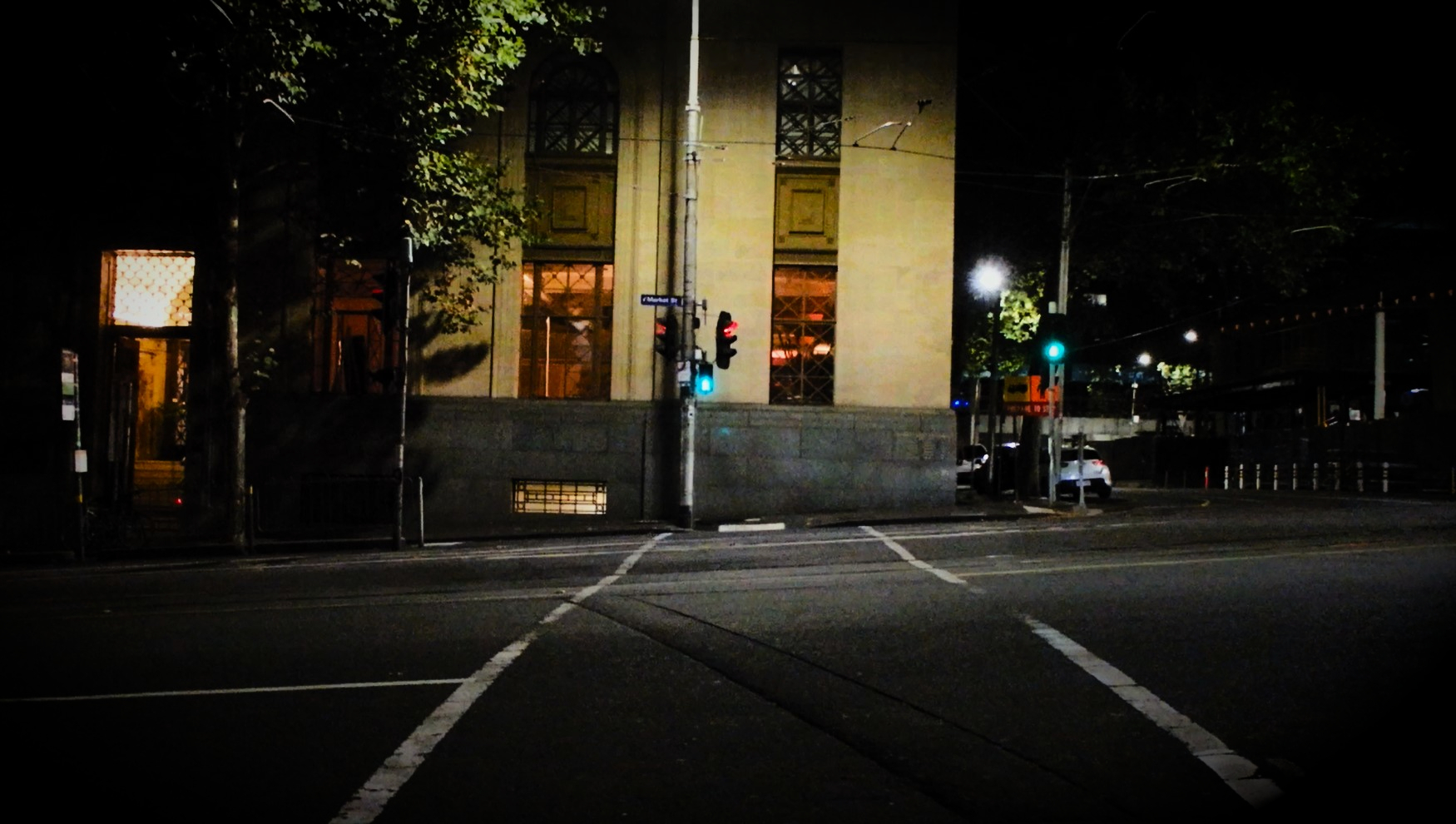


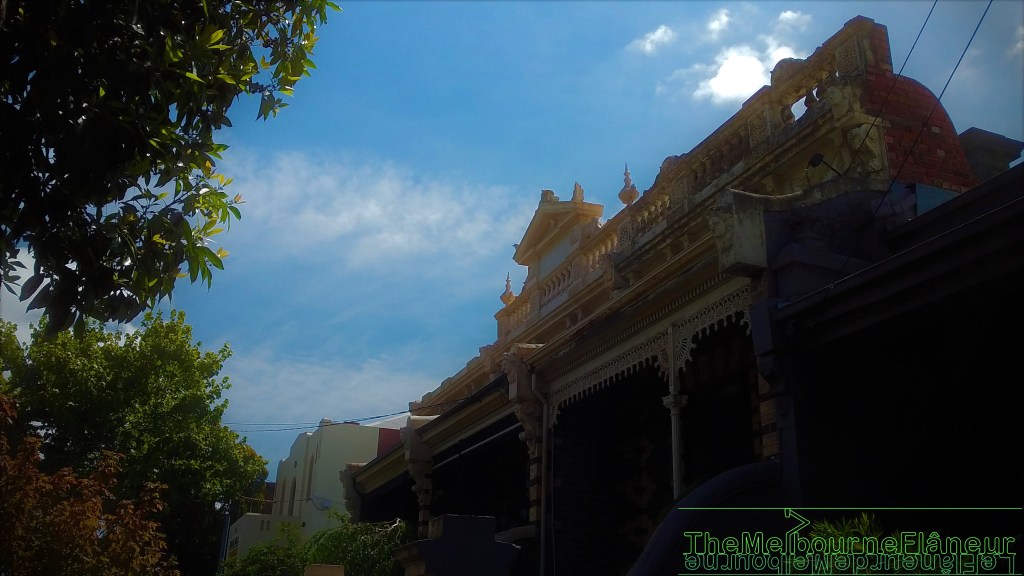
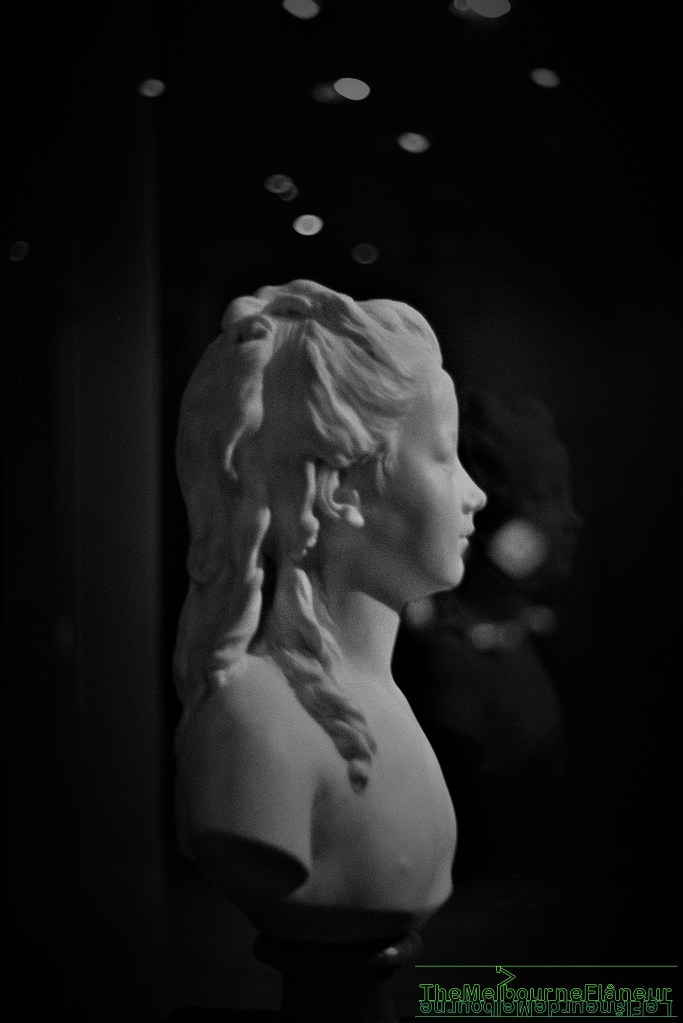


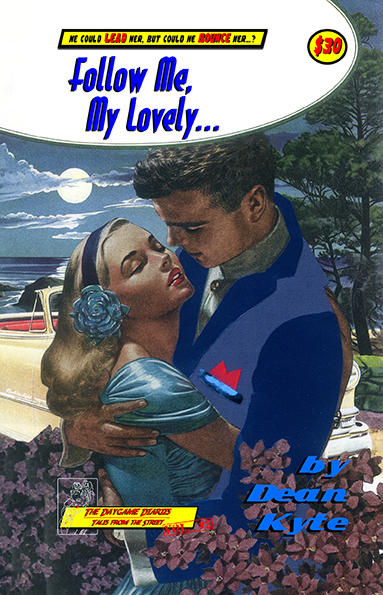
 deankyte.com