Croyez-vous que vous soyez le premier homme dans ce cas ? Avez-vous plus de génie que Chateaubriand et que Wagner ? On s’est bien moqué d’eux cependant ? Ils n’en sont pas morts. Et pour ne pas vous inspirer trop d’orgeuil, je vous dirai que ces hommes sont des modèles, chacun dans son genre, et dans un monde très riche et que vous, vous n’êtes que le premier dans la décrepitude de votre art.
Do you think you’re the first man to have been laughed at? Have you more genius than Chateaubriand and Wagner? Have they not been made fun of? They haven’t died of it. And so as not to puff up your pride too much, I will tell you that these men are models, each in his own field and in a very rich world, and that you—you are merely the first in the degeneracy of your art-form.
— Charles Baudelaire to Édouard Manet, letter of 11 May, 1865 [my translation]
Baudelaire’s recognition of an incipient degeneracy in the art of Édouard Manet would be the most significant remark, either public or private, that the poet would make on the work of his painter-friend, and, indeed, Baudelaire’s slighting comparison of Manet to another personal friend whose genius, by contrast, he had been the first man in France to recognize—Richard Wagner—is telling. As Spengler observes: ‘Between Wagner and Manet there is a deep relationship, which is not, indeed, obvious to everyone but which Baudelaire with his unerring flair for the decadent detected at once.’
It is an enduring mystery of criticism why Baudelaire, so sensitively attuned to the etiolation of forms that would, in time, mark itself out as the pathological trait of modern art—and so quick, moreover, to perceive the chthonic correspondences between his project of a modern, urban poetry and the work of artists in other media whose formal æsthetics bore similarities to his own—should have signally failed to see that it was Manet—not Constantin Guys—whom future historians and critics would deem to have embodied Baudelaire’s own notions of modern artistic heroism, as the quintessential ‘Painter of Modern Life’.
Beaucoup de gens attribueront la décadence de la peinture à la décadence des mœurs. …
Avant de rechercher quel peut être le côté épique de la vie moderne, et de prouver par des exemples que notre époque n’est pas moins féconde que les anciennes en motifs sublimes, on peut affirmer que puisque tous les siècles et tous les peuples ont eu leur beauté, nous avons inévitablement la nôtre.
… [N]’a-t-il pas sa beauté et son charme indigène, cet habit tant victimé ? N’est-il pas l’habit nécessaire de notre époque, souffrante et portant jusque sur ses épaules noires et maigres le symbole d’un deuil perpétuel ? Remarquez bien que l’habit noir et la redingote ont non seulement leur beauté politique, qui est l’expression de l’égalité universelle, mais encore leur beauté poétique, qui est l’expression de l’âme publique ; — une immense défilade de croque-morts, croque-morts politiques, croque-morts amoureux, croque-morts bourgeois. Nous célébrons tous quelque enterrement.
…
Le spectacle de la vie élégante et des milliers d’existences flottantes qui circulent dans les souterrains d’une grande ville, — criminels et filles entretenues, — la Gazette des Tribunaux et le Moniteur nous prouvent que nous n’avons qu’à ouvrir les yeux pour connaître notre héroïsme.
…
La vie parisienne est féconde en sujets poétiques et merveilleux. Le merveilleux nous enveloppe et nous abreuve comme l’atmosphère ; mais nous ne le voyons pas.
Le nu, cette chose si chère aux artistes, cet élément nécessaire de succès, est aussi fréquent et aussi nécessaire que dans la vie ancienne : — au lit, au bain, à l’amphithéâtre. Les moyens et les motifs de la peinture sont également abondants et variés ; mais il y a un élément nouveau, qui est la beauté moderne.
Car les héros de l’Iliade ne vont qu’à votre cheville, ô Vautrin, ô Rastignac, ô Birotteau, — et vous, ô Fontanarès, qui n’avez pas osé raconter au public vos douleurs sous le frac funèbre et convulsionné que nous endossons tous ; — et vous, ô Honoré de Balzac, vous le plus héroïque, le plus singulier, le plus romantique et le plus poétique parmi tous les personnages que vous avez tirés de votre sein !
Many people will attribute the decadence in painting to the degeneration of customs. …
Before we investigate what the epic side of modern life may be and prove, through example, that our era is not less fruitful in sublime motifs than antiquity, it may be averred that since every age and nation has possessed its proper beauty, we, inevitably, have our own.
… Has it not its beauty and its native charm, this oh-so-maligned suit? Is not the suit essential for our age, suffering and bearing upon its very shoulders, puny and black, the symbol of a perpetual mourning? Note well that the black suit and frock coat have not merely their social beauty (which is the expression of universal equality), but also their poetic beauty, which is the expression of the public spirit:—an immense cortège of undertakers – political morticians, romantic embalmers, middleclass funeral directors. We are all of us celebrating some sort of burial.
…
The spectacle of fashion and of the countless floating existences which circulate in the bowels of a great city—crooks and whores—the court reports and tabloids prove to us that we have merely to open our eyes to meet with our brand of heroism.
…
Parisian life is abundant in marvellous and poetic subjects. The marvellous surrounds us and suckles us like the air, but we do not see it.
The nude, that object so dear to artists, that essential ingredient of success, is just as common and indispensable as it was in antique life: in the bed, the bath, upon the stage. The means and the motifs of painting are equally abundant and varied; but there is a new element—modern beauty.
For the heroes of the Iliad do not come up to your ankle, O Vautrin, O Rastignac, O Birotteau!—and you, O Fontanarès, who haven’t dared to recount to the public your chagrins under the tail coat, funereal and wracked with sobs, that all of us wear. —Nor you, O Honoré de Balzac; you, the most heroic, the most original, the most romantic and poetic of all the characters you have drawn forth from your heart!
It is clear that Baudelaire sees the essence of modern beauty as crime—committing le mal.
The heroes of modern life, far superior to the strong men of antiquity, are the decadent, elegant criminal masterminds of the Balzacian social network of the city, the dandiacal flâneurs for whom the funereal uniform of the black frock coat is a democratic disguise that allows the artistic observer to take the total measure of the urban scene, du grand monde au demi-monde.
L’ordre social, l’action de la société sur l’individu, dans les diverses phases et aux diverses époques, ce réseau d’institutions et de conventions qui nous enveloppe dès notre naissance et ne se rompt qu’à notre mort, sont des ressorts tragiques qu’il ne faut que savoir manier. Ils sont tout à fait équivalents à la fatalité des anciens ; leur poids a tout ce qui était invincible et oppressif dans cette fatalité ; les habitudes qui en découlent, l’insolence, la dureté frivole, l’incurie obstinée, ont tout ce que cette fatalité avait de désespérant et de déchirant : si vous représentez avec vérité cet état de choses, l’homme des temps modernes frémira de ne pouvoir s’y soustraire, comme celui des temps anciens frémissait sous la puissance mystérieuse et sombre à laquelle il ne lui était pas permis d’échapper, et notre public sera plus ému de ce combat de l’individu contre l’ordre social qui le dépouille ou qui le garotte, que d’Œdipe poursuivi par le Destin, ou d’Oreste par les Furies.
Social order—the action of society upon the individual—in various phases and during various epochs; this network of institutions and conventions which catches us in its toils at the moment of our birth and is only broken at the hour of our death, furnishes the mainspring for tragedy which the dramatist need only know how to manipulate. These institutions and conventions are perfectly equivalent to the ‘destiny’ of the ancients; their gravitas possesses everything that was invincible and oppressive in the ancient notion of ‘fate’. The customs that flow from them—insolence, frivolous cynicism, stubborn unconcern—is replete with all that ‘fate’ had in it to inspire heartbreak and despair: If you truthfully depict this state of affairs, modern man will tremble from his incapacity to extricate himself from it just as the man of ancient times used to quiver beneath the obscure and sombre power from which he was forbidden to escape, and our modern audience will be more moved by the individual’s fight against the social order which seeks to strip or strangle him than by Œdipus pursued by Destiny, or Orestes by the Furies.
— Benjamin Constant, « Réflexions sur la tragédie », Revue de Paris (1829, p. 136 [my translation])
Echoing the insight of Benjamin Constant nearly two decades before him, Baudelaire is of the view that urban crime is the sole field of heroism available to men possessed of any spirit of adventure in modernity.
And artists—whether of word or paint—are the supreme outlaws, the supreme non-conformers to the social order.
The dandy-flâneurs, those ‘æsthetic terrorists’ of the bourgeois order who act in resolute defiance of the safetyist constraints of the law—who seek to break the social network of the civilized community binding them to impotence from birth to death, and who refuse to serve the metropolitan machine in the slavery of ‘gainful employment’, preferring instead what I call ‘productive indolence’—those elegant, artistic, criminal souls, deserters of their society but drawn like moths, by grace of their macabre curiosity, to it—to be the ironic witnesses of its criminal beauty, its crime against humanity—are the only heroes in modern life equal to the ancients.
Manet, a dandiacal flâneur as given as Baudelaire to Balzacian survey of the great machine à vivre that was the modern metropolis of Paris, wore the uniform of the fashionable man about town for his undercover excursions into observation of its many strata and facets.
Baudelaire had no lack of opportunities to observe Manet at this idle labour and know that, with the appropriate changes being made, Manet’s visual style and technique was the counterpart to his own literary approach to the modern urban scene of Second Empire Paris.
As two dandy-flâneurs, the poet had often been the painter’s Balzacian bosom companion—the Paul de Manerville to his Henry de Marsay—on sketching expeditions to the jardin des Tuileries.
With his black stovepipe, his exuberant black silk bowtie, his prematurely greying locks and his Satanic profile, Baudelaire would more than once provide Manet with the subject for a snapshot-like sketch that, in its curious caricatural indefiniteness, would trace with ‘vague precision’ the smeary mark that Baudelaire would leave on the margins of the vast, Balzacian tableau of modern Parisian life, a figure in the background, like Vautrin, only afterwards to be recognized as the absolute centre of the cultural scene for the whole nineteenth century.
Thus, as David Carrier, summarizing the position of critics who have lamented Baudelaire’s stunning failure of perspicacity in appreciating the revolutionary rôle that Manet would play in the art of the future, regretfully puts it, ‘it is embarrassing that a great critic failed to see the value of the work of a friend.’
‘It has been alleged,’ writes Joanna Richardson, ‘that Baudelaire did not appreciate Manet at his true worth. … It might indeed be said that Delacroix concealed the modernity and the stature of Manet from him.’
Baudelaire was caught up as a partisan in the great controversy that would preoccupy French art during the second third of the nineteenth century, and which would only retrospectively appear to history as a minor theatre of conflict, a very distant skirmish from the front lines of avant-garde battle that were then drawing themselves behind Manet and in opposition to his sure sense of what constituted modern beauty.
This was the great contest between the primacy of line—precise, classical draughtsmanship as personified by Ingres—and the vibrancy of colour as the expression of romantic emotion, and personified by Baudelaire’s enduring hero, Delacroix.
Manet resolved the problem of line and colour in a novel way that nevertheless looked back—with ambiguous irony—to the classical models claimed by the two masters. Manet’s lines, as in Olympia (1863), were often gross in their salience, an infantile perversion of Ingres’ tin-type kind of design, his fields of unbroken colour vibrant but inharmonious to sensibilities that admitted that Delacroix, despite his lack of draughtsmanly clarity, achieved something poetic and musically suggestive in his tonal arrangements.
In « Le Peintre de la vie moderne », Baudelaire would call genius ‘childhood wilfully, skilfully regained’, and in the novelty of Manet’s visual style, an apparently infantile—even imbecilic—degeneracy of facture that was, in fact, meticulously laboured over as a way of expressing the spectacle of modern Paris in its marvellous, poetic welter of instantaneous impressions, the painter proved that he possessed the ‘lively sense organs and the analytic spirit which enable him to impose order upon the sum of visual materials unconsciously amassed’ which Baudelaire ascribed to Guys.
Manet was half a generation younger than Baudelaire and was thus somewhat removed from the pitched contention between neo-classical line and romantic colour: Born on 23 January 1832, Manet was ineluctably destined, like Baudelaire, to be pilloried by the establishment in his lifetime, shunted to the margins of Parisian society as a stubborn madman one could do nothing with, only to become posthumously influential, lionized for the moral determination of his conscientious rebellion against the artistic mores of the Second Empire, vindicated as the most intransigent stumbling-block upon which the future edifice of modern art would be founded.
January 23rd is a sinister and potent date.
The Sabian symbol for the third degree of Aquarius, coinciding with the Sun’s transit through it on this date, is ‘A deserter from the navy’: That image symbolizes the rebellious—indeed, criminal—abandonment of a rigid, hierarchical structure, an established institution, an ark-like architecture that is designed to safely carry one over ‘le gouffre’ (to use a word we frequently encounter in Baudelaire’s maritime poetry)—the bitter abyss, the hellish, mazy chaos of the waves that are ever under man’s feet.
In his refusal to serve a structure he sees as foundering, the rebellious deserter who jumps ship chooses to become an uncompromising outlaw of society.
In their youths during the 1840s, both Baudelaire and Manet had been forced by their respective families to quit what the older man’s stepfather called ‘the slippery streets of Paris’ and take long, exotic sea voyages—brutal separations designed to quell the rebellious desires of their hearts for poetry on the one hand and painting on the other.
Manet had been forced on a voyage to Rio de Janeiro by his father—a judge—to qualify for induction into the Navy. Manet studiously failed the entrance examinations twice, his non-conforming Aquarian spirit refusing to submit to his father’s authority as it would later refuse to submit to the established judgments of the Académie des beaux-arts.
In the end, by his strategy of ‘compliant resistance’, going along with his father’s dictates while secretly sabotaging them by his intransigent determination to do nothing but become a painter, Manet would get his own way and be allowed to enter to atelier of Thomas Couture.
Baudelaire’s stepfather, the maréchal du camp Aupick, ‘violently disturbed’ by young Charles’s avid pursuit of ‘the perdition of the streets of Paris’, would bundle the aspiring poet off to India, hoping that the exoticism of the East would return a matured young man inclined to read law—or at least, as mother and stepfather muttered between themselves, privately recognizing that they were up against a similarly stubborn case, a poet who would write of honourable subjects and not the ambulatory muses of the Parisian streets.
Baudelaire jumped ship in Mauritius, and within eight months would be back on the ‘slippery streets’ of the capital, returning, as Manet would do some seven years later, as indissuadable from the mad career pathway he was determined to pursue as when he had left, but bringing to his vision of the modern Parisian spectacle all the decadent exoticism he had absorbed in Cape Town, Mauritius, and Réunion.
Thus, January 23 is a date that portends criminal rebellion, the radical overthrow of all monolithic structures of orthodox ‘right thought’ designed to float us, as in an ark, safely over the raging sea of life.
On the same date in 1862, his friend Manet’s thirtieth birthday, the forty-year-old Baudelaire would do what he would hardly ever do in the pages of his Journaux intimes, and mark this fatal date as a dark and potent inflection point in his life.
J’ai cultivé mon hystérie avec jouissance et terreur. Maintenant, j’ai toujours le vertige, et aujourd’hui, 23 janvier 1862, j’ai subi un singulier avertissement, j’ai senti passer sur moi le vent de l’aile de l’imbécillité.
I have cultivated my hysteria with relish and dread. Nowadays, I always feel vertigo, and today, 23 January 1862, I suffered a singular presentiment:—I felt the wind of the wing of mental degeneration sweep over my being.
This book is on the verge of being born and will be out before Christmas. I urge you to purchase copies in your choice and quantity of formats now using the payment buttons below, with invoicing for shipping to occur when the first batch of orders goes to press at the end of this month.
Édouard Manet, Olympia (1863-5), oil on canvas, 130.5 cm × 190 cm, musée d’Orsay, Paris.
L’usage social de la liberté littéraire deviendra de plus en plus rare et précieux. Les grandes démocraties de l’avenir seront peu libérales pour les écrivains ; il est bon de planter très haut des poètes drapeaux comme Baudelaire.
On pourra les agiter de temps en temps afin d’ameuter le petit nombre des esclaves encore frémissants.
The social use of free literary expression will become increasingly rare and precious. The great democracies of the future will be very illiberal for writers; it is therefore good to plant poets like Baudelaire upon the highest eminences as standards.
We will be able to wave them from time to time so as to riotously rouse the small number of slaves still trembling for freedom.
In May of 1865, the talk of tout Paris was the scandal of the Salon, the inclusion of Édouard Manet’s Olympia in the annual exhibition of painting and sculpture held by the Académie des beaux-arts. Two years earlier, Manet had been in the thick of an agitation, his provocative canvas Le Déjeuner sur l’herbe serving as a convenient standard behind which a group of disaffected artists could rally, petitioning the Emperor, Napoléon III, in protest at their rejection by the jury. Now Manet was at it again with something that had been accepted by the jury but which was—if possible—even more outrageous a slap in the face than his Luncheon on the grass had been.
Manet had expected trouble, but from a different quarter, his other entry in the Salon of that year, a history painting showing the Saviour being insulted by the Roman soldiers, going unremarked as compared to Olympia, an uncompromising nude of a contemporary Parisian prostitute so offensive in her frankness that she excited embarrassed ridicule from visitors to the Louvre when she did not actually excite physical attack. Manet, a naïve revolutionary with an earnest desire for the respectability of the Académie, was nonplussed. He wrote his friend, the poet Charles Baudelaire, who had frequently covered the Salon as an art critic of exquisite though outré tastes, seeking guidance and reassurance.
Je voudrais bien vous avoir ici mon cher Baudelaire, les injures pleuvent sur moi comme grêle…. J’aurais voulu avoir votre jugement sain sur mes tableaux car tous ces cris agacent, et il est évident qu’il y a quelqu’un qui se trompe.
I very much wish you were here, my dear Baudelaire, for insults rain on me like hail…. I should have liked to have your healthy judgment on my paintings, for all these cries grate on me, and it’s clear that someone is in the wrong.
— Édouard Manet to Charles Baudelaire, undated letter of early May 1865 [my translation]
The 44-year-old poet was then in Brussels, where he had been for over a year, escaping his Parisian creditors, attempting to sell the rights to his works to Belgian publishers, giving scarcely attended lectures on modern French art to the uncultured Bruxellois, drinking heavily, and roundly hating the place, which he condemned in poems and pamphlets. Sick, penniless, within a year of suffering a mysterious crisis that would leave him partially paralyzed, almost mute, and barely sensible, two years away from his death, Baudelaire had little time for Manet’s complaint. Hearing without sympathy his friend’s lament from the capital of fashion and culture, on 11 May, 1865, Baudelaire fired off an exasperated epistle from the Godforsaken Belgian backwater to the man whom future generations would acknowledge to have been the reluctant, unfairly crucified father of modern art.
Croyez-vous que vous soyez le premier homme dans ce cas ? Avez-vous plus de génie que Chateaubriand et que Wagner ? On s’est bien moqué d’eux cependant ? Ils n’en sont pas morts. Et pour ne pas vous inspirer trop d’orgeuil, je vous dirai que ces hommes sont des modèles, chacun dans son genre, et dans un monde très riche et que vous, vous n’êtes que le premier dans la décrepitude de votre art.
Do you think you’re the first man to have been laughed at? Have you more genius than Chateaubriand and Wagner? Have they not been made fun of? They haven’t died of it. And so as not to puff up your pride too much, I will tell you that these men are models, each in his own field and in a very rich world, and that you—you are merely the first in the degeneracy of your art-form.
— Charles Baudelaire to Édouard Manet, letter of 11 May, 1865 [my translation]
Those last, emphasized words would be prophetic, not merely of Édouard Manet’s destiny to embody the title that his friend had incorrectly or churlishly ascribed to another, lesser artist, to be ‘the Painter of Modern Life’, but it would equally be prophetic of the destiny of Baudelaire himself: By the end of the century, this poet, mocked and derided in his lifetime for his own pretensions to academic respectability as a troubadour of prostitutes, would be regarded by the physician and social critic Max Nordau as having been the fountainhead of degeneracy in modern life and the chef d’école in the Decadent movement of modern poetry, and early in the next century, T. S. Eliot would declare that modernism in poetry had definitively begun with Charles Baudelaire.
With 96 per cent of the poems, prose poems—and fiction (!)—of Charles Baudelaire now translated and in place, Maledictions, Blasphemies, Laments is on-track for release before Christmas.
Pre-orders for the book in three formats—the hardcover dust jacket “Melbourne Edition”, the Economy Softcover version, and the PDF eBook—are now being accepted at an early-bird price.
Select your choice and quantity below to secure your copies in the desired formats, with invoicing for shipping to occur when the first print run occurs in a month’s time.
The spaces of cinematic and literary noir have their roots in the supernatural vision of Poe. In this video essay, Dean Kyte reads a thoughtful, lyrical passage from Patricia Highsmith’s Strangers on a Train (1950).
He was staying at the Hotel Montecarlo, about ten blocks from the Hotel Ritz, a great shabby building that looked like the former residence of a military general. One entered it through a wide carriage drive, paved in black and white tile like a bathroom floor. This gave into a huge dark lobby, also tile floored. There was a grotto-like bar-room and a restaurant that was always empty. Stained marble stairs wound around the patio, and going up behind the bellhop yesterday, Guy had seen, through open doorways and windows, a Japanese couple playing cards, a woman kneeling at prayer, people writing letters at tables or merely standing with a strange air of captivity. A masculine gloom and an untraceable promise of the supernatural oppressed the whole place, and Guy had liked it instantly, though the Faulkners, including Anne, chaffed him about his choice.
His cheap little room in a back corner was crammed with pink and brown painted furniture, had a bed like a fallen cake, and a bath down the hall. Somewhere down in the patio, water dripped continuously, and the sporadic flush of toilets sounded torrential.
When he got back from the Ritz, Guy deposited his wristwatch, a present from Anne, on the pink bed table, and his billfold and keys on the scratched brown bureau, as he might have done at home. He felt very content as he got into bed with his Mexican newspaper and a book on English architecture that he had found at the Alameda book-store that afternoon. After a second plunge at the Spanish, he leaned his head back against the pillow and gazed at the offensive room, listened to the little ratlike sounds of human activity from all parts of the building. What was it that he liked, he wondered. To immerse himself in ugly, uncomfortable, undignified living so that he gained new power to fight it in his work? Or was it a sense of hiding from Miriam? He would be harder to find here than at the Ritz.
—Patricia Highsmith, Strangers on a Train (1950, pp. 50-1)
As un adhérent du Nouveau Roman who has decentred characters from his narratives and made architecture their star, I was delighted when I read the passage above in Patricia Highsmith’s Strangers on a Train (1950) last year.
Though a little purple round their edges—(as stained, perhaps, as the place they describe)—I nevertheless felt, for three paragraphs, almost as if I were reading one of my own ficciones intercalated into Highsmith’s literary crime novel.
In those three paragraphs, Patricia Highsmith imagines—fully a dozen years before Resnais and Robbe-Grillet—Marienbad, albeit she sites that labyrinthine hôtel onirique en Mexique, the land loved by the surrealists.
Strangers on a Train is a young novelist’s book: the brushwork is a little loose, the colour a little too chromatic. Highsmith is not yet in possession of the tight, Jamesian command of character and moral situation she will evince but half a decade later in The Talented Mr. Ripley (1955). Yet more so than in that book (which the Library of America chose to include as a representative example in its collection Crime Novels: American Noir of the 1950s), Strangers on a Train is definitely a roman noir.
And, as a mere slip of a girl at thirty, Highsmith had at least written a novel which could command the attention of Hitchcock.
A couple of months ago in Melbourne, I saw Hitchcock’s 1951 adaptation of Strangers on a Train in what I’m sure must have been the first time in over twenty years. It was the second half in a double-bill that included North by Northwest (1959)—(can you believe seeing those two together on the big screen in one night?)—and whereas I knew every line and shot of the first film by heart, Strangers on a Train had slumbered so long in my memory that it was virtually like seeing it fresh.
Like Highsmith’s novel, technically I was surprised to find the film a little slipshod for Hitch: he has a matte photograph of Washington’s Capitol that manages to jump three times in a single setup; he relies a little too heavily on ill-matching stock footage for the tennis match, and the pro doubling for Farley Granger can’t possibly be mistaken for him at a distance.
But I walked out of that double feature into a dark, rainy, prematurely chill midnight in Carlton pulling my trenchcoat more tightly about me and thinking that, if a legitimate case can be made for any of Alfred Hitchcock’s films as being ‘noir’, then surely Strangers on a Train is at least as viable a contender as the oft-proposed Shadow of a Doubt (1943).
The Highsmith/Hitchcock intersection points to something fundamental about this vaporous thing called ‘noir’: both the novelist and the cinéaste are moralists in the domain of crime fiction, tellers of ‘moral tales’, though the telling of such contes moraux comes more naturally to the writer than to the filmmaker, who must principally convey his moral tone visually rather than by means of language.
There’s a whole tedious chapter (if memory serves) of Notre-Dame de Paris (1831) in which Victor Hugo bangs on with his usual exhausting gusto about the architecture of the eponymous Parisian cathedral, sententiously arguing for it as a veritable ‘bible in stone’ whose every arch and capital is a letter in its visual language.
Film noir is primarily a ‘tonal’ quality of the cinematic treatment of those things in actuality which must serve the filmmaker as his alphabet—the streets, the buildings, the people, their fashions and conveyances, of modernity.
As an historical phenomenon, film noir was an æsthetic movement in the visual treatment of actuality, a distinctly expressionistic inflection of cinema’s native tendency towards realism.
As a stylistic movement proper to the artistic medium of film rather than a literary genre, film noir was, therefore, a set of ‘visual strategies’ for treating urban modernity that encompass all aspects of the cinematic apparatus but principally those native to the medium—lighting, camerawork, mise-en-scène and montage.
Film noir was an æsthetic portfolio of techniques for subjectively inflecting the image of built space, and as such, it produces an impression of ‘hyper-reality’, and thus a mood of ‘dis-ease’ in the viewer as he encounters a form of the ‘uncanny valley’ in the anthropocentric environment of the modern city.
The image of the city, this social environment built by humans ostensibly for humans—but which actually serves to alienate human beings precisely because of its ‘over-humanness’, its continual reference to anthropocentric concerns—becomes unsettlingly ambiguous in film noir.
As a tonal mood to depictions of the city, the affective character of film noir suggests an uncanny ‘doubleness’ to the faces which the spaces of modern actuality present to us when they are reduced to pure, geometric, architectonic forms by black-and-white cinematography.
… [O]blique and vertical lines are preferred to horizontal. Obliquity adheres to the choreography of the city, and is in direct opposition to the horizontal American tradition…. Oblique lines tend to splinter a screen, making it restless and unstable. Light enters the dingy rooms of film noir in such odd shapes—jagged trapezoids, obtuse triangles, vertical slits—that one suspects the windows were cut out with a pen-knife. No character can speak authoritatively from a space which is being continually cut into ribbons of light.
I say ‘realism’ because a totally uninflected image—one that is Newtonianly objective, which does not assume the position of a limited, subjective observer—is presently impossible to us. That’s still one of the charming limits of the artistic medium of cinema: a filmed image partakes of the ‘genre’ of realism without ever attaining the objective reality of which it gives the viewer a convincing impression.
In this sense, at its least inflected, even a documentary film may be as much a work of ‘realism’ as a novel by Zola—and fall as far short of a purely scientific description of actuality as his pretenses to ‘objectivity’ through the literary medium of long-form fiction.
But what forcibly struck the French-Italian critic Nino Frank in the article where he coined the term ‘film noir’ to describe a certain genre of American policier was precisely this vigorous impression of a ‘new realism’—a ‘neorealismo’, if you will—in these wartime thrillers, detective stories for the most part, but also reverse-engineered stories—like Double Indemnity (1944)—in which ordinary men and women lured into committing crime played the starring rôles rather than the sleuth uncovering their guilt.
Ainsi ces films « noirs » n’ont-ils plus rien de commun avec les bandes policières du type habituel. Récits nettement psychologiques, l’action, violente ou mouvementée, y importe moins que les visages, les comportements, les paroles – donc la vérité des personnages, cette « troisième dimension » …. Et c’est un gros progrès : après les films comme ceux-ci, les personnages des bandes policières usuelles ont l’air de fantoches. Or il n’est rien à quoi le spectateur d’aujourd’hui soit plus sensible qu’à cette empreinte de la vie, du « vécu », et, pourquoi pas, à certaines atrocités qui existent effectivement et qu’il n’a jamais servi à rien d’occulter ; la lutte pour la vie n’est pas une invention actuelle.
Thus these ‘dark’ movies have nothing in common with the usual kind of detective yarns. Distinctly psychological stories, action, in these films, whether violent or frenetic, is less important than the faces, behaviours, words—hence, the truth of these characters, that ‘third dimension’…. And this is a major step forward: after movies like these, characters in the usual detective stories appear insubstantial. Now, there is nothing towards which today’s filmgoer might be more sensitive than this trace of life, of ‘life as it is lived’, and—why not?—towards certain atrocities that actually exist, and which it has never done any good at all to hide: The struggle for life is not a current invention.
Frank was writing two years to the month after the Liberation of Paris, and ‘life as it is lived’ during what the French call ‘les années noires’ of the Nazi Occupation had certainly been dark and full of ‘certain atrocities’.
Just as, for the Italians, the dying months of Nazi Occupation give fruitful birth to a ‘new realism’ in cinema that trenchantly refuses to hide those ‘certain atrocities’ which actually exist in the struggle for life, so for the French, more keyed to the existential implications of the crime genre, film noir, as a stylistic inflection of generic thriller material, adds a ‘third dimension’ to cinema—that of the moral psychology of crime.
By German Expressionism out of French Poetic Realism, film noir is a set of visual strategies that forcibly inflect with psychological subjectivity the ‘objective’ image photographed by this non-intentional artistic medium: the architectonic shapes and spaces of urban modernity become effective ‘crime scenes’, freighted with desire, rage, melancholy and dread.
As Paul Schrader outlines in “Notes on Film Noir”, how the spaces of urban modernity are lit, the time of day at which they are photographed, whether the setting is given as much compositional emphasis as the actors, and how active a rôle the cinematic apparatus plays in advancing the narrative determines to what extent the image of actuality photographed is inflected with a moral character we call, after the French wartime experience of doubleness and ambiguity in the places of modernity, ‘noir’.
Carl Plantinga goes a great distance towards staking out the conceptual terrain of what constitutes a tonal ‘mood’, or what he calls an ‘affective character’, in film, art, and literature, taking Orson Welles’ Touch of Evil (1958) as his particular example in “Art Moods and Human Moods in Narrative Cinema” (2012).
Building on the work of Greg M. Smith, Plantinga argues that the plot-based ‘events’ in both literary and cinematic narratives (as, for instance, in both Highsmith’s and Hitchcock’s respective versions of Strangers on a Train) are clothed and cloaked in ‘an affective experience that permeates the fictional world of the work.’
Plantinga argues that this enveloping ‘mood’ of a given film ‘is something like its affective “character”,’ and that, to use his example, ‘[i]n Touch of Evil we could describe this [mood] as dark, foreboding, anxious, and unbalanced.’
As per Schrader’s iconographic summary of film noir stylistics, a preponderant percentage of scenes in Touch of Evil are shot in low light, at nighttime or in sombre interiors, with light sources stabbing stark rays into the frame from outré angles. Certainly, the baroque emphasis on the built environment of the Mexican border-town is given as much visual prominence as the actors. And, from the very first and famous shot crossing the frontier, Welles actively employs the cinematic apparatus to drive the moral tale he has to tell forward.
As Plantinga puts it, in a film noir like Touch of Evil (which he says is particularly effective at conveying its global mood of dread, anxiety and unbalance), the form of the film as much as its visual content is charged with an affective character whose essential qualia we might call ‘noir’.
… [T]he film noir may set the scene in a city late at night, the empty streets deserted and the rain falling, a few figures huddled in isolated doorways—all suggestive of darkness, wetness, coldness, and loneliness. On the soundtrack are the strains of melancholy music, together with the faint sounds of a quarreling couple in some nearby apartment.
—Carl Plantinga, “Art Moods and Narrative Moods in Narrative Cinema” (2012, p. 465)
In film noir, the visual ‘content’ of urban architectural forms—buildings, streets, doorways, apartments—undergo an epiphanic formal treatment. The qualities of darkness, emptiness, wetness, coldness and loneliness described by Plantinga in this imaginary example—not to mention the muted sound of anger—cloak the city in a shroud—but it’s a glamorous shroud.
In this epiphanic formal treatment, this intentional subjective inflection of visual content that carries no affective character in itself, the images of cities and the typical structures within them are glamorized by the cinematic apparatus, bringing out a supposed ‘poetic realism’ immanent in these objective structures, their implicit ‘photogénie’, their ‘sexy’ appeal to the camera’s non-intentional eye.
It’s arguable that what Frank was responding to in 1946 as a new realism in Hollywood crime dramas was in fact a ‘hyper-reality’ that the cinematic apparatus, with glamorizing intentionality, was painting on the banal visual content of actuality.
As I demonstrate in the video essay at the top of this post, somehow the hour of the day, the tightness of the aperture, the least inflection one can give to a photographed image of actuality in what was simply intended as a background for a Mexico City driving shot;—somehow all this plus the intrinsic, reductive beauty of black-and-white as an æsthetic limitation and inflection of reality works together to make even the most banal image of city streets and buildings ‘noir’.
On a personal note, your Melbourne Flâneur joined the new social medium AirChat this week and he’s loving it. Here’s a link to my feed:
I’ve been very resistant to social media and I’m typically glacial in the speed of my take-up when it comes to new technologies, but when I heard about AirChat, I jumped on it. After twenty years of standing on the sidelines watching the other kids play, I think this is social medium I’ve been waiting for.
So far, AirChat gives evidence of being the perfect social medium for a writer to rehearse his ideas in public. I’ve been putting the voice-to-text AI through its paces by reading aloud daily drafts of a new short story I’m working on, and as you can see in the quick and dirty video below, the AI accurately renders complex sentences featuring a technical vocabulary of architectural and mathematical terms which (according to the OED) are typically not among the most frequently used words in English.
Dean Kyte has joined AirChat and he thinks it’s going to be a game-changer for introverted writers seeking a viable social medium with which to communicate their words to a primarily oral, rather than literate, audience.
I also find that it copes with my slippages into French and Italian pretty well, often correcting itself when it mistakes a foreign word for one that sounds similar in English. It seems to search the Internet for self-corrections: in an exchange with Naval Ravikant where I invoked the name of Carlo Gozzi, the AI subsequently fixed up its initial misrendering of ‘gotsy’ based on the context of my voice note—what is called a ‘chit’ on AirChat.
In addition to giving the good folk on AirChat a daily earful of what I have been writing in the mornings, I’ve also posted a few random thoughts throughout the day based on the notes I’ve taken from my readings in researching this article.
So if you would like to interact with your Melbourne Flâneur, take vicarious, asynchronous part in my flâneries, or perhaps listen in or contribute yourself to some of the generative intellectual conversations that are happening on AirChat, I invite you to follow me @themelbflaneur.
A silent film at the Art Gallery of NSW in Sydney inspires a quick and dirty flâneurial video essay by Dean Kyte.
«Le spectacle n’est pas un ensemble d’images», notait Guy Debord en 1967, «mais un rapport social entre des personnes, médiatisé par des images». Un tel rapport social définit très précisement l’hysterie. C’est donc bien cette névrose généralisée qui caractérise la «société du spectacle». Le spectacle n’est pas «le capital à un tel degré d’accumulation qu’il devient image», c’est l’aliénation capitaliste devenue si générale et irrécusable qu’elle engendre une folie universelle. Le spectacle est l’aspect clinique de cette folie.
‘The spectacle is not an ensemble of images,’ Guy Debord would remark in 1967, ‘but a social relationship between people mediated by images.’ Hysteria is very precisely defined by just such a social relationship. It is therefore indeed this generalized neurosis which characterizes the society of the spectacle. The spectacle is not ‘capital accumulated to such a degree that is becomes image’, it’s the alienating effect of capital become so general and indisputable that it engenders a universal madness. The spectacle is the clinical aspect of this madness.
In my æsthetic philosophy of flânerie, by far the largest branch is given over to the constellation of networked problems that arise from the issue of modernity.
Flânerie is a strategy that certain rare, dandistic men will always choose for gracefully surviving modernity:—for the accoutrements of modernity are products of civilization, and the condition of ‘civilization’ itself is produced precisely by the accoutrements of modernity.
Le dandysme apparaît surtout aux époques transitoires où la démocratie n’est pas encore toutepuissante, où l’aristocratie n’est que partiellement chancelante et avilie. Dans le trouble de ces époques quelques hommes déclassés, dégoûtés, désœuvrés, mais tous riches de force native, peuvent concevoir le projet de fonder une espèce nouvelle d’aristocratie, d’autant plus difficile à rompre qu’elle sera basée sur les facultés les plus précieuses, les plus indestructibles, et sur les dons célestes que le travail et l’argent ne peuvent conférer. Le dandysme est le dernier éclat d’héroïsme dans les décadences…. Le dandysme est un soleil couchant ; comme l’astre qui décline, il est superbe, sans chaleur et plein de mélancolie. Mais, hélas ! la marée montante de la démocratie, qui envahit tout et qui nivelle tout, noie jour à jour ces derniers représentants de l’orgueil humain et verse des flots d’oubli sur les traces de ces prodigieux myrmidons.
Dandyism appears especially during those transitional periods when democracy is not yet omnipotent and aristocracy is only partially debased and tottering. In the strife of these periods, certain classless, idle men, fed up but all of them flush with native force, are capable of conceptualizing the plan for the foundation of a new type of aristocracy, all the more difficult to break since it will be based upon the most precious and indestructible faculties, and upon divine gifts that cannot be conferred by labour and lucre. Dandyism is the last spark of heroism in the age of decadence…. [It] is a setting sun: like the declining luminary, it is superb, without heat and full of melancholy. But, alas, the rising tide of democracy, which seeps into and levels everything, daily drowns these last representatives of human pride and pours upon the traces left by these prodigious Myrmidons a deluge of oblivion.
In his critique of the Paris Salon of 1846, Baudelaire ended his diatribe with a manifesto proclaiming the heroism of modern life, declaring that the dandy’s black frock coat, so abused by the literati of his day as ‘unpoetic’, was the armour that the modern cavalier must wear, bearing upon his thin, bowed shoulders ‘the symbol of a perpetual mourning’—a cross as potent as Parsifal’s.
‘Modernity’ is as much a myth as ‘antiquity’, and as Louis Aragon says in the preface of his surrealist classic Le Paysan de Paris (1926), for the dandistic, flâneurial poet, bopping about the city in his sensual derangement, a new mythology of our modern condition springs fruitfully up at every step.
I notice in my own case, starting now to give an occasional live recitation of pieces from The Spleen of Melbourne CD, that my surreally Parisian vision of Melbourne has for my fellow citizens something of this effect: places and names rendered banal by familiarity are suddenly seen anew through the prism of a poetic prose; and it may be that the heroism of the urban everyday, the ‘actless act’ of observant walking, the flâneur’s fashionable swagger through the suburbs, will one day be thought as heroic a processional as the Snowy horseman’s ride.
But the problems of modernity give way to those of post-modernity, which is both imminent threat and immanent opportunity.
This is the penultimate period of the Spenglerian decline, the democratic tide of decadence risen so high that only the stiffest necks can pretend it isn’t up to their chins.
In our times, those stiff-necked captives are the Baby-Boomers, children of a liberal, international rules-based order. And at the other end of the spectrum, the poor souls trying to breathe underwater, are the Zoomers.
Neither demographic, I contend, has any idea what is going on, and both, in the chauvinism of mutual ignorance, are vociferous in prescriptions downward and proscriptions upward.
The Boomers, being thoroughly analogue people, cannot imagine a mode of life that is thoroughly mediated by the digital spectacle, and the Zoomers, who have no living experience except of an existence thoroughly mediated by imaged surfaces, cannot imagine a halcyon, organic time that was not exclusively dictated by 1’s and 0’s.
Only Generation X and the older Millennials—those of us who gained our majority before September 11, 2001—are really in a position to survey the salience landscape of opportunity and threat with something like a clear-eyed assessment.
As the waters rise around us in the West, those of us born between, say, 1966 and 1983 stand with one foot planted in a living memory of where humanity has been—its analogue history—and one in an imagining of where it must evolve to—its digital future.
We’re not digital natives, more like émigrés from the analogue to this new salience landscape. We’re forty years and more wandering in the desert, somewhat adapted to life in these climes but with a living remembrance of ‘the Old Country’ behind us.
As splenetic and depressive a soul as Baudelaire, as thoroughly ennuyé with life in the twentieth and twenty-first centuries as he was with life in the nineteenth, and as one who, like Baudelaire, was utterly alone in decrying the bourgeois myth of progress, scuttling my whole future in the 1990’s to become (of all unremunerative things) a ‘writer’ when it was unfashionable to believe that the bottom would soon drop out of capitalism, democracy and modernity, I smile with benign contempt at the leprous grifters online who now making a living sounding the bell about the decline of the West.
It is only now, as they start to take on ballast with every breath, that they can taste the salt in the air.
I made a fatal choice that I wasn’t going to buy in to this bourgeois myth of modernity, but that a ‘New Myth’ of modernity did indeed need to be written;—and that it had to be written; that the old analogue craft of taking a pen in one’s hand and shaping a thought on paper that was eminently ‘functional’, fit for its purpose but elegant in its form, could not be superseded by plastic keys, digital screens and spellcheck.
I was one of the few who actually drew the line in the sand of technological convenience beyond which I refused to cross when the stakes were still low enough to be containable, and I have held the line implacably, foreseeing the moral cul de sac of Web 2.0.
As analogue people, the Boomers are enthused by this ‘brave new world’, seeing nothing but exhilarating opportunity in the digital, while, as digital natives, the Zoomers, living with the moral consequences of a reified spectacle, see nothing but nihilistic threat in the social networking affordances of Web 2.0.
And observing the hopelessness of the younger generation—these young folks who were born after a time when a moral calculation on the relative costs and benefits of technological, capitalistic modernity could be made, and who are thus in no way responsible for the place, underwater, where they find themselves—as I said to someone recently, it feels, as a Gen-X/Gen-Y cusper, that the fatal decision I made on the verge of my majority to stove in my boat and go down, to pursue humanity over technology whatever the personal cost, to be a writer rather than a technocrat, was a premonition of the Zoomers’ future.
What I chose as a poet-prophet of the present has been forced upon them as an inevitability, and as the tide rises, the decline’s coming for us all.
Quand le monde semble une prison et l’existence une impasse, quand la conscience se révolte contre le lieu qu’elle occupe, ou quand elle erre désorientée comme dans les pièges d’un labyrinthe, ça s’appelle la mélancolie. Sa victime entretient avec l’espace la plus douloureuse des relations ; elle en éprouve tantôt le manque, tantôt l’excès ; sa finitude lui fait horreur, de même que l’infinitude la terrifie. D’où la recherche mélacolique des ailleurs et des lontains : à l’égaré, le voyage promet un but, au captif une évasion. L’ancienne médecine le savait bien, qui aux malades de l’âme prescrivait de prendre la route — soit pour conquérir un horizon et sortir de leur marasme, soit pour imposer un rhythme aux fluctuations de leur inquiétude.
Le XIXe siècle, âge du spleen, est aussi l’âge des partances. La grande époque des là-bas. De Chateaubriand à Nerval, de Baudelaire à Maupassant, pas un écrivain (laissons de côté les «bourgeois», condamnés aux faux-semblants de leurs circuits touristiques) qui n’entende l’appel du large et n’y réponde à sa manière. L’un, parmi les bruyères de Bretagne ou dans les forêts d’Amérique, rêve de part et d’autre de l’océan aux espaces d’une autre vie…. Le second poursuit jusqu’au pied des Pyramides sa recherche des grands mystères. San quitter Paris, le poète des Fleurs du Mal s’en va … à la poursuite de son désir, ou plonge au fond de l’inconnu … vers la nouveauté d’un ailleurs. Et en 1889, n’en pouvant plus de voir la tour Eiffel confirmer le triomphe des mercantis, Maupassant fait voile vers la Sicile, avant de s’embarquer dans la démence. La puissante rêverie de l’exilé, et la pérégrination romantique vers les prestiges de l’Orient ; l’odyssée toute spirituelle du voyageur presque immobile, et la fuite écœurée loin du monde matérialiste : quatre modes d’évasion qu’a inventés le mal du siècle.
When the world seems like a prison and existence an impasse, when consciousness rebels against the site it inhabits, or when it wanders, disoriented, as if among the traps of a maze, we call this melancholy. Its victim maintains the most painful relationship with space; he feels sometimes the lack of it, sometimes the excess; its limits inspire horror in him just as its limitlessness terrifies him. From whence emerges the sad quest for ‘elsewheres’ and ‘other places’: to the lost, travel promises a goal, to the captive, an escape. Ancient medicine understood this condition well and prescribed the road to those sick at soul—whether to conquer an horizon and thus overcome their slump, or to impose a rhythm on the fluctuations of their anxiety.
The nineteenth century, ‘age of spleen’, is also the era of departures, the great period of going overseas. From Chateaubriand to Nerval, from Baudelaire to Maupassant, there is not a writer who does not hear the call of the open sea and respond to it in his own way—leaving to one side the ‘popular’ writers, condemned to the false pretenses of their touristic parcours. One, on the moors of Brittany or in the forests of America, dreams of the spaces of another life on both sides of the Atlantic…. The second pursues his search for the great mysteries to the foot of the Pyramids. Without leaving Paris, the poet of Les Fleurs du mal goes … after his desire or plunges to the depths of the unknown … towards the novelty of somewhere else. And in 1889, no longer able to stand the sight of the Eiffel Tower confirming the triumph of the moneylenders, Maupassant sets sail for Sicily before embarking for madness. The powerful dream of the exile and the romantic pilgrimage towards famous sites of the Orient; the entirely spiritual odyssey of the almost paralyzed traveler, and the revolted flight far from materialistic society: these are four plan of escape devised in response to the malaise of the century.
— Yves Hersant, preface to J.-K. Huysmans, Là-Bas (1985, pp. 7-8 [my translation])
Thus it is that in France, the nation that, through all its revolutionary social experiments with governance in the nineteenth century, sets the tone of modernity for the rest of the world, all serious writers feel a ‘fruitful despair’ and an urge to set off for ‘somewhere else’—materially different conditions of space and time that are, geographically and temporally, consubstantial with a new spirit of life, their own place and time being dead to them.
Over Easter, traditionally humanity’s solemn feast time for marking the annual cycle of descent and ascent, of death and resurrection, I found my eye caught by a provocative title on YouTube: “Why Young People Want to Die | Derrick Jensen Interview”.
As a survival of the nineteenth-century ‘age of spleen’ into twenty-first-century postmodernity, as the ‘down under’ interpreter of Baudelaire—as ‘là-bas’ – simultaneously, antipodally ‘down there’ and ‘over there’ – as Baudelaire could have wished to get!—your Melbourne Flâneur, trudging the camino of a city and a country in search of a better life than technological, capitalistic modernity has offered us, was sure to be attracted by such a wrist-slitting title!
Apparently Derrick Jensen is a writer. I don’t know Mr. Jensen or his work; I had never heard of him before my eye alighted on this video and have never read any of his books. But I liked the way he conducted himself in this interview and he spoke just as writer should do:—as the conscience—both in the English sense and in the French, as the ‘consciousness’—of his time.
When we hear so much unconsidered chatter on all forms of media, social and otherwise, polluting the sensemaking commons, it’s for those few of us who have mastered the human skills of the métier of writing—the abstract ability to rotate concepts in our mind as you can see Jensen do in this interview, and to consider the modular constructions that can be formed by words and ideas before he speaks—to guide the discourse, for we’re in the crow’s nest and can see both the Old Country behind us and the Promised Land before us.
I bring your particular attention to the section of the interview between 59:19 and 1:03:39 where Jensen talks about his introduction to Guy Debord’s concept of ‘la société du spectacle’. It’s a pretty graphic example, I warn you, but that’s to the point.
As Debord states and Jensen explains, in our addictive ‘mal du siècle’, addicted to a global spectacle composed of a mosaic of reified digital images which have colonized analogue reality, the images of human life must themselves become more graphic to deliver even a little hit.
But what is gained by the image’s graphicness comes at the cost of emotion, of connection, of relation to the real person behind the fake image.
Guy Debord, in the sixties, wrote about how if you take away relationship, the spectacle itself becomes boring. … [I]f you take emotion away from sex, if you take any connection whatsoever away from sex, it frankly can get kind of boring. And if it gets boring like that, you have to continue to increase the stimulus to make it so it doesn’t get boring.
— Derrick Jensen
When I heard Jensen’s explication of the spectacle, I was reminded of a quick and dirty video essay I made some time ago in Sydney—the one at the top of this post.
Wandering around the 20th-century galleries one rainy December day in the Art Gallery of NSW, I found myself attracted to an old silent short, “Toto exploite la curiosité” (1909) by Pathé Frères, playing in the Australian room, one of a number of early French films restored by the National Film and Sound Archive.
The plot is simple enough: A Parisian gamin finds a kaleidoscope lying in the street, picks it up and, as you can see in the video essay, just about goes into sugar shock as soon as he raises it to his eye to view the spectacle of coloured beads within.
Another gosse comes along, curious about the epileptic fit Toto is having in the street, and asks to have a look—with the same result.
Soon there’s a whole crowd of bons bourgeois gathered around Toto, who has had the bright idea of charging a fee to see the spectacle of the kaleidoscope, and almost as quickly, a riot breaks out at this nascent display of capitalistic enterprise, with even the gendarme who comes to restore order jockeying to get a look-see and just about fainting under the force of the spectacle.
What fascinated me were the hand-coloured inserts of the inside of the kaleidoscope, which look to be animated, though I’m not sure. It’s a sophisticated piece of early narrative filmmaking, and with nothing on me but my phone to record a swatch of it, as someone whose filmmaking and videographic style is heavily influenced by pre-Griffith silent cinema, I had to nab a couple of minutes of “Toto exploite la curiosité” as a kind of ‘visual note’ to myself on the level of sophistication it’s possible to achieve with an economy of technique.
But then too, I’m fascinated by kaleidoscopes which, as Toto’s exploitative brainwave shows, are the proto-cinematic spectacle par excellence. As David Thomson tells us in The Whole Equation (2005), whereas the Lumière brothers imagined the movies as a communal spectacle, a single screen we share in the dark, it was their competitor, the enterprising American Thomas Edison, who had the longer vision for the medium, imagining it not as one big screen, but as many small screens that every audience member could voyeuristically enjoy on his own, tuning in to the spectacle of his choice.
In essence, Edison imagined the kaleidoscopic spectacle of television, the personal computer, and even the smartphone.
So the kind of unconscious meta-referentiality in “Toto exploite la curiosité”—the fact that this short French film was in some sense using the kaleidoscope, an invention of the early nineteenth century, to predict, at the dawn of cinema, a spectacularly mercantile, American-inflected future for the medium it could not possibly have imagined—seemed to me a miraculous bit of cinema poetry, one that illustrated a quotation from my reading, an extract from French essayist Michel Bounan’s book La folle histoire du monde (The Mad History of the World).
Bounan, a doctor and friend of Guy Debord, is no longer with us, having died in 2019. This is unfortunate, as I would love to translate Bounan’s short, prophetic book, written in 2006, just before the big uptake in social media, and introduce his premonitory thoughts on the spectacular state of clinical hysteria and mass psychosis we now find ourselves in—and into which the Zoomers have been effectively born—to an Anglophonic audience.
Though he’s writing a whole decade before Brexit and Trump, and he never lived to see the Coronavirus, when I first read La folle histoire du monde mid-way through the pandemic, I was sure that Bounan was coyly referring to events across the Channel and across the Pond, that’s how prophetic his book seems.
And yet social media was not yet really ‘a thing’, as the kids say, when he was writing it.
In the citation I translate in the video essay, Bounan quotes Debord’s fourth thesis in La société du spectacle (1967)—that the spectacle itself is not simply an ensemble of images, but, as Jensen explains, it is a relationship between people that is mediated by images.
And as Debord, in his sidebar commentary on his own work, points out, this thesis is a paraphrase of Marx’s statement in Capital:—that capital itself is not an object, but a social relationship between people which establishes itself via the mediation of objects.
We see both these things demonstrated in the excerpt from “Toto exploite la curiosité”: It is the object of common curiosity, the kaleidoscope, that establishes and mediates the initial relationship between Toto and the other boy. Equally, it is the common object of curiosity, the spectacular object of the kaleidoscope, that mediates the entire social network that assembles on the street around Toto.
And furthermore, as Toto begins to charge the badauds for access to the spectacle secreted within the kaleidoscope (over which, through the law of ‘finders keepers’, he has sole propriety), it is both capital and the spectacle that objectively mediates the relationships of the society around him.
In essence, it is the ensemble of subjective images within the black box of the kaleidoscope that objectively dictates the formation of the social network, its relationship to itself, and its relationship to Toto.
What fascinates me about the kaleidoscope as a proto-cinematic device is that it is the perhaps only instrument of objective vision—quite unlike a telescope or microscope—that projects a purely subjective image. Looking into the black box of a kaleidoscope is like seeing pictures in the abstract shapes of clouds—while looking outward, you see a spectacle within yourself.
We’re now at a point in our evolution where the globe is like a giant mirror ball over which we have glued the tiny subjective screens of our narcissistic reflections projected through the spectacular, kaleidoscopic medium of the Internet. And we have two generations now who have been born into this reified world of digital surfaces applied contiguously over the organic, analogue reality which supports our life and relations with each other.
And that’s Bounan’s ‘universal madness’, the generalized hysteria illustrated in “Toto exploite la curiosité”, the hyper-stimulated relationships without emotion, without authentic human connection Derrick Jensen observes with sympathetic sadness in the young.
Dean Kyte adapts some of the sound cues from Alfred Hitchcock’s Rear Window (1954) into a poetic new soundscape for Melbourne’s Docklands.
In watching Rear Window (1954) again after several years, I was surprised to discover that the film could conceivably be regarded as an example of what I have called ‘flâneurial cinema’.
I say that I am ‘surprised’ to have made this retrospective discovery about a film I know so well because Alfred Hitchcock is not a director I naturally class among the colleagues I claim as part of a movement, the name of which I have all but invented to describe a tendency among certain cinéastes to take a more exploratory approach to our art-form.
Despite being one of the most masterful manipulators of the incurious and unreflecting assumptions of commercial cinema, Hitchcock is an experimental filmmaker au cœur—one who continually questions the commercial assumptions of cinematic form; one who continually renovates himself, setting himself new æsthetic experiments with form to explore in each new film; and in that narrow regard he makes a sally into one of the domains I claim as the natural territory of a ‘flâneurial cinema’, the inquisitive conceptual space of the experimental film.
As Evelyn Kreutzer recently showed with her video essay “Footsteps” (2022), there are essays in flâneurism chez Hitchcock—examples of those ‘moments privilégiés’ where his movies briefly respire in the spectacular ‘wonder’ of cinematic mundanity, but rarely is the conceptual architecture of his films constructed on the basis of a thoroughgoing flâneurial investigation of the plastic potentialities of cinematic form.
And curiously, in thinking back on Hitchcock’s œuvre, it stands out to me in retrospect that those films he made with James Stewart—Rope (1948), Rear Window, and Vertigo (1958)—seem to be the movies where he takes the most overtly flâneurial attitude of exploration and experimentation towards film form.
As Richard Corliss said in his Time obituary for the actor back in 1997, James Stewart represented for Alfred Hitchcock a kind of ‘pedestrian everyman’—a voyeur who finds himself lured by an oasis of glittering evil that lies just beyond his reach.
Flânerie is an amoral æsthetic activity which privileges the scopic sense, and thus its relationship with both voyeurism and the cinema is implied. The reason, perhaps, that Rope, Rear Window, and Vertigo elicit from Hitchcock his most thoroughgoing flâneurial inquisitions, investigations, explorations and experimentations into the possibilities and potentialities of cinematic form is that something archetypal in the actor himself evoked a flâneurial response in Hitchcock that critics have not yet noticed.
What I am suggesting is that beneath the veneer of intrinsic ‘goodness’ chez Stewart, there is a free-floating, drifting, dynamically bending, corruptible stance that well represents the ‘un-engagé’ nature of modern man in the morally bankrupt twentieth century.
From the pick-and-mix drawing-room intellectual of Rope who ‘samples’ the philosophy of Nietzsche without committing himself to the absolute moral consequences of it, to Scottie Ferguson, the most overtly flâneurial of Hitchcock’s characters in his most obviously flâneurial film, Stewart, the ‘impotent observer’ who finds himself ‘morally seduced’ by the visions his wandering male gaze meets with, is an actor uniquely aligned to the conceptual and mechanical apparatus of Hitchcock’s cinema—the place where the director’s æsthetic theory of cinema meets the technical practice of it.
In his analysis of the film in The Art of Alfred Hitchcock (1976), Donald Spoto argues for Rear Window as Hitchcock’s ‘testament film’: it is a kind of analogy for itself, showing us not only how a Hitchcock movie is made, but, more crucially, how it should be watched.
In Spoto’s view, Stewart’s ‘Jeff’ becomes ‘Hitch’; his apartment is the cinema, his rear window the screen on which the director’s voyeuristic visual pleasures are played out. More vulgarly, Jeffries’ immobilizing broken leg, which renders him impotent to take a more active flâneurial rôle in the drama, might be read as Hitchcock’s girth, of which the director was acutely sensitive, and which condemned him, in his own view, to be an armchair observer of life.
Thus, when Jeff sends Lisa (Grace Kelly) ‘onto the scene’ of this immense dollhouse Hitchcock constructed to avoid all the ennui he felt about going on location, Stewart is, in a sense, ‘directing’ Her Serene Highness on this screen of scopic pleasure which Hitchcock has built as a proscenium to ‘grace’ the most beautiful doll in his dollhouse.
Then too, the three-shot structure that governs the film’s sensemaking apparatus—close-up of Stewart looking at something; insert of what he’s looking at from a position aligned to his point of view; close-up of his reaction—is the fundamental syntagm of HItchcock’s cinema.
As elegantly simple as this visual syntax is, in Rear Window it shows itself to be supremely flexible at conveying a wide range of emotionally intoned meanings. The three-shot syntagm shows us not only how Hitchcock constructs his emotional effects, but tells us how we should watch his movies so as to inferentially derive meaning from them.
And as a visual dialect, an æsthetic theory of sensemaking that Hitchcock consistently applies practically in his cinema, this syntagmatic structure in Rear Window perhaps tells us better in than any other film how Hitchcock himself typically viewed the world.
Given that I propose flâneurial cinema as a reel investigation du réel, the experimental nature of the flâneurial cinematic inquiry in Rear Window, where the overtly artificial studio becomes a kind of ‘lab’ for research into the plastic potentialities of cinematic form, would appear problematic because in this film Hitchcock eschews location shooting with far more than his usual violence.
But, paradoxically, the film is flâneurial in its domesticity, and in Rear Window, the camera, as the fundamental tool of cinematic recherche, takes an extended ‘voyage autour de ma chambre’:—for the private domestic space of L.B. Jeffries’ Greenwich Village apartment exerts a ‘sphere of influence’, arrogating the courtyard behind the eponymous ‘rear window’ to itself.
For the private individual, the place of dwelling is for the first time opposed to the place of work. The former constitutes itself as the interior. Its complement is the office. The private individual, who in the office has to deal with reality, needs the domestic interior to sustain him in his illusions…. From [the exclusion of commercial and social considerations] arise the phantasmagorias of the interior—which, for the private man, represents the universe. In the interior, he brings together the far way and the long ago. His living room is a box in the theatre of the world.
The courtyard becomes ‘interiorized’ so as to become ‘domesticated’ by the flâneurial regard of Jeffries in the same way that the Parisian flâneur annexes the local park to his private chambre as a Le Nôtrean ‘salle’—a communal, outdoor ‘living room’ where one feels strangely closeted to carry on in public some of the activities—reading, drinking beer, watching the folks ‘across the way’—that might typically be regarded as private or ‘indoor’ activities.
It’s worth noting how little of Jeffries‘ apartment Hitchcock actually shows us: we see only the central living space clearly. We get oblique glimpses of the kitchen area and bathroom, but the angle of regard is principally turned outward: as the credits demonstrate with their bookended raising and lowering of the shades over the rear window, we are in a private loge at the theatre, and as in the theatre, public spectacle is private entertainment for the flâneur.
Thus Hitchcock achieves a remarkable sense of ‘intimacy’ through the truncated set design of the apartment in Rear Window: just as the flâneur finds his home in the crowd, the real ‘inside’ of Jeffries’ domestic life is ‘out there’ in the ‘secret, private world’ of the public courtyard.
In this restriction of regard, of scopic access to Jeffries’ actual living space, the film produces a similar effect to the one that Ozu later achieves in An Autumn Afternoon (1962): the more restricted our visual access to the Hirayamas’ living spaces, the more intimately we feel ourselves to be ‘within’ these spaces we must, as in the theatre, regard from a singular point of perspective that actually keeps us ‘out’ of them.
Thus, in its ‘domesticity’, Rear Window is flâneurial in a distinctly ‘Japanese’ sense I associate with the literature of Sei Shonagon and Murasaki Shikabu: Jeff, with his retinue of nurses and servants (both man- and maid-), is the Heian lady behind screens.
Something essential to remember while reading The Tale of Genji is that no one in it is ever alone. A lord or lady lived surrounded by a more or less large staff of women and, just outside, men. The notions of solitude and privacy did not exist. …
Still, a lord or lady with no one but attendants or household staff nearby was alone in a way, because in an important sense such people did not count. Relations between people of standing were what mattered, and these were not necessarily conducted face-to-face. Good manners maintained proper distance, which amounted to upholding the accepted social order. … Domestic space, divided by screens, curtains, blinds and so on—objects hardly more substantial than ways of speaking—similarly upheld distance and inviolate dignity.
If the flâneur is inescapably masculine, a rarefication of the hunter under conditions of modernity, the chasseur/chercheur who seeks to ‘collect beauty’, there is a sense in which women too, despite their domestic concealment from the male gaze of the public sphere, have traditionally participated in a circumscribed form of flânerie.
It’s one that we see represented by Sei in The Pillow Book (1002) and by Murasaki in The Tale of Genji (ca. 1010). In the Heian period, a respectable gentlewoman kept herself modestly veiled from the male gaze behind an elaborate array of curtains, veils and screens, and in some very significant sense, as Royall Tyler writes in his introduction to Genji, in the ancient Japanese of Sei’s and Murasaki’s texts, for a woman to have been ‘seen’ by a man meant that she had been ‘known’—in the biblical sense—by him.
Likewise, in the most chilling moment of Rear Window, when Raymond Burr’s Thorwald turns his gaze directly on the camera, what a fuss of modesty Jeff suddenly kicks up: ‘Turn out the light, he’s seen us!’ he cries out in a hoarse whisper to Stella (Thelma Ritter). Suddenly the camera draws back from Stewart’s close-up reaction shot through the rear window of the apartment, and for the first and only time in the picture we see Jeff ‘like a bug under a glass’, from the perspective of one of his neighbours.
Thus, like Sei and the heroines of Murasaki, there is a feminine privilege in Jeff’s seeing while not being seen, in allowing his gaze a flâneurial parcours over the other windows of the courtyard.
And equally, there is something fundamentally ‘compromising’ in the immodesty of ‘being seen’—for that shot reveals Jeff to us in all his moral squalor.
As a feminine form of flânerie, the domestic constraints of the Heian lady’s physical restrictions and limited visual access produces a heightened observational tendency. As Polish psychologist Kazimierz Dabrowski observed with respect to Marcel Proust, who led a similarly cloistered, bed-bound life as these ancient ladies, debility and illness encourages certain sensitive souls to compensate by developing their capacities for deep observation.
Instead of seeing what is ‘dramatically different’, Jeff must now develop that inferential regard that ‘reads into’ the flattened, limited spectacle presented to his view—just as we must do with the two-dimensional image presented us in the cinema. It is this type of inferential flâneurial regard that allows Lisa, with her deprecated ‘feminine intuition’, to instantly apprehend that Miss Torso (Georgine Darcy) isn’t into any of her hungry suitors.
‘How can you tell that from here?’ Jeff asks her, craning his neck a little to get a clue as to how she makes that intuitive leap.
‘You said that it resembled my apartment, didn’t you?’ Lisa tartly replies with all the je-ne-sais-quoi Grace Kelly is capable of.
The second major technique of flâneurial cinema in evidence in Rear Window lies in its sound design. We note that Hitchcock directed that the sound should be entirely recorded from the perspective of Jeffries’ apartment. That choice also works to limit the perspective, anchoring sound as well as vision to that of a flâneurial observer.
It’s impossible to overstate the important rôle that sound plays in flâneurial cinema. The musique concrète of Rear Window’s soundscape is its accompaniment—just as it is in Rope, and in The Birds (1963).
The camera’s retreat down the staircase and out into the noise of the street in Frenzy (1972) is also an example of a flâneurial moment privilégié in Hitchcock’s cinema, the musique concrète of the growing ambient street sounds washing, like the accretion of so many sedimentary layers of quotidian banality, over the moment of ‘marvellous wonder’ when the rape and murder of Babs (Anna Massey) will transfigure this unprepossessing coin de la ville into a ‘scène de crime’.
Like water rushing to fill the lowest point, sound rushes in to fill the horror vacui of the empty image as its ‘accomplice’, covering over, ‘hushing up’ the sobs and choking screams we cannot hear.
My point is this: It is really in the world of sound that cinematic image lies in flâneurial cinema. The restricted regard of a personified camera means that the ears become the true scopic senses;—for a deliberately restricted, subjectified regard ‘blinds’ the camera and opens the viewer’s ears to supply the elided parts of the image.
A comparison of Hitchcock’s technique in conveying the horror of Babs’ violation in Frenzy with how he chooses to convey the mysterious fate of Anna Thorwald (Irene Winston) in Rear Window is instructive here: In the later film, the camera literally turns aside from a vision it cannot bear to record and beats a retreat, stopping its ears to Babs’ screams and sobs with the sounds of Covent Garden’s banal commercial spectacle.
Not a lot to reasonably base the supposition of a murder on.
Hitchcock, who was capable of imagining some of the most violent images in cinema, makes the choice to replace what is easily the most spectacularly kinetic image it is possible to film—the destruction of a human being—one which, under the ‘sex and violence’ assumptions of commercial cinema, is easily the most æsthetically pleasing image to mainstream audiences, with sounds that hardly suggest the true horror of a soul violently leaving its body.
The sounds are ambiguous, which, quite apart from being necessary to the film’s narrative conceit, supplying a ‘plausible deniability’ to the images of Thorwald’s banal yet unaccountably puzzling behaviour, puts us in the sensemaking position of being forced to ‘fill in the blanks’ by engaging a cinematic sense other than our eyes—for the camera literally cannot see what happened to Mrs. Thorwald, and there’s no reason to suppose that these two sounds—a woman’s cry, breaking glass—even imply a murder.
We enter, in some sense, a ‘threat posture’ in flâneurial cinema: Given the noirish ambiguity of modernity, it is no longer enough merely to look at the banal spectacle, one must vigilantly listen for clues—audio cues that provide further context which will ‘amplify’ the inferential meaning of what one is seeing in the salience landscape.
In flâneurial cinema, we are seeking to bring the camera tightly to heel, to rein in its affordance to be an ‘objective’, God’s-eye observer—everywhere all at once—and bring its range of vision back within the personal limits of human sight.
The musique concrète of Rear Window supplies a ‘live score’ accompanying its action, the classical ‘movement-images’ which hearken back to Hitchcock’s origins in the silent cinema, and sometimes, as when Thelma Ritter or Grace Kelly mug directly to the camera in its personified rôle as Jeff, the acting in Rear Window is as broad as in a silent melodrama.
Which brings me to the final way in which Rear Window, despite its slick commerciality, may be regarded as an experimental essay in flâneurial cinema.
The conventional reading of Rear Window advanced by critics such as Donald Spoto and Robin Wood is that the spectacle of Jeff’s flâneuristic regard flitting around the courtyard represents an analogical externalization of his internal psychological drama with respect to the prospect of marrying Lisa, with his dilemma being analogically externalized in various scenarios framed in the rear windows of his neighbours.
But in fact, I would argue that the forcibly constrained flânerie around the courtyard undertaken by both his and Lisa’s regards makes them jointly aware of ‘the wonder’ hidden in the banal quotidian in such a way as to revivify their relationship just when it is faltering.
In a sense, the discovery of a hidden mystery, an exotic, outré occurrence couched in the banal vernacular of the visible, ‘marries up’ this couple who are coming apart at the seams.
They become partners in a flâneurial adventure which, in its feminine constraints, its forced sedentariness and immobility, is better suited to Lisa’s pampered, cosmopolitan life than to Jeff’s rugged traipsings around the third world as a photo-journalist. The great mechanized, modern city of New York becomes an amusement park of spectacular wonder they can both enjoy from a tantalizing distance, and Hitchcock doesn’t fail to tell us, with a pointed close-up of Stewart’s admiring face when Kelly rushes back to the apartment to discover Thorwald’s reaction to the cruel ‘prank’ of slipping the note under his door, that Jeffries has discovered an unsuspected vein of pluck in his patrician girlfriend which makes her instantly more ‘wifeable’ to him.
In the urban wonderland of Greenwich Village, in this utterly artificial Luna Park Hitchcock has constructed for these two characters, the mystery of Mrs. Thorwald’s disappearance is a ‘wonderful’—by which I mean, a ‘marvellous’—event: As James Ellroy demonstrates in his appropriation of Walker Percy’s notion of ‘the wonder’ in Clandestine (1982), there is very little to distinguish between those moments of banal beauty in the life of the city which are invisible because they are overlooked and the aberrant criminal events which are hidden from plain view.
When I became more comfortable with solitary patrol, I would ditch out on Norsworthy completely and hit the numbered side streets off Central—tawdry rows of small, white-framed houses, tar-paper shacks, and overcrowded tenement buildings. I bought three pairs of expensive binoculars and secreted them on the rooftops of buildings on my beat. Late at night, I would scan lighted windows with them, looking for crime and wonder. I found it. The whole gamut, from homosexuality—which I didn’t bother with—to wild jazz sessions, to heated lovemaking, to tears. I also found dope addiction—which I did act on, always relaying my information on reefer smoking and worse to the dicks, never trying to grandstand and make the collar myself.
And one can take this further and say that in its aberrant disruption of the orderly running of the ‘machine à vivre’ which is New York City, the revelation of the clandestine crime which provokes ‘wonder’ in the flâneurial observer is on a similar—if not the same—order of spectacular æsthetic pleasure as the ‘marvellous’ poetic events beloved by the surrealists—those violent irruptions of irrational disjuncture.
For both Jeff and Lisa, the flâneurial adventure of inferentially reading into the flat, banal, quotidian spectacle of the courtyard—literally the clandestine ‘backstage’ or ‘behind the scenes’ of urban life—and discovering a ‘marvellous’ truth hidden in the plain view of that unprepossessing actuality, one that miraculously beggars all the probabilizing of Jeffries’ policeman friend Doyle (Wendell Corey), joins this couple more firmly together in dyadic union just when they in danger of coming permanently apart.
When Thorwald eventually enters Jeffries’s apartment, this is the surreal ‘marvellous’ invading the banalité ennuyeuse of Jeff’s existence—his ‘six weeks sitting in a two-room apartment with nothing to do but look out of the window at the neighbours.’
For Hitchcock—particularly in Rear Window—the modern banal is a source of surreal marvel and flâneuristic wonder.
But the shot in Frenzy I alluded to above is another example, a poetic strophe in itself that all but condenses the entire flâneurial message of Rear Window: The further back the personified camera moves from the alienating spectacle, the more the quotidian covers the horrific wonder of murder, and the more difficult it becomes to inferentially read that ‘wonderful’ aberration into the flat – flattening—ultimately flattened image of banal actuality that conceals the miraculously improbable moment when peaceful order is fatally disrupted in the secret life of the City—a ‘marvellous’ moment that is invisible to us for being deliberately overlooked.
Dean Kyte reads “David Goodis”, a poem from Geoffrey O’Brien’s collection In a Mist (2015), composed of lines lifted from the novels of American crime writer David Goodis.
His room had a bed,
a table and a chair.

He turned and looked around the room
and tried to see something.

The quiet became very thick
and it pressed against him.

The heat
was stronger than any liquor.

He told himself to relax
and play it cool.

He told himself
to get back on balance.

As he went out of the house
he could still hear the screaming.

And later, turning the street corners,
he didn't bother to look at the street signs.

—Geoffrey O’Brien, “David Goodis”, In a Mist (2015, p. 29)
In today’s video on The Melbourne Flâneur, I present you with something a little bit different, chers lecteurs. With a wink and shout-out to the friends and followers of this vlog in the great, wide-open United States, instead of my own images of melancholy, brooding Melburnian noir, I present for our Seppolian mates a poetic vision of San Francisco as seen through classic 35mm stock footage shot, I would say, sometime in the 1960s. And instead of intoning my own words over this soir-y, noir-y vision of Tony Bennett’s favourite town (twin, as I have noted in another post, to Melbourne as a nineteenth-century city founded on gold, a fellow colony of the global caliphate of Paris in that century), I croon lyrics doubly appropriated.
The poem, entitled “David Goodis”, is by Geoffrey O’Brien—poet, film critic, fellow Francophilic Francophone, and, most notable of all, editor-in-chief of the prestigious Library of America, the equivalent, in American letters, to the French Bibliothèque de La Pléiade. With my nez sufficiently en l’air, allow me to say, with all the Proustian snobbery I can muster, chers lecteurs, that you are nobody in American literature until you have had the corpus of your literary outpourings fitted for the funereally black dustjacket of the LOA and your surname calligraphed in white on cover and spine.
Which is as much to say that you are no one at all in the history of American thought until your intellectual corpus has passed under the purview and scrutiny of Mr. O’Brien, an unusually subtle dissector and perspicacious critic of the underground currents of American life and culture, and deemed by him worthy of the black jacket and calligraphic treatment.
The subject of Mr. O’Brien’s poem is such a luminary, but a controversial admission to the Academy, I would hazard, for David Goodis (1917-67), is a writer still unacknowledged—and even unknown—by the American public at large, and, sous la Coupole of that black-redingoted coterie which includes the immortal likes of Messrs. Melville, Whitman and Twain—not to mention several former Commanders-in-Chief whose pens have been as mighty as their swords—Mr. Goodis would doubtless be received reluctantly, with the hands of those gentlemen remaining firmly behind their backs.
I say that the poem in the video above is doubly appropriated: Not only have I taken the liberty of rendering Mr. O’Brien’s poem, from his most recent collection, In a Mist, in my antipodean tones, but he, in turn, has taken the liberty of lifting the lines of his poem from the pulp paperback novels of Mr. Goodis, and thus we both do homage to a writer whose hand we would not decline to shake.
With respect to Mr. O’Brien, there are very few living writers in the world I respect or admire, from whom I think there is anything at all that I can learn, or whose words perpetually astonish me at the subtlety of their insight, such that they make me wish that I had written them, but Geoffrey O’Brien is one of those very few living writers, and as he is not really well-known in Australia and his books are about as hard to come by in this country as Mr. Goodis’ are in America, I am very happy to press his name upon you, dear readers.
Mr. O’Brien first entered my life more than twenty years ago, with the discovery of the expanded edition of his first book, Hardboiled America: Lurid Paperbacks and the Masters of Noir (1981)—which was, incidentally, also my introduction to the works of Mr. Goodis. I’ve lost count of how many times I’ve read Hardboiled America; it’s one of the seminal influences on my literary life, and as a work of both art and literary criticism, it establishes Mr. O’Brien’s unique tone and style as a writer.
With no disrespect to him, I mistrust his poetry for the most part; like myself, formal poetic composition is not where Mr. O’Brien’s forte lies. But also like myself, he is definitely that rarest product of modernity’s contradictions, a poet in prose, and as I said in my post “Can prose be poetry?”, what defines this idiosyncratic espèce d’écrivain is the reconciliation in his being of opposites that are diametric—even, it would appear, mutually exclusive to one another: As Hardboiled America demonstrates at every re-reading, Mr. O’Brien has the holistic soul and vision of a poet, but that oceanic vision of wholes—the whole sweep of the paperback industry in its lurid years—is canalized through the prosateur’s dissective vision of parts.
He is, in other words, one of the subtlest analysts of the underground currents of American life and culture, for he perceives the whole of the Zeitgeist in particulars—particular writers of pulp paperback fiction, and particular cover artists.
As I said in that post, the analytic, the critical faculty is key to the constitution of the prose poet: in him, the rationality of the scientist meets the religiosity of the poet. And certainly, when I was learning my craft and trade as a writer, hammering out film criticism for magazines on the Gold Coast, anytime Geoffrey O’Brien’s by-line appeared in Film Comment, I descended on his analyses with double the attentiveness: his essay on Jacques Tourneur in the July-August 2002 issue of Film Comment is still memorable to me twenty years later as one of the great examples of writing on film, conveying both the ‘sensuality’ of the cinematic experience and the ‘intellectuality’ of the critical analysis of that experience.
In fine, he brings both sensuality and intellectuality to his survey of the pulp paperback industry in the middle decades of the last century; and if this eminently ‘cinematic’ approach to the pulp novel is eminently ‘right’ for this pseudo-cinematic medium, it is even more so when Mr. O’Brien treats of the cinema itself. The Phantom Empire: Movies in the Mind of the Twentieth Century (1995) is an epic in prose poetry on the level of the comte de Lautréamont: it’s a surreal cultural history of the cinema written from the perspective of the movies themselves, and Roger Ebert (who also possessed this rare quality of being able to write about the sensuous experience of an intelligent consciousness engaging, in real time, with cinema) thought The Phantom Empire so good that he included an extract from it in his Book of Film, which collects ‘the finest writing’ on the art-form from Tolstoy to Tarantino.
But what of the subject of Mr. O’Brien’s poem, David Goodis, ‘the poet of the losers’, ‘the mystery man of hardboiled fiction’, as Mr. O’Brien calls him? I said I mistrust Mr. O’Brien’s poetry for the most part, but in his ‘sampling’ of random sentences lifted from Mr. Goodis’ pulp novels, and their rearrangement into a narrative even more elliptical, more blankly poetic than Mr. Goodis’ underdone prose, he finds that prosaic/prosodic reconciliation in himself—and he finds it even more in Mr. Goodis, a complete paradox of a writer, one who is no poet by any indulgent allowance, and who is so feeble in his faculties as an intellect, and so barely competent in his execution as a novelist that he barely deserves the allowance of being called a prose writer at all.
Yet the fact is that the great novelists have usually written very good prose, and what comes through even a bad translation is exactly the power of mind that made the well-hung sentence of the original text. In literature style is so little the mere clothing of thought—need it be insisted on at this late date?—that we may say that from the earth of the novelist’s prose spring his characters, his ideas, and even his story itself.
I like this quote from Mr. Trilling, for it accords with my deepest, most chauvinistic sentiments about writing:—that manipulation of the symbology of written language, what I call ‘the algebra of human thought’, is the purest demonstration of the quality of a person’s thinking, their capacity to engage in abstract logical reasoning. It’s the high bar I apply to every writer I read. Very few pass it, and almost nobody living does so.
Mr. Goodis is the extraordinary exception to that rule formulated by Mr. Trilling. He’s not a ‘bad writer’ in terms of being absolutely incompetent to bang an Underwood;—among noir novelists, Cornell Woolrich is much worse. Mr. Goodis occasionally turns out a sentence, a paragraph, a whole scene—as at the end of The Burglar (1953)—that moves us with its ‘jazzy, expressionist style’, as the LOA dubs his brief, abortive flights into a lyricism that just grazes the underside of poetry and is otherwise unknown in the literature of noir.
But Mr. Goodis shares with Mr. Woolrich, and even exceeds him in the rare quality that ‘his characters, his ideas, and even his story itself’ do not spring out of ‘very good prose’. There is a kind of syncopated clumsiness to his sentence construction which, as Robert Lance Snyder observes, typically ‘dispenses with punctuation between coordinated clauses’, creating the jazzy effect of Mr. Goodis’ ‘intradiegetic’ style—a poor man’s stream of consciousness.
Though a product of literary modernism, he is no Proust and no Joyce. The clumsiness of his characters’ internal monologues, their madeleineical souvenirs of a golden past perdu, their depressing predictions about the immediate future, may be an intentional technique, a deliberate strategy to ironize, alienate and distance himself, as author, from his pathetic antiheroes who, despite their copious streams of consciousness, are not greatly imbued with self-consciousness.
But I think not. Mr. Goodis gives the studious appearance of being too lazy for such Flaubertian meta-games. He is not an intellectual. He has, perhaps, more intellect and more self-consciousness about the sources of his ennui than Mr. Woolrich, but being lazy, he does not have much more, and he has no idea but one—the Fall from bourgeois grace into an infinite Abyss, an endless slide into differentially more straitened circumstances that perhaps not even death arrests, a chute lubricated by paranoid fear, mortifying remorse, nihilistic despair, paralyzing loneliness and intransigent paresse.
The policeman shrugged. All the policemen shrugged. The woods shrugged and the sky shrugged. None of them especially cared. It meant nothing to them. It meant nothing to the universe with the exception of this one tiny, moving, breathing thing called Vanning, and what it meant to him was fear and fleeing. And hiding. And fleeing again. And more hiding.
And it is this extraordinary, expressionist evocation of the mélange of emotions, the compelling intensity and vivacity with which Mr. Goodis renders his personal hell with perverse lyricism despite his paradoxical commitment to writing the most stolid, the most grey and pedestrian prose possible that makes him one of the very rare exceptions to Mr. Trilling’s rule. He’s an absolute savant in literature, and one of the enduring, unanswerable questions about his life remains whether his failure as a writer was a deliberate ploy, a calculated plot, a planned campaign of æsthetic terrorism, blowing up his life in a blow against the bourgeoisie, or whether it was merely the result of his own indolence and incuriosity about the world.
Of all the writers of pulp fiction, excepting Dashiell Hammett (who, in the sense articulated by Mr. Trilling, is a far greater writer than Mr. Hemingway, a proto-Robbe-Grillet, and who is yet, even in America, to be fully given his due as a ‘serious novelist’), David Goodis is my favourite writer in the camp of the roman noir; and it is perhaps saying a very good deal that as recherché a writer as myself, one who applies the most ruthless standards of criticism and finds almost no one—not even myself—equal to the cut should acknowledge as an influence and as a ‘phare’ce petit gars Goodis.
David Goodis is a flâneurial writer pur-sang. The commercial livery of the crime novel is but a camouflage for his flâneurial spirit and his flâneurial preoccupations, his elliptical, abortive investigations of modernity. He wears the mantle of the crime novel about his meagre shoulders just as Eddie Lynn, the antihero of his masterpiece, Down There (1956), wears the ‘operative identity’ of a thirty-a-week piano-player in a dive bar on Philadelphia’s Skid Row: this is merely an operative identity, a ‘cover story’ for the true story that Mr. Goodis endlessly rehearses from one lurid, trashy paperback to another—the mysterious trauma of his enigmatic life.
“Can you tell me who you are?”
“Brother.”
“Whose brother?”
“His.” Turley pointed to Eddie.
“I didn’t know he had a brother,” Plyne said.
“Well, that’s the way it goes.” Turley spoke to all the nearby tables. “You learn something new every day.”
“I’m willing to learn,” Plyne said. And then, as though Eddie wasn’t there, “He never talks about himself. There’s a lota things about him I don’t know.”
“You don’t?” Turley had the grin again. “How long has he worked here?”
“Three years.”
“That’s a long time,” Turley said. “You sure oughtta have him down pat by now.”
“Nobody’s got him down pat. Only thing we know for sure, he plays the piano.”
“You pay him wages?”
“Sure we pay him wages.”
“To do what?”
“Play the piano.”
“And what else?”
“Just that,” Plyne said. “We pay him to play the piano, that’s all.”
“You mean you don’t pay him wages to talk about himself?”
Plyne tightened his lips. He didn’t reply.
Turley moved in closer. “You want it all for free, don’t you? But the thing is, you can’t get it for free. You wanna learn about a person, it costs you. And the more you learn, the more it costs. Like digging a well, the deeper you go, the more expenses you got. And sometimes it’s a helluva lot more than you can afford.”
Like Henry James’ ‘obscure hurt’, we are unlikely to ever know the precise details of Mr. Goodis’ mysterious trauma: masterful dandy, masterful flâneur, in his short, self-effacing life, he made a business of systematically obliterating all possible traces of himself from the documentary record of the twentieth century and of leaving too many false clues in their place.
He’s like Lee Harvey Oswald, another thoroughly nineteenth-century man who finds himself adrift as a refugee in the twentieth century. Like Mr. Oswald periodically turning up on the fringes of American culture, always tantalizingly close to the secret centre of celebrity and always on the verge of it prior to his fateful appointment in Dallas, time and again Mr. Goodis turns up in Hollywood, in Philadelphia, in New York, on the arms of Humphrey Bogart and Lauren Bacall or failing signally to make himself memorable to François Truffaut, detonating himself in some outré stunt all his friends agree you had to be there for, or else playing the invisible man, the ‘serious writer’ who snubs invites from Ann Sheridan to go flâning in South Central L.A., posing in Communist cells so as to get close to black women.
The key difference between these two terrorists of the bourgeois order is that, whereas Mr. Oswald actively sought celebrity, Mr. Goodis actively sought to escape it, to renounce his early fame and return to a state of 無 which he associated with his ville natale and his parental home at 6305 North 11th Street in Philadelphia.
For the sum of everything was a circle, and the circle was labelled Zero.
…
You know, I think we’re seeing a certain pattern taking shape. It’s sort of in the form of a circle. Like when you take off and move in a certain direction to get you far away, but somehow you’re pulled around on that circle, it takes you back to where you started.
—Goodis (1997, pp. 654, 699)
To be sure, David Goodis, a writer terminally out of step with the drumbeat his time, is an ‘acquired taste’, and even today, the high-fructose corn-syrup-swilling Seppolians can’t take much of the arsenical cynicism de ce sacré numéro.
He is without doubt the most despairing of the noir writers working during the classic period of the paperback original. As Mr. O’Brien observes in Hardboiled America, the Goodis vision of the world is so unrepentantly joyless, in such intransigent contrast to the optimistic propaganda America was telling itself during the fifties, that it is not only an enduring wonder how Mr. Goodis got published on a consistent basis, but how it was that he became a bestselling author for what amounts to a kind of private ‘folk art’, so idiosyncratically personal is his vision of unremitting nihilism.
And yet somehow, for a brief period between 1951 and 1961, there was a popular market in America for the inexplicable private project Mr. Goodis appeared to set himself:—to convey himself by slow turnings to the same gutter in Philadelphia’s Skid Row he repeatedly slid his characters towards. After the peak of the paperback boom and the bounce of intellectual and æsthetic respectability he received grâce à M. Truffaut’s adaptation of Down There as Tirez sur le pianiste! (1960), he promptly fell into the obscurity he desired and became a forgotten writer in America, dead just seven years later at the age of 49.
For, despite the fact that Mr. Goodis, like so many of his characters, started his career at the top, his second novel, Dark Passage (1946), being serialized in The Saturday Evening Post, earning him a Hollywood contract with Warner Bros., and being turned into a movie starring the noir dream team of Bogie and Baby, and despite the fact that Gold Medal paperback originals such as Cassidy’s Girl (1951) were million-sellers in their first printing, in the States, he is still an underground writer, and until the Library of America published Five Noir Novels of the 1940s & 50s in 2012, his work regularly fell out of print in the English-speaking world.
It’s France that made the reputation of David Goodis, and it’s in French that his work has continued to live, being continually reprinted in the prestigious Série Noire, and being continually adapted for the cinema by everyone from François Truffaut to Jean-Jacques Beineix. When Mr. O’Brien published his expanded edition of Hardboiled America in 1997, the only biography of Mr. Goodis was in French—Philippe Garnier’s Goodis: La vie en noir et blanc (1984), and so stubborn has American disinterest been in him that it was not until after the LOA edition of Mr. Goodis’ works that an English translation of the biography was published—one written by M. Garnier himself.
Ça alors! It says a great deal about a writer that not only do his countrymen hold him in such contempt that no one in American academe thinks him worthy of a critical biography, but that every member of every English department in every American university who has a command of French is so ennuyé with the subject of David Goodis they can’t even be bothered to translate the one biography of him that already exists!
But to call Goodis: La vie en noir et blanc a ‘biography’ in the strict sense is to be too generous. Improbable as it is in the twentieth century, the first in human history to be documented from first day to last, Mr. Goodis was so effective in his campaign of self-erasure from the record that too few facts remained for M. Garnier, less than twenty years after his subject’s death, to present a coherent ‘life’ of David Goodis in black and white.
The book, instead, growing out of a short documentary, “Loin de Philadelphie”, an episode of the French television series Cinéma cinémas (1982-91), is a kind of abortive detective story not unlike Mr. Goodis’ loosely plotted, elliptical ‘thrillers’, as M. Garnier goes ‘sur la piste’ de David Goodis, visiting his old friends and employers in Hollywood and Philadelphia, trying to shake out anything solid at all about this man who exists merely as a sum of improbable anecdotes M. Garnier struggles to corroborate, or else as a soul determined to leave no trace of himself behind on the memories of the lives he passed through.
M. Garnier, who confesses at the beginning of his biography to be unconvinced of the worthwhileness of the enterprise, saying that the Goodis œuvre, in his view is ‘loin d’être incassable’, has proved to be the best friend this overlooked writer has ever had. Not only did he take up his pen thirty years later to translate himself for the benefit of the few Americans with an interest, but, as he says in this interview, the confrontation with himself, with a book he had written as a young man, was strange enough for him to feel that a new version was required for the French public, Retour vers David Goodis (2016), correcting some errors and adding some of the few solid facts about ‘the mystery man’ that have been unearthed since.
Suffice it to say that no one in the States has yet taken the initiative to publish an English translation.
Why do the French love David Goodis so much?
… [I]l est à parier que les Américains, s’ils étaient seulement conscients de l’existence de Goodis et de sa surprenante réputation en France, considéreraient cet auteur de romans de gare comme une de ces charmantes mais énervantes idiosyncrasies qu’ont parfois ces crazy frenchmen — un peu l’équivalent littéraire de Jerry Lewis.
… You could bet that, if the Americans were only aware of Goodis’ existence and his surprising reputation in France, they would regard this author of pulp fiction as one of those charming yet irritating quirks of taste those ‘crazy Frenchmen’ sometimes have—a bit like a literary Jerry Lewis.
—Philippe Garnier, Goodis: La vie en noir et blanc (1984, p. 23, my translation)
The Americans hate nothing more than the hear the French praise the parts of their culture they themselves most deprecate, to prize the most naïvely, elementally ‘American’ parts of it they themselves despise—Jerry Lewis, par exemple.
Like all of us, they want to be taken seriously for the things they are really no good at. American ‘intellectualism’ comes off, to the French, as the naïve overreaching of a very limited spirit. The place where the Americans truly live, the locus of their national genius, lies in the naïve, the gauche, the moments of unreflecting action and un-self-conscious confidence in a manifest destiny they unironically evangelize to the rest of the world through the mythology of their cinema and literature.
When the Americans act from this place of naïve, gauche enthusiasm, they succeed in seducing all of us—but particularly the cynical, worldly French.
Note that I said ‘act’:—Americans are doers and not thinkers for the most part. They’re a concrete people with no national gift for the abstract. Even their ‘philosophy’, so-called, reflects a bias towards concrete action and ‘real’ results—the positivism of William James, the objectivism of Ayn Rand, for instance—and despite the dogged earnestness with which American ‘thinkers’ evangelize an ‘evidence-based approach’, to more subtle spirits, it takes very few steps down the logical road to perceive the unironic, bourgeoisnaïveté of American ‘thought’.
The Americans are the least platonic people on earth. They privilege the concrete over the abstract, doing over thinking, the tangible, material thing they regard as ‘real’ over the intangible, immaterial idea that the French would regard as being equally real—perhaps more so. If it can’t be measured and quantified, if it doesn’t possess some immediate, pragmatic utility, if it isn’t effective or can’t be made more so, it isn’t ‘real’ to Americans.
Even American transcendentalism is, in effect, a philosophy of extroverted sensing, not of introverted intuition: To escape the maya of material illusion, the transcendentalists, bizarrely, seek to plunge more deeply into it, their solution to the corrupting materialism of American society being to escape into the even more immediate materiality of Nature, to take real actions—chopping wood, drawing water, building one’s log cabin—in that domain.
We are still haunted by a kind of political fear of the intellect which Tocqueville observed in us more than a century ago. American intellectuals, when they are being consciously American or political, are remarkably quick to suggest that an art which is marked by perception and knowledge, although all very well in its way, can never get us through gross dangers and difficulties. And their misgivings become the more intense when intellect works in art as it ideally should, when its processes are vivacious and interesting and brilliant. It is then that we like to confront it with the gross dangers and difficulties and to challenge it to save us at once from disaster. When intellect in art is awkward or dull we do not put it to the test of ultimate or immediate practicality. No liberal critic asks the question of Dreiser whether his moral preoccupations are going to be useful in confronting the disasters that threaten us. And it is a judgment on the proper nature of mind, rather than any actual political meaning that might be drawn from the works of the two men [Theodore Dreiser and Henry James], which accounts for the unequal justice they have received from the progressive critics. If it could be conclusively demonstrated by, say, documents in James’s handwriting that James explicitly intended his books to be understood as pleas for co-operatives, labor unions, better housing, and more equitable taxation, the American critic in his liberal and progressive character would still be worried by James because his work shows so many of the electric qualities of mind. And if something like the opposite were proved of Dreiser, it would be brushed aside as his doctrinaire anti-Semitism has in fact been brushed aside because his books have the awkwardness, the chaos, the heaviness which we associate with “reality.” In the American metaphysic, reality is always material reality, hard, resistant, unformed, impenetrable, and unpleasant. And that mind is alone felt to be trustworthy which most resembles this reality by most nearly reproducing the sensations it affords.
—Trilling (1950, pp. 12-3)
Mr. Trilling’s ‘electric qualities of mind’, the real, embodied thinking that the écrivain pur-sang engages in, the unabashed intellection which is, in its abstraction, deeply practical in its confrontation with the concrete problems of life, is a rare event among American writers. There is, in fine, a grossness and a crudity to American thinking—which is not at all to insult them, for (as I will demonstrate in the next section) this grossness and crudity is merely a function of the English language itself, which privileges the actual, the immediate, the tangible, the material, the visible, the doable.
It is not a language well-adapted to the expression of invisible intuitions or subtle conceptualizations, and thus a rare writer like Geoffrey O’Brien is almost sui generis in American intellectual life, and hardly known to the public at large because such subtle perspicacity as his—which has more in common with French modes of thinking—is too delicate and diffuse a lacework to pass easily through the rough, popular laundering of ideas that a gross, clunky ‘thinker’ like Noam Chomsky depends upon for his reputation as America’s foremost ‘intellectual’.
The naïve, vital ‘elementality’ of the American spirit which the French find so seductive in a writer like David Goodis, who demonstrates his own naïve, gauche, but eminently electric qualities of mind, a vibrant, nervous, embodied sense of ‘something going on’, and which the Americans themselves deprecate as revealing the least sophisticated side of their culture, is so attractive because there is where American culture is ‘happening’; there is where it’s ‘at’; there is where they are transmitting high sensemaking signal, through the evangelism of their books and movies, about what is really ‘going on’ in Western civilization, right at the avant-garde, the cutting edge of decadent modernity.
What the Americans most prize about their culture, what they believe best represents them, often leaves the French cold. American ‘high culture’—like Australian, for that matter—is a very tepid, shallow thing, colonial in outlook, derivative and unoriginal for the most part. It’s in the unreflecting, youthful enthusiasm of their popular culture—the place where the American spirit of ‘doing’ is being done—that they are seductive to the French, who have done everything before the Americans, and for whom everything has been done before.
L’Amérique (as M. Nabokov noticed), c’est Lolita—the Lolita to France’s Humbert Humbert, and vieux roués ennuyés that they are, utterly shagged and fagged after the long debauch of European history, the one thing that can get the French end up, that can stir it from somnolence, is the endearing, innocent delusion of youthful America that there is something new under the sun; that all the possible permutations and combinations of human life have not already been enacted; and that the logical conclusion of every possible pathway for societal living does not end in disillusion, in the confrontation with humanity’s inextinguishable evil, its deceptiveness and depravity.
I said above that Mr. Goodis was no intellectual. And yet he has Mr. Trilling’s ‘electric qualities of mind’, more so than the ‘bookish’ authors the Americans would like to press on us as their most literary—‘literary’, as Mr. Trilling says, ‘in the bad sense’ of striving to be self-consciously ‘fine’, like Theodore Dreiser, whose An American Tragedy (1925) might be the ‘backstory’ for the archetypal Goodis plot—a young man of great expectations; a stratospheric rise to the top; two women, a good, ‘common’ girl who loves and understands him, and a bad society dame he lusts fatally for; murder; and an equally vertiginous descent into darkness.
Mr. Fitzgerald said that there are no second acts to American lives. And thus at the place where the action of Mr. Dreiser’s uniquely American tragedy cuts out, in the Void of that 無-state is where the Goodis world, the hellish underworld of American life, begins.
If the French read existentialism into books that the Yanks deprecate as the worthless œuvre of a very minor author, in a genre—the pulp crime thriller—they regard as being merely a socially sanctioned form of pornography, it’s because, with his fervent testifying towards a vision of unutterable darkness and bleakness, Mr. Goodis is naïvely pointing, gesturing wildly towards where it—Western civilization in existential decline—is at, what is really going onright now.
“Aaah, close yer head,” some nearby beer-guzzler offered.
Turley didn’t hear the heckler. He went on shouting, tears streaming down his rough-featured face. The cuts in his mouth had opened again and the blood was trickling from his lips. “And there’s something wrong somewhere,” he proclaimed to the audience that had no idea who he was or what he was talking about, “—like anyone knows that two and two adds up to four but this adds up to minus three. It just ain’t right and it calls for some kind of action—”
“You really want action?” a voice inquired pleasantly.
—Goodis (1997, p. 588)
‘There’s something wrong somewhere’: the gross vagueness of that elemental apperception is American intellection at its most crudely clear, and the solution to the Audenian ‘situation of our time’ is action—some kind of it, an equally vague prescription.
Even if he expresses the American Dream by negation, as an arbitrary nightmare—unjust, unequal, and unfree—in the naïve, gauche earnestness with which Mr. Goodis stumblingly evangelizes the vision of his personal hell, he is testifying to the French of all they perversely admire in their republican frères—a young, rude culture that believes absolutely in itself even when, as in the case of David Goodis, the absolute belief in the American Dream is absolute disbelief in it, a kind of ‘atheism’ towards this liberal ideal which has become the secular deism of modernity—the very torch of Liberté, Égalité, and Fraternité for the entire Western world.
As a writer who not only fell through the cracks of the American Dream, but whose ambition—whose version of it—was to precipitate himself headlong into the San Andreas Fault of it, to realize ultimate success in ultimate failure, the action that David Goodis and his characters take is the very thing that makes him despicably sinful to the Americans—a literary Jerry Lewis whose artistic appeal they can’t understand—and a hero of applied existentialism to the French.
The Americans lionize their successes, the heroes of their society who make it—despite the crippling, Darwinian competition of it—to the top. The French, en revanche, romanticize their failures, the tender souls unfit for their society, the artistic prophets who, while alive, the bourgeoisie scapegoats, and upon whose graves, after death, the bourgeois sons and grandsons erect whited sepulchres to the poètes maudits their ancestors crucified with the refusal of artistic recognition, and hence a mortifying poverty.
In Goodis: La vie en noir et blanc, M. Garnier identifies a fundamental French affinity and affection for ‘the little guy’—le petit gars, le petit bonhomme—the outcast of society which helps to explain why they should take up from the gutter this writer the Americans have cast into it as so much ‘trash’.
Perhaps it is a consequence of their republicanism, an égalité they have had to apply conscientiously, with many reactions and abandonments, on the atavistic foundations of one of the most hierarchical societies in history, that the French should have a rather sentimental regard for the common man—particularly when he’s hard done by, betrayed momentarily by a failure in the promise of the republican social contract of 1789.
That ‘sentimentalism’ for the common man and woman is as morphologically present in the works of M. Zola as it is in the pride the French take in ‘heroes of the people’, great artists like Jean Gabin or Édith Piaf who never lose the common touch, the sense of the streets.
But as M. Garnier explains, the rather sentimental French feeling for drunks, amnesiacs, madmen, hard-luck cases and ‘lost’ people of all sorts becomes especially heightened after the Second World War, and he notices that, with Mr. Goodis, the obsession regularly renews itself: he is ‘la personnalité la plus forte que nous ait révélée l’après-guerre’, a veritable ‘Lautréamont du polar’, a writer who, despite his personal fragility and the weakness of his novels, does not fall into the oblivion he desires but maintains a stubborn grip on the French psyche, being periodically rediscovered by new generations of readers and cinephiles.
There’s an irony in this; for while Mr. Goodis sought and realized his American Dream, succeeding handsomely at failure, leaving hardly any trace of himself behind as the most quintessentially American of American products—the utterly disposable ‘throwaway man’—in his Stygian passage through the gutters of Philadelphia, he is led out to sea, across the Atlantic, and down the Seine to become ‘le succès de Paris’, lionized by the Rive Gauche existentialists as one of the purest examples of American ‘philosophizing’ on the state of the world l’après-guerre, a vibrant, naïve surrealist in a despised genre, the roman noir, and one of its writers most worth saving from l’oubli.
Nothing, it seems, quite succeeds like failure.
The defining characteristics of the American roman noir and film noir can more easily be deduced from French critical discourse…. As [James] Naremore writes, both before and after the war, ‘when the French themselves were entrapped by history’, critics influenced by existentialism were attracted to film noir ‘because it depicted a world of obsessive return, dark corners, or huis-clos’. The crises that had shaken France since the 1930s – the period of war, occupation, resistance and collaboration described by the French as ‘les années noires’ – led many to share the existentialist preoccupations, and to appreciate the darker strains in recent American literature and film.
Les années noires—the ‘black years’ of French life between 1940 and 1944. That word—noir—as an adjective, a colour, but also a metaphorical state of negative emotion, and as a noun, a condition of obscurity, has, in recent years, been applied rather too casually by the literal-minded English-speaking peoples—particularly the Americans—to all sorts of media productions, such that proper comprehension of its French meaning, diffuse, as in the abstract manner of French thought, and yet precise, is in danger of being terminally compromised.
And yet, if we are to properly conceptualize the state and condition of our (post)modernity—what I call, with reference to Mr. Auden, ‘the Crime of our Time’—this meta-crisis in meaning which is producing the exponential decline of a globalized West, then we must understand what the French mean by this totalizing state of darkness, this totalizing condition of obscurity we translate literally as ‘black’ or ‘blackness’.
The state of noir that the French identify as a salient current in American popular film and literature analogous to their own réalisme poétique is the state of complete uncertainty, and it is the condition of total ambiguity.
It is being indefinitely—maybe permanently—arrested in a state of ‘threat assessment’ with respect to a modern environment one can no longer ‘read’, a state of ‘alienation’ à l’égard des alentours—as in the condition of being ‘occupied’ by a foreign power, uncertain who, or what, in the environment one can trust, whether one’s neighbour is un collaborateur or un résistant. One is plunged ‘dans les ombres’ of this modern society rendered suddenly ‘black’ by an inscrutable Hobbesian conflict in which one is being ‘warred against’ by a barrage of ambiguous signal coming from all directions, assailed by the competing demands of salience in the environment.
It is the typical, conspiratorial, paranoid condition of espionage, of cold warfare, where the most banal signal may be freighted with the greatest existential significance to the one who can read it. And in the fog of war, in this world of ‘nuit et brouillard’ ‘after Auschwitz’, to participate (or not) in the conflict—and which side of this culture war of competing meanings, competing interpretations of impenetrable reality one chooses—becomes, for the French, the existential question of personal morality par excellence.
L’enfer, c’est les autres; l’homme est condamné à être libre:—the state and condition of noir, for the French, is the open-air prison of spectacular society, whose ambiguous bars, the curbs and checks and guardrails on our liberty, are other people, the fateful choices we make from moment to moment in our interactions with them.
And after the Libération, the French must come to terms, in les années 40, et les années 50, the great years of noir as a cultural phenomenon,—and even into les années 60, the years of the Nouvelle Vague,—with the humiliating cowardice of the Vichy years, what the existential choice of surrender, of ‘powerless’ collaboration with an alienating force, says about the majority of people in French society.
Beneath our social costumes, beneath the veneer of civility and civilization, we are all black as hell.
Je me demande si les Français ne trouvent pas une certaine mélancolie existentielle dans les romans de David; une attitude dénuée de tout jugement envers les personnages qui sont touchés par le destin d’une manière qui leur échappe complètement, mais qui néanmoins n’ont pas perdu leur dignité, ni certaines valeurs éthiques, ni leur capacité à ressentir les choses. Tout ça en dépit de ce que la vie leur a fait. Il y a quelque chose d’existentialiste là-dedans, et avec la vogue de ce mouvement juste après la Guerre, je me demande si ce n’est pas cette dimension philosophique, cette coloration des livres de David, que les Français ont perçues, ou cru percevoir… Je m’empresse de dire que c’est une notion totalement étrangère au public américain. Ses personnages ne perdent jamais leur humanité, même s’ils semblent toujours superficiellement consumés par le désespoir; ils sont encore capables d’être touchés par des principes moraux, en dépit de leur désillusion foncière. C’est bien ce qu’on trouve dans l’expérience historique et philosophique de la France après la Guerre. Mais c’est une sensibilité tout à fait incompréhensible pour les Américains, qui ont toujours été consumés par l’optimisme; nous n’avons jamais été désillusionnés, sauf peut-être maintenant, pour la première fois de notre histoire, à cause du Vietnam.
Je me demande si David n’écrivait pas ces choses-là complètement inconsciemment; je suis presque sûr qu’il n’y pensait pas en ces termes. Il n’en parlait jamais. J’ai l’impression que pour lui l’écriture c’était surtout une mécanique. Une chose à formules. Mais en dépit des formules il est inévitable qu’un écrivain insuffle un peu de sa personnalité dans les projets les plus commerciaux. J’ignore s’il a jamais eu l’ambition d’écrire “sérieusement”. Il n’en parlait jamais, ne révelait que très peu de sa personnalité, malgré un extérieur très ouvert et jovial. Peut-être qu’il s’ouvrait à son agent, à son avocat ou à son psychanalyste, s’il en avait un, ce dont je doute fort. Il reste que c’était un être humain remarquable, très attachant, et qui n’écrivait comme personne d’autre. Le fait que les lecteurs français aient été à même de percevoir, de deviner ce côté unique chez lui rien qu’à travers ses livres—alors que son pays le rejetait—en dit long je crois sur la culture française.
I wonder if the French don’t find a certain ‘existential melancholy’ in David’s books; an attitude stripped of all judgment towards people who are touched by fate in a way that completely blindsides them, but who, despite this, never lose their dignity, nor certain ethical values, nor their capacity to feel things. All this despite what has happened in their lives. There is something vaguely ‘existentialist’ about David’s work, and given the vogue this movement enjoyed just after the war, I wonder if there isn’t the hue of this philosophical dimension to David’s books, which the French have perceived—or believe they have perceived—in them… I hasten to add that it’s a completely foreign notion to the American people. David’s characters never lose their humanity even if they are always appear, on the surface, to be consumed by their despair: they’re capable of being moved by moral principles, despite their fundamental disillusionment. That’s what we find in the historical and philosophical experience of France after the war. But it’s a sensibility altogether incomprehensible for the Americans, who have always burned with optimism: we’ve never been disillusioned, except perhaps now, for the first time in our history, due to Vietnam.
I wonder if David wasn’t writing his books completely unconsciously; I’m almost certain that he never thought in such terms. He never spoke of his work ever. I had the impression that for him, writing was above all a mechanical process, a formulaic thing. But despite the formulas, it’s inevitable that a writer will inject a little of his personality into even the most commercial projects. I don’t know if he ever had the ambition to write ‘seriously’. He never discussed it and only ever revealed a tiny portion of his personality, despite his very open and jovial front. Perhaps he opened up to his agent, his attorney, or his psychoanalyst—if he had one, which I strongly doubt. What remains is that David was a remarkable human being, very endearing, and someone who wrote like nobody else. The fact that it is even possible for French readers to perceive, to divine this unique side of him just through his books—while his own country rejected him—speaks volumes, I think, about French culture.
—Paul Wendkos, friend of Goodis and director of The Burglar (1957), as cited in Garnier (1984, pp. 57-8, my translation)
Despite himself, Mr. Goodis naïvely expresses the fundamental noir state and condition for the humiliated, soul-searching French after World War II. He both embodies in his own life and writes (howsoever imperfectly) of the condition of modernity in its terminal phase of decline.
In his permanent paralysis of threat assessment, unconvinced by the all-purpose American solution of ‘doing something’—that superficial American intellection which, in its gross crudity, actually cracks its shovel on the obdurately dense fog, the abstract, ambiguously multi-level ground of reality—Mr. Goodis’ existential choice, like that of the majority of Frenchmen during les années noires, is to defer choice, to drop out of society, to keep his head down and let the cup of positive action pass for as long as possible from his lips.
The flâneur’s paralysis before the ambiguity of modernity manifests itself as the paradoxical symptom of a pathological mobility, a restless recherche du nouveau. More ground needs to be taken in to gather more points of data so as to compass the variety presented by reality, and thus resolve the ambiguous enigma of the threat assessment. The flâneurial project becomes a noir project because of the inherent hopelessness of the endeavour: one man walking the streets of Paris, Melbourne, Philadelphia, or L.A. tout seul cannot possibly satisfy Ashby’s Law.
As traumatized an observer of triumphant American society as French writers and filmmakers were of their own defeated society après la Guerre, Mr. Goodis personally and iconographically embodies the flâneur as the anonymous ‘Man of the Crowd’. More than the archetypal figures of the P.I., the femme fatale, the gangster as ‘Organization Man’, the bent cop who is virtually a petty criminal, the good, domestic woman, Mr. Goodis identifies and embodies the fundamental noir condition of being ‘no one at all’, no longer even an individual, but one of the urban dispossessed, a shiftless refugee from a seismically disrupted meaning after 1945.
And for the French, equally the most literary and the most cinematic culture on earth, which is to say, the culture that best reconciles the disparate and mutually exclusive æsthetic demands of the word and the image, the image of David Goodis, this American crime writer who set his sights on a zero-state, whose acte gratuit was to erase himself from the historical record, such that only a few, frequently reprinted photographs of him remain, has, as M. Garnier says, ‘devenu icône pour les Français’, ‘l’archétype de l‘écrivain américain.’
The archetype of the American writer: David Goodis at his desk in the attic of his parents’ home. [N.B. Philippe Garnier disagrees as to where this photograph was taken, and on closer inspection and deeper reflection about it, I’m inclined to agree with the Angeleno setting he posits in his comment below.]
This image, which has become iconographic of the mystery man, is the one the LOA chose for the cover of its omnibus edition of his works. You can tell the time by the shadow on his chin, and bent pensively over his Remington, the collar of his striped shirt unbuttoned, the forties-style tie at half-mast, the braces (a famous Goodisian fashion statement to his friends) on display and the de rigueur desk lighter and ashtray in conspicuous view, as M. Garnier says of this image and its twin, taken side-on to the desk, ‘[i]l ne manque plus que la bouteille de rye-whisky sur la table’ to complete this archetypal image of the twentieth-century American writer.
But in contrast to the machinal, masculine asceticism of typewriter, desk and uniform—the American writer as literary worker, not literary artist—Mr. Goodis has, as M. Garnier says, delicate features and sensitive eyes rendered rather feminine by brows and lashes—altogether ‘[u]ne belle tête, mais étrangement vide d’expression.’
Plyne looked, seeing the thirty-a-week musician who sat there at the battered piano, the soft-eyed, soft-mouthed nobody whose ambitions and goals aimed at exactly zero, who’d been working here three years without asking or even hinting for a raise. Who never grumbled when the tips were stingy, or griped about anything, for that matter, not even when ordered to help with the chairs and tables at closing time, to sweep the floor, to take out the trash.
Plyne’s eyes focused on him and took him in. Three years, and aside from the music he made, his presence at the Hut meant nothing. It was almost as though he wasn’t there and the piano was playing all by itself. Regardless of the action at the tables or the bar, the piano man was out of it, not even an observer. He had his back turned and his eyes on the keyboard, content to draw his pauper’s wages and wears his pauper’s rags. A gutless wonder, Plyne decided, fascinated with this living example of absolute neutrality. Even the smile was something neutral. It was never aimed at a woman. It was aimed very far out there beyond all tangible targets, really far out there beyond the left-field bleachers. So where does that take it? Plyne asked himself. And of course there was no answer, not even the slightest clue.
…
The soft-easy music came drifting from the piano.
—Goodis (1997, pp. 598-9)
A truly ‘beautiful man’, ‘véritablement spirituel’, as M. Baudelaire might say—if, like the French, you perceive beauty in failure, a ruined nobility in wasted acts.
And for Mr. Goodis, who was known in Hollywood as a writer as handsome as Tyrone Power—a comparison he hated—it strikes me as miraculous that M. Truffaut should choose Charles Aznavour—who predicts the wasted Goodis of the sixties with his sensitive, slightly feminine beauty—to interpret Charlie/Eddie-as-David, the displaced typist-as-pianist, the utterly ‘automatic writer’ à la Wendkos, from whose pianola-like platen the ‘soft-easy music’, the prose-poetic musique concrète of empty writing, tinklingly unscrolls of its own accord. Though never having met Mr. Goodis, le bel Aznavour, with his aristocratic air de petit-bonhomme fallen on hard times, has the ‘soft-easy smile’ of this ‘man who wasn’t there’—who isn’t there in this photograph—down pat.
The cipher we see above has the androgyny of the dandy, and inhabiting the Void, he has the dandy’s vacancy, his incompleteness unless donning the costume of an operative identity and playing it to the hilt, as though his life depends on it—which it does, since, for the dandy, what—or rather, ‘who’—to wear is, as Philip Mann says in The Dandy at Dusk (2017), fundamentally an existential question.
But, as an underground, flâneurial writer, Mr. Goodis is an ‘inverted dandy’: Where, as Mr. Brummell declared, the dandy pur-sang seeks to make himself invisible through his toilette, being so rigorously ‘correct’ in his operative identity as to fail to turn a head, the inverted dandy (a concept I appropriate from Hr. Mann, who completely misunderstands the logic of the terme génial he himself has invented) seeks instead to make himself un spectacle that competes with the societal spectacle, drawing attention to himself in actes gratuits of æsthetic terrorism, turning heads, as Mr. Goodis did through the public detonation of himself in those outré stunts and extravagant blagues directed against good, bourgeois order reported by his friends.
Knowing Mr. Goodis’ dandistic propensity for fantasist play-acting and deadpan practical joking, one is entitled to wonder, looking at this signally unenlightening image, if he isn’t putting on a deliberate spectacle for the camera, playing at being the ‘serious writer’—un Hammett de poche, the future darling of French existentialists who will perceive the ‘electric qualities of mind’ in this intellectual naïf who transcends the small, mean formulæ of a genre of literature deprecated in his own country—the roman noir—to tell us something large and generous about the conditions of modern life after 1945.
Ce n’est que maintenant, avec le temps, et aussi quand on se rend compte que vous Français avez perçu confusément cette brillance et cette solitude chez David Goodis, ce n’est que maintenant qu’on réalise qu’il était l’être le plus unique, le moins conventionnelle qu’on ait connu de toute notre vie.
It’s only now with the passage of the years,—and also when we take notice of the fact that you French have vaguely perceived that brilliance and solitude that lies at the heart of David Goodis,—it’s only now that we realize he was the most unique, and the least conventional soul we could possibly have known in all our lives.
—Jane Fried, friend of Goodis, as cited in Garnier (1984, pp. 125-6, my translation)
Roman policier, roman noir: The crime novel as sociological investigation
Having determined that the French perceive a naïve, elemental existentialism analogous to their own more self-conscious, sentimental variety chez Goodis, the broader question then becomes:—Why are the intellectual French reading trashy crime fiction?
Among the English-speaking peoples, the crime genre is a deprecated form of literature, and, as we have seen, no more so than among the Americans, for whom (as Mr. O’Brien tirelessly demonstrates in Hardboiled America) pulp crime fiction was but the most effective vector for the delivery of literary pornography.
The hardboiled literature on which the paperbacks thrived and to which they ultimately contributed partook, in its heart, of a demonic vision. The publishers often took pains to make that vision more ribald and colorful than the original texts warranted. After all, the public wanted gunfights and Lana Turner, not existentialism and l’acte gratuit.
—Geoffrey O’Brien, Hardboiled America: The Lurid Years of Paperbacks (1981, p. 66)
A gleaming black revolver choked, white-knuckled, with masturbatory zeal and pointing obliquely at the crotch of the busty blonde bursting out of the cover is not so much a ‘preview of coming attractions’ as a provocation—and a direct solicitation—to drop 25¢ and franchir la porte, step behind the velvet curtain and discover if la Turner ‘gets it’—gets it good.
This was the climate in which Mr. Goodis was writing during the 1950s, and this was the market that he was writing for.
Crime fiction, from its inception, has always been a commercial genre. The detective story is, of course, the brain-child of an American author of commercial fiction—Edgar Allan Poe—and, par conséquent, the product of the English language, adapted to its material-realist mode of thinking. Given that crime fiction, in the Anglosphere, has never quite escaped its petit-bourgeois origins, the inky ‘odours of the shop’, we assume that other cultures deprecate this disposable form of ‘puzzle literature’ as much as we do.
But when Mr. Poe wrote “The Murders in the Rue Morgue” in 1841, his setting was Paris, his detective was French, and he was writing with respect to a parallel tradition that had its basis in fact rather than fiction: In line with its cultural primacy as ‘Capital of the Nineteenth Century’, it was Paris and not London which saw the institution of the first modern metropolitan police department under Napoléon Ier, and the memoirs of Vidocq, mastermind and first chief of the Sûreté, the French secret police under the Emperor, were a global publishing phenomenon.
Moreover, as Eugène Sue’s Les Mystères de Paris (1843) demonstrates, for the French, at the head of the cultural empire of modernity, the crime novel is part of a broader flâneurial project of sociological investigation, a comprehensive ‘physiognomic taxonomy’ of les types who inhabit the new societal ‘machine’ of the modern, spectacular City.
The French do not despise crime fiction, and if you have ever had the pleasure of reading a French crime novel—the so-called roman policier, or, more colloquially, le ‘polar’—it is rather a different experience, much more subtly flavoursome, than what we are generally given to chow down on in English.
The clue to the difference lies in the term ‘roman policier’, which we generally translate, in our English taxonomy of the crime genre, as the ‘police procedural’. The French have always been much less interested in the figure of the ‘talented amateur’ of the English tradition, or the private eye of the American tradition, than in the corporate machinery of the police, and given that the earliest policemen, such as M. Vidocq, were themselves former criminals, how this corporate machinery interacts with citizens on the other side of the law.
As compared to our Anglocentric assumptions about the philosophy of jurisprudence, how the machinery of the law should ideally unfold when set in motion, there are also significant differences in the modern French legal system, which was codified by the Emperor and only reformed by M. de Gaulle some 150 years later. These quirks of Gallic thought which the Anglophonic reader is likely to find either charming or exasperating, such as the active rôle played in investigation by ‘examining magistrates’ who seem to act as a handbrake on police procedure rather than a throttle to it, like the prosecutorial ‘D.A.’ of American lore, extend the operation of that corporate machinery the French find so fascinating into another dimension of the legal nexus that Anglophonic crime fiction, with its focus on the quasi-legal lone investigator, finds it typically convenient to ignore.
And perhaps as a consequence of the amoral beginnings of the French police, a curious flavour of ‘fraternity’ between the upholders of the moral order and the denizens of the underworld seems to have trickled down in French crime novels and movies. Everyone, flics et filous, seems to be very good copains with one another in a way that the more adversarial Anglo legal system would certainly find irregular.
A wary camaraderie and weary good humour about the typical, compromising foibles of the ‘comédie humaine’ of crime as a ‘left-handed form of human endeavour’ seems to prevail through all the levels, and both sides of the law, which perhaps in some sense reflects an enduring assumption about society as a ‘great machine’ which the French crime novel owes to the novel more generally as codified by M. Balzac.
The French roman policier, in fine, is more of a sociological investigation than the English Golden Age detective story. It is not incompatible, as Anglophonic readers assume, with the broader literary project of the modern novel since M. Balzac rationalized the form to naturalistically describe and delineate the corporate machinery of society, how the spectacle of the City operates, how the logical terms of that abstract ‘open-air prison’, the concrete and living bars of its citoyens as physiognomic types, dramatically interact to produce the tragicomic conclusions of crime and punishment.
And the discernible abstract dimension to the polar as social commentary above the machinations of a ‘plot’—both narrative and criminal—to be both divined and solved shows a different basis in assumptions of thought about what the novel of realistic intrigue is and what it may be, one which is a function of the more abstract nature of the French language itself.
French is not, like English, a ‘powerful language of ideas’. It is a graceful language of subtle ideas.
It is not a gross and crude shovel to crack the obdurate ground of material reality, turn a lot of earth, and construct a concrete edifice of thought one can point to as a tangible, sensible ‘result’. It is not, in fine, the language of science.
The English language is about three times the size of French. Such lexical broadness and such differentiation in the nuance of meaning that more or less synonymous words possess makes English a ‘powerful language of ideas’, an ideal tool for the penetration of material reality, the scientific description of it, and the inferential positing of diverse hypotheses about how material reality should or will ‘behave’ under described conditions.
This scientific-rationalist, material-realist bias in the language itself, the admirable capacity of English to name and describe concrete ‘things’ in the sense-world, is the reason why the classical Golden Age detective story first phenomenologically appears in English, and even accounts for why the first practitioner of the form should be an American:—For however out of step Mr. Poe was with his society (and he was as out of step with American society in the nineteenth century as Mr. Goodis was with American society in the twentieth), however much he was constitutionally attuned to the suprasensual, what he called his ‘tales of ratiocination’ are couched in the extroverted sensing biases, the foundational assumptions of English itself about how one should ideally confront the mystery of reality which surrounds us.
As a heuristic of practical action, the Foucauldian ‘grille’ of English assumes quite unambiguously that we make our way most efficaciously in the night and the fog that surrounds us by trusting to those material things which supply signal to our senses.
And thus the crudity and the grossness of thought, the naïve ‘elementality’ of the American spirit is a function of the morphological assumptions of the English language,—its biases toward the material and the concrete,—and American ‘culture’ (a high, globalized Western civilization in existential decline) is, in effect, the triumph of the English language itself—this globalized language of science, of scientific rationalism and material realism.
The ratiocinative, hypothetico-deductive scientific method is what guides the chevalier Dupin of Mr. Poe’s detective stories; it’s equally what guides Sherlock Holmes: a conception of the world, through the grille of English, as ludic space, as game, as puzzle, as, literally, ‘casse-tête’ to be ‘solved’, as a Nature that is, despite its apparent irrationality, fundamentally rational.
And perhaps more naïvely still, on the sociological front, English assumes the irrational comédie humaine of crime, that ‘left-handed endeavour’, to be rationally deducible from material facts and evidence, and reduces human beings and their surreal behaviour to a set of flattened-out puzzle pieces, tokens in a game of Cluedo to be arranged and rearranged until, by a logical process of elimination, the combinatorial permutations of characters, settings, and props resolve themselves into the one possible picture of an occluded reality.
And thus it is ridiculous for Mrs. Christie, in her country-house games of Cluedo, to invoke ‘the little grey cells’ of human psychology as distinguishing the deductive method of Poirot from his forerunners in this: The little Belgian may not throw himself on his face among the begonias or be able to distinguish forty different brands of cigarette ash at a glance, but his method of deduction is as ratiocinative as Holmes’, dependent, as Mrs. Christie’s ‘plots’ are, upon a physics of time and space in which the irrational human element causes no friction, no décalage, her ‘characters’ being but paper dolls, cardboard cut-outs of human beings to be moved in straight vectors from conservatory to library in order to keep their timetabled appointments with the shifting finger of Poirot’s suspicion.
And there is a scheme of Agatha Christie’s featuring M. Hercule Poirot, that ingenious Belgian who talks in a literal translation of school-boy French, wherein, by duly messing around with his “little gray cells,” M. Poirot decides that nobody on a certain through sleeper could have done the murder alone, therefore everybody did it together, breaking the process down into a series of simple operations, like assembling an egg-beater. This is the type that is guaranteed to knock the keenest mind for a loop. Only a halfwit could guess it.
It is only with Mr. Hammett, and with the hardboiled school of American crime fiction in the twenties and thirties, that ‘the little grey cells’ of human psychology become genuinely relevant to the interpretation of the black mystery into which so much of human life falls.
The texts in question essentially can be dated from 1922, when Dashiell Hammett published his first Black Mask story. … What Hammett did of special note was to wed a style to a mythology. The result was a specifically modern demonology.
Of course demons had been around in America since the beginning…. But it wasn’t until Hammett that the demons rode on the municipal bus and rented rooms in cheap hotels. Something clicked: it was “realism,” the realest yet. Yet beyond the lifelike shimmering of the surface, something else showed through, the lineaments of a dream or of a primal epic.
The realist element was far from negligible. Following Hammett’s lead, the crime novel became a major vehicle for social analysis. Even allowing for generous doses of fantasy and melodrama, it is possible to get a coherent picture of the underside of American life from the works of Hammett, James M. Cain, Raymond Chandler, Horace McCoy, David Goodis….
—O’Brien (1981, pp. 67-8)
The emergence of the American hardboiled crime story in the interwar years, I would contend, is a naïve reaction to—and an even more naïve interrogation of—the scientific-rationalist, material-realist assumptions implicit in the very language which underwrites the American culture.
As Hr. Spengler says, the Great War was the apotheosis of Western ‘civilization’, self-inflicted, attritional mass extermination being the logical end of the Faustian scientific-rationalist project of ‘enlightened modernity’.
And if America, as the most technologically convinced and therefore also the most decadent efflorescence of these Faustian fleurs du mal which bloom into a totalizing, globalized West European conflict, is, as I say, ‘the triumph of the English language itself’, the civilizational conquest of the world through the crudely effective language of science, then it is only meet that writers like Messrs. Hammett, Cain, Chandler, and McCoy—the first generation of American noir writers, men with actual experience of the Great War—should question, in their work, the frictionless physics of the classical English Golden Age detective story, the assumptions that English itself can ‘get at the Truth’ of messy, irrational human conflict.
It is not uncommon, for instance, for the Continental Op not to ‘solve’ his cases, but merely to propose a tentative, provisional solution—one possible solution among many—that plausibly hangs culpability on the actually guilty party, and is plausibly rational enough, however contrived and engineered by the Machiavellian Op, to pass beyond the English standard of reasonable doubt and get the murderer the Op hungrily want to hang up to the gallows.
In this, Mr. Hammett’s Op—the self-described ‘manhunter’—is a demonologist—a demon-hunter—who, in contradistinction to Holmes, or Poirot, or other Golden Age detectives of the English tradition, is no ratiocinative savant, no ‘citizen-scientist’ who writes scholarly monographs on cigarette ashes, but is really a reader of people, a master of ‘the little grey cells’ of human psychology, and he depends, for his entrapment and exorcism of the demons from society, upon his own daimonic Machiavellianism to read the hands they hold close to their vests, bluff them, and claim the pot.
Thus it is that with the introduction of the Eighteenth Amendment to the Constitution just after the Great War, America begins to get an intimation of what black demonic forces lie under our social costumes. Literal-minded English is no longer sufficient, with its faith in superficialities, to describe the spectacular society of ‘levels’ to which Prohibition gives rise overnight, a society suddenly made ‘ambiguous’ and ‘doubled’, a place of occluded gin-joints behind respectable shopfronts, of teacups containing bootleg liquor, of secret knocks and passwords.
To take a Spenglerian perspective, the hardboiled school of crime fiction is a specific excrescence of the morphological phenomenon of Prohibition just as it is, more generally, an excrescence of the morphological phenomenon of the interwar period, a punch-drunk period where some of the bright, sun-lit certainties in American life have been shaken loose by the trauma of the Great War. With Black Friday and the Great Depression, these superficial certainties—which are the foundational assumptions of American society—will undergo further oscillation, and when, finally, the United States enters the Second World War on December 7, 1941, it will enter fully into a state that has been prophesied by some of the films that have begun to be released in that year—the state of noir, the state of complete uncertainty and total ambiguity.
America is still in that state. Indeed, we all are, for as Faustian (post)modernity disintegrates at an exponential rate, the condition of ‘noir’ is now a globalized phenomenon.
In mystery and hardboiled fiction, the transition from the Thirties to the Forties is unmistakable. Cain and Hammett and McCoy deal in a clear unblinking light. Objects are delineated against the quietly terrifying neutrality of a noon sky, and actions are equally neutral—be they a suicide or a walk across a verandah. They deal as well in speed, in deadpan wisecracks that add another kind of brightness.
Then, with the 1940s, comes the Great Fear. The light is shadowed over; for ten years the key words will be “night” and “dark.” The hardboiled wry grimace will be replaced by abject terror, by a sense of ultimate impotence in a world suddenly full of danger, of nothing but danger. In Hammett’s novels there are conspiracies, but there is nothing mysterious about them. They are part of the everyday violence of an everyday corrupt city, and they need no superhuman powers, secret weapons, or networks of invisible agents to make themselves felt. In Raymond Chandler’s books, the menace is vaguer, more all-embracing, more redolent of primitive terror—the world is a vast spider’s web. A postwar writer like David Goodis writes of fear as if it were the only emotion his heroes were capable of experiencing.
—O’Brien (1981, p. 88)
With the American writers of the hardboiled school, Anglophonic crime fiction in the most anti-platonic society on earth begins to nervously question the material assumptions of the language which underwrites its very culture and society.
Crime, it is finally acknowledged by the Americans, is not a rational problem in physics to be ‘solved’; it’s an irrational, Hobbesian poker game between people, and as Mr. O’Brien says, the new, nihilistic American crime novel—the ‘roman noir’—becomes ‘a major vehicle of social analysis’, moving closer to the parallel tradition of the French.
French, as I said, is a much smaller language than English. The corpus of extant words, therefore, has to bear a greater burden of work. Nuanced meaning, which English differentiates into synonyms, is more often condensed in French, one word bearing multiple connotations.
We saw this in the previous section with the very simple, matter-of-fact word ‘noir’ itself, which simultaneously possesses descriptive, poetic, and nominal meanings. Where English differentiates the shades of nuance into synonyms, French integrates them into global, holistic concepts, and thus the ‘hues of black’ contained in the word ‘noir’, the adjacency of the related notions of the absence of light and colour, of negative emotion, and of obscurity are simultaneously condensed into a single conceptual term.
Thus, as I said in the previous section, English is not a language well-adapted to subtle, abstract ideation: where French requires one word to communicate a multidimensional concept, English requires two or three adjacent synonyms to parse the same idea with an equivalent level of precision.
And if you want to understand why, in the Anglosphere, we are at the avant-garde of the meta-crisis in meaning, why we are on the cutting edge of Western existential decline, you would do well to notice the different foundational assumptions in the English and French languages.
The pandemic of ‘wokery’ that has deranged the minds of English-speaking peoples—particularly the Americans—is nothing more than the attempt of these people, governed by a language which prefers things to ideas, and which valorizes the material over the abstract, to concretize and literalize French postmodern philosophy, the avant-garde thought experiments of a language that is very adept at opening the mind to diffuse, subtle possibilities which may be implicit in material reality, but which is nowhere near as effective as English in articulating positive actions and achieving practical results.
The deleterious influence which French thinkers like M. Foucault have had on the Anglosphere due to the very imperfect dissemination of their ideas through the universities is the result of this misapprehension of subtle concepts (not at all without value, but distinctly limited in their practical utility) which the literal-minded English-speaking peoples suffer when their differentiated tongue is forced to confront integral intuitive speculations that require a grasp of the holistic French language, with its condensed constellations of implicit meaning, to properly appreciate.
The decline in the academic humanities being sharp since the importation of French postmodernism, there are many people in the English departments of American, British, and Australian universities who lack the ‘electric qualities of mind’ requisite to dexterously handle the multitudinous demands of our own tongue. These people have not read M. Foucault in French; they do not really know what he is saying; and having been acculturated by their language to think as gross materialists, they do not, in any event, possess the supple ‘electric qualities of mind’ necessary to enter the purely abstract realm of implicit possibility he excitingly resides in.
Moreover, the wrongheaded Anglo attempts to ‘apply’ French postmodern philosophy demonstrate the straits a materialist culture gets into when it tries to make a practical policy out of diffuse intuitions the thinkers of a more abstract culture posit as pure thought experiments, as potentials and possibilities that may be implicit in the material world of the senses, and which the grille of their abstract language elevates in salience to their attention and allows them to perceive.
Where English is a powerful language of ideas rich in practical fruits, French is a graceful language of subtle ones, of keen apperceptions that are intellectually delicious but not necessarily practical. Where English is naturally pitched towards the material plain and differentiates the things of Nature, French is more naturally pitched towards the abstract realm and integrates ideas through their platonic similitude.
Proverbial French “abstractions” in French poetry often represent a paradoxical desire to break through them and, by this act, to catch sight of the unusual slices or levels of reality.
Elsewhere I have suggested that American poets tend to begin with a fact and work toward an idea, while their French counterparts begin with an idea and work toward a fact. In the French prose poem, one of these initial ideas may indeed entail smashing through ideas, as the poet … would smash through a brick wall keeping him or her from an ardently desired reality. … Could it be that somewhere in this neighborhood exists a meeting point for French and American writers, where the French aspiration to break through concepts and attain a kind of “reality” encounters the demotic proclivities … in American prose poetry?
As Mr. Taylor shows in his stimulating journal article, the French seek extroverted sensing through their natural proclivity for introverted intuition, while the Americans, conversely, seek introverted intuition through extroverted sensing. This complementarity is what the two cultures find naturally attractive in each other: the French adore the Americans’ ‘earthiness’, the Americans love the ‘sophistication’ of the French.
And moreover, the ‘neighbourhood’ where they find a ‘meeting point’ for French abstraction and American materialism lies in the ‘demotic proclivities’ of that peculiarly American form of prose poetry, the deprecated pulp crime novel. ‘Down these mean streets’, the Cinderella of American literature is rendered suddenly ‘sophisticated’ when taken up by charming French intellectuals and paraded round the Beaux-Arts Ball as ‘le roman noir’.
As M. Garnier says in Goodis: La vie en noir et blanc, because of its deprecated commercial history, its sub-literary status as either cardboard puzzle or pornography, the Americans can’t quite get it through their heads that tout le monde en France—even intellectuals—reads crime fiction.
And yet Mr. Hammett would take it to his grave as the greatest point of pride in his life that he had earned the notice of André Gide, who compared his prose, in its cold, hard elegance, to mathematics. And as Mr. O’Brien tells us in Hardboiled America, there was a period when Mr. Hammett’s contemporary, Horace McCoy, now a shamefully forgotten writer in the States, was regarded by the French as the literary equal of Messrs. Faulkner and Hemingway, and no less an écrivain than Albert Camus would cite Mr. McCoy’s They Shoot Horses, Don’t They? (1935) as a crucial inspiration for L’Étranger (1942).
The American roman noir is a sociological investigation, like the French polar, but it’s also, necessarily—in a way English crime fiction has never been—an investigation of the English language itself.
Literary innovation in English has not, since the turn of the twentieth century, occurred in England itself, and I’ll hazard to say that it never will again. The greatest writer in our language during the last one hundred years was an Irishman, and after him, literary innovation in English has been monopolized by the Americans, a rude, young culture who have extended the demotic for all of us and, through the influence of Messrs. Hemingway and Hammett, have reformed the way that English is written the world over—for better and for worse.
The literary legitimacy of the roman noir lies in the way it investigates a rude, young society through its vibrant, vulgar vernacular, its slang and argot. The living language of a culture is the way a society makes sense to itself—and, indeed, of itself—and thus the hardboiled crime novel of the twenties and thirties, and the roman noir proper of the forties and fifties, is an eminently suitable vehicle for an investigation of, an interrogation of, the sudden ambiguity into which modern American society is thrown due to this meta-crisis in meaning, the gnawing doubt that the scientific-rationalist, material-realist language of ‘the King’s English’ is capable of adequately describing and making sense of an ambiguous reality.
The form of the ‘mystery’, which is tasked with divining meaning, of sense in an apparent irruption of dissonant ‘non-sense’, is the form of literature par excellence for an investigation of modernity that is simultaneously sociological and, necessarily, linguistic.
And it was this American ‘renovation’ of English, of course, that attracted a classically-educated linguist like Raymond Chandler to pulp fiction. He himself compared ‘the American language’ he taught himself to speak and write to the seismically evolving English of Elizabeth I, and went to so far as to say that if Mr. Shakespeare—to whom we owe one-quarter of our entire lexicon—were alive and writing today, he would doubtless be an American filmmaker working in Hollywood.
… [J]e ferai remarquer que les Gommes ou le Voyeur comportent l’un comme l’autre un trame, une «action», des plus facilement discernables, riches par surcroît d’éléments considérés en général comme dramatiques. S’ils ont au début semblé désamorcés à certains lecteurs, n’est-ce pas simplement parce que le mouvement de l’écriture y est plus important que celui des passions et des crimes?
I will point out that The Erasers and The Voyeur both include a plot and ‘action’ that is very easy to make out, and both are bristling with an excess of elements that are generally considered dramatic. But if, at the beginning, they both appear ‘diffuse’ to certain readers, isn’t this simply because the action of the writing itself is more important than the dramatic action of emotions and crimes?
—Alain Robbe-Grillet, “Sur quelques notions périmées”, Pour un nouveau roman (1963, p. 32, my translation)
And as the example of a French novelist-cum-filmmaker like Alain Robbe-Grillet, working in the middle years of the century, shows, the investigation of literary language—what M. Robbe-Grillet calls ‘l’écriture’; literally, ‘the writing’, the material artefact of the very words themselves on the page—is, and should be, the proper concern of the nouveau romancier.
In his first two published novels, Les Gommes (1953) and Le Voyeur (1955), he sought to scientifically demonstrate the conviction that writing itself is the only proper subject of research for writing. Though ‘crime novels’ of a very abstract type, both books are nominally romans policiers and show the influence of the American roman noir and film noir.
Indeed, as a reverse instance of Franco-American cross-fertilization, these books—like M. Robbe-Grillet’s œuvre generally—demonstrate the inverse of the argument I advanced above: French being a language that gracefully floats in a realm of platonic abstractions, it is singularly ill-adapted to rigorous material description, and yet it is M. Robbe-Grillet’s stubborn project to force the language down into the gross world of ‘things’ where English naturally lives, and where the Americans revel.
The result, in Les Gommes and Le Voyeur, is as grinding and merciless and bleak a description of ‘reality’ as we find in any American roman noir by Mr. Goodis—and perhaps more so since M. Robbe-Grillet, as a French intellectual, is not reacting to ‘a world of things’ made suddenly ambiguous with naïve nihilism, but is sadistically determined to rub our noses in the merde of our material condition through as ‘scientific’ a description of it as French can muster.
Il tentativo di Robbe-Grillet non è umanistico, il suo mondo non è in accordo col mondo. Ciò ch’egli cerca è l’espressione di una negatività, vale a dire la quadratura del cerchio in letteratura. Non è il primo. Oggi conosciamo opere importanti – rare, è vero – che sono o sono state deliberatamente il risiduo glorioso dell’impossibile…. La novità di Robbe-Grillet è il tentativo di mantenere la negazione al livello delle tecniche romanzesche…. Nell’opera di Robbe-Grillet, c’è dunque, almeno tendenzialmente, rifiuto della storia, dell’aneddoto, e insieme rifiuto della significazione degli oggetti. Di qui l’importanza della descrizione ottica in questo scrittore: se Robbe-Grillet descrive quasi geometricamente gli oggetti è per sottrarli alla significazione umana, emendarli dalla metafora e dall’antropomorfismo. … Non è sicuro che Robbe-Grillet abbia realizzato il suo progetto: in primo luogo perché lo scacco è nella natura stessa di questo progetto (non c’è un grado zero della forma, la negatività gira sempre in positività)….
Robbe-Grillet’s project is not a humanistic one: his world is not aligned with the world. What he seeks is the expression of a negative state—which is to say, a literary ‘squaring of the circle’. He’s not the first. Today we know of important works—rare ones, it is true—that are or have deliberately been the glorious residue of this impossible project…. Robbe-Grillet’s innovation lies in his effort to maintain the negation at the technical level of the novel…. In the work of Robbe-Grillet, there is, therefore, at least generally, a rejection of ‘story’, of anecdote, and concurrently a rejection of objects as vessels of meaning. Hence the importance of optical description in the work of this author: if Robbe-Grillet describes things almost geometrically, it is in order to ‘subtract’ them from human sensemaking, liberate them from the pathetic fallacies of anthropomorphism. … It isn’t certain that Robbe-Grillet has achieved his project: in the first place because failure is baked into the very nature of it (there is no ‘Degree Zero’ of form, the negation turns into a positive act)….
—Roland Barthes, “Non c’e una scuola Robbe-Grillet”, Saggi critici (1966, pp. 49-50, translated by Lidia Lonzi, my translation of Lonzi)
In his impossible quest to ‘square the circle’ of literature, to express in the positive form of writing itself an absolutely negative state of inhuman ‘thingness’, M. Robbe-Grillet’s literary project somewhat resembles the flâneurial-literary life-project of Mr. Goodis—that ‘body of work’, a literary corpus which is the sole material record—like some empty, chrysaline trace left by an ectoplasm in its passing across this plain—of a completely self-erased life, one hell-bent, in all its positives actions, on circling back to the absolutely negative, zero-state of 無.
In “Sur quelques notions périmées” M. Robbe-Grillet valorizes l’écriture by satirical negation of it: Rather than being the foreground concern of the novelist—the ‘romancer’ as ‘teller of tales’—the material language a writer avails himself of is generally relegated to the background, as a mere ‘vehicle’ for the delivery of the intrigue. For M. Robbe-Grillet, however, the ‘medium’ of the novel—which is to say, l’écriture, words and writing themselves—are the very ‘message’ of it.
The ‘désagregation’, the ‘désamorcement’ of literary language itself, its disintegrating capacity to convey and deliver a decipherable meaning, is, for M. Robbe-Grillet, the real ‘intrigue’, the real ‘mystery’ of the modern story, and the roman policier is the form of the nouveau roman best suited to express the sudden ‘crypticity’ of language in modern life.
Thus, as M. Garnier shows, the romans noirs of David Goodis, which in their nihilism point naïvely towards this condition of existential ‘meaninglessness’ the French themselves, through their more diffuse, more abstract language are also registering post-1945, are both seen and read by the French through a prism of intellectualism.
While generally deprecated in his own country, he is given the grand treatment en France, being elected to the Académie of the crime novel, the Série Noire, from which brand-name the very terms ‘film noir’ and ‘roman noir’ are derived.
In 1945, under the editorship of Marcel Duhamel, Gallimard started publishing its translations of British and American crime novels in the Série Noire. In 1946, echoing the Gallimard label, the French critics Nino Frank and Jean-Pierre Chartier wrote the two earliest essays to identify a departure in film-making, the American ‘film noir’. Although they were not thought of in the United States as films noirs (the French label did not become widely known there until the 1970s), numerous postwar Hollywood movies seemed to confirm the French judgement that a new type of American film had emerged, very different from the usual studio product and capable of conveying an impression ‘of certain disagreeable realities that do in truth exist’.
—Horsley (2001, p. 90)
American disinterest in Mr. Goodis’ work is in some sense a function of economics and the invidious rôle that publicity—‘marketing’—plays in American ‘high’ culture: Paperback originals such as the ones Mr. Goodis wrote for Gold Medal and Lion not being released in hardcover, as M. Garnier explains, the dark novels written by shamefully ‘ignored’ authors like Mr. Goodis and Jim Thompson—gentlemen we now regard as the classic romanciers of the second generation of noir—were beneath the notice of The New York Times, then as now the supreme arbiter of literary ‘good taste’ in America, and hence the jury a ‘respectable’ book had to satisfy in order to become a bestseller.
Quelle odeur de magasin!Franchement, ça pue.
I spoke above of the ‘rough, popular laundering of ideas’ in American high culture: this is it. And with respect to the argument that Mr. Trilling makes in “Reality in America” (as indeed throughout The Liberal Imagination), in the corrupt intellectual laundry centred in The New York Times Building, we see the contemptible ‘middlebrowness’ of American ‘high’ culture industriously about its trade of blanchissage—the imaginative constraints of liberalism which disallow the dark, urgent vision of a writer like Mr. Goodis, full of the ‘electric qualities’ of the American mind at its most naïvely keen, as being beneath its snooty notice.
In America, what appeals to the widest respectable demographic is pushed, peddled, pimped and trafficked by The New York Times, and consequently has an automatic ‘inside track’ to becoming ‘high culture’ by domestic standards, these standards being judged by sales, the American benchmark of ‘success’.
In the States, you need nothing but money to be a success—money to start with, in order to pay The Times for your publicity, money to end with, in sales, and money, as profit, for a chaser.
The French, however, standing outside this invidious commercial laundry, and with their admirable ability to divine the implicit quality of things, are in a far better position to dispassionately and accurately judge where the wellsprings, the vital currents of American life lie.
And as the example of David Goodis shows, inevitably, the true creative spirit of America lies in those economically straitened corners that are beneath ‘respectable’ commercial notice—in such artefacts compiled of the ‘trashy’ detritus of American life as the B picture, the pulp paperback, the Cornell box.
It’s in these deprecated corners of ‘folk art’ that something inventive, innovative, vibrant is happening in American life, where a poverty of means forces the artist to be creative in order to realize his private vision.
Les couvertures de ses romans pour Lion Books collent assez bien à l’idée qu’on se fait généralement de Goodis et ses romans: grisaille et meublés bon marché. Certaines des couvertures Gold Medal, par contre, en surprendraient beaucoup. Goodis percevait le marché Fawcett comme étant plus cru, plus avide de sensations que celui de Lion Books. Il a écrit ses romans les plus outrageux, les plus sadiques et les plus «érotiques» pour Gold Medal, et ne s’est mis au ruisseau que pour cette seule masion d’édition. Le côté perdition, descente aux abysses, semblait coller parfaitement avec l’idée qu’on pouvait se faire du marché Fawcett. Parce qu’il ne faut pas oublier que la façon dont ces romans étaient perçus en Amérique était radicalement différent qu’en France, où ils trouvaient une caution intellectuelle via Gallimard. Et l’écran vide des couvertures noires permettait de se faire le cinéma qu’on voulait. Les couvertures Fawcett, elles, ne permettaient aucune équivoque. La superbe couverture de Cassidy’s Girl montre une chatte sur un drap brûlant, en combinaison, faisant des appels de fards à une grande brute en T-shirt genre Marlon Brando. On parle peut-être de Lautréamont au dos de l’édition française de Of Tender Sin, et l’illustration de couverture d’Obsession montre peut-être les ravages de l’alcool et des mauvais rêves, mais la couverture Fawcett de Of Tender Sin, elle, allait plus droit au but; on y voyait une superbe blonde lascive, dépoitraillée, dont l’attitude et les jambes écartées ne laissaient aucun doute sur la teneur de l’ouvrage en question. «Plus d’un million d’exemplaires vendus», clame la réédition Dell de Cassidy’s Girl en 1967. Mais vendus où? A qui? Dans les truck-stops et les bouquinistes de la nation, dans les gares de Greyhound.
The covers of his novels for Lion Books tally well enough with the idea that we generally have of Goodis and his books: gloomy and cheaply furnished. Some of the covers for his Gold Medal books, on the other hand, might take you very much by surprise. Goodis regarded the Fawcett Gold Medal market as being cruder, hungrier for ‘kicks’, than the Lion Books market. He wrote his most outrageous novels, his most sadistic and ‘erotic’, for Gold Medal, and only precipitated himself into the gutter for this publishing house. The side of him that seeks perdition, a descent into Hell, would appear to gel perfectly with the idea one gathers of the market for Fawcett books. We must not forget that the way these books were viewed in America was radically differently to the way they were perceived in France, where they received an intellectual endorsement through Gallimard. And the blank screen of the black covers in the Série Noire editions allows every reader to project his own private cinema onto them. The Fawcett covers leave nothing to the imagination. The magnificent cover for Cassidy’s Girl shows a slut in her slip steaming up the sheets, giving the come-hither look to a big bruiser in a Marlon Brando-style T-shirt. Lautréamont might be invoked on the back of the French edition of Of Tender Sin, and the front might show the wages of drink and bad dreams, but the cover of the Fawcett edition gets straight to the point: there we see a big, lusty blonde, deeply décolletée, whose attitude and gams wide open for business leave no doubt as to the tenor of the work inside. ‘Over a million copies sold!’ the Dell reprint of Cassidy’s Girl claims in 1967. But sold where? And to whom? In the nation’s truck-stops and second-hand bookshops, in Greyhound terminals.
—Garnier (1984, p. 200, my translation)
A descent into Hell: The covers for the Gold Medal editions of Cassidy’s Girl (1951) and Of Tender Sin (1956), as reproduced in Hardboiled America.
One of the astonishingly consistent findings of M. Garnier’s American recherche de David Goodis is how few of his friends actually read his novels. They typically found ‘ce genre de romans indignes d’eux’;—the emphasis is M. Garnier’s. ‘This type of novel’—the pulp crime thriller—was really a socially sanctioned form of pornography in the lurid years of the paperbacks, as the quote above—like Mr. O’Brien’s prose-prosodic descriptions of paperback cover art in Hardboiled America—gives evidence.
Failing to obtain the imprimatur of The New York Times, publishers like Lion or Gold Medal—‘le Skid Row de l’édition’, as M. Garnier calls it—set themselves up somewhat in defiance of popular, bourgeois ‘good taste’: all holds came off. As inverted dandy-flâneur, Mr. Goodis is, therefore, a member of an æsthetic résistance to hegemonic American ‘good taste’, to the ‘whitewashing’—the corrupt intellectual blanchissage—of American culture.
He is working at the vital centre of American cultural life—which is, paradoxically, the artistic margins of it. There he is free to be original and experimental, to ‘rechercher’, through flânerie, the gutters of Philadelphia, and to work at the avant-garde of literary modernism.
This is what the French perceive in him. And their presentation in the Série Noire, those blank, black covers that allow one to project onto them one’s own private film noir, those uniform black covers of the French editions of Mr. Goodis’ work, like the bland, cream covers of so many French paperbacks then as now, point towards the abstract, intuitive inclinations of the French, who do not require the hyper-real, hyper-material, hyper-pornographic presentation that appealed to their materialistic American frères as a commercial vector for buying and reading books.
Seen in that abstract light, the electric qualities implicit in David Goodis, this man who presents as blank a façade as the French editions of his own books, what lies behind his teeming materiality détourné, becomes nakedly apparent to the French; and they recognize him as a brother to their own intellectual tradition, a more naïve version of same, a dandy, a flâneur, a surrealist, an applied existentialist, an étranger to his society who nevertheless has his finger on the quickened pulse of it, who can feel where American culture is ‘at’ after 1945.
Jean-Antoine Houdon’s Buste de jeune fille (1791), surrounded by works including Gyokusen’s Wagtails by a rocky torrent (Meiji period, at rear) and Monet’s Nymphéas (c. 1914-7, at right).
«Les Créateurs...
veulent l’Éternel.  Ils disent: pierre
sois éternelle...»


Artists...
Desire immortality.  They say: ‘Stone,
May you live forever...’

—Rainer Maria Rilke, Le livre du pèlerinage (my translation)
A quick and dirty video postcard from your humble servant, currently on tour in the bristlingly cold Canberra. It’s the first time that your Melbourne Flâneur has visited our nation’s capital, and as always, for as voracious and avaricious an aficionado of art as I, a flânerie through the National Gallery of Australia was in urgent order.
True to what I have rapidly (and disconcertingly) discovered to be Canberran form, there’s not a lot going on there.
Apart from Jackson Pollock’s Blue Poles (1952), the coup de scandale of the Whitlam Government, most of the international collection is jungled up.
But I did encounter a familiar face—albeit at a distance. Behind the velvet rope in a salle being prepared for a future display, I espied Jean-Antoine Houdon’s Buste de jeune fille (1791), which had been passing several seasons in Melbourne, on loan to the NGV.
That delightful demoiselle was one of the first femmes de Melbourne I met when I decamped down there, and she has always remained one of my favourite dames at the NGV, so much so that I photographed her gracious gorge in situ when she was living in our second city.
Houdon, Buste de jeune fille (1791), NGV-I. Shot on Kodak T-MAX 400.
I think it’s one of my best photographs: a very shallow depth of field and a reasonably tight aperture at a reasonably fast shutter speed gives the little angel the look of swimming in a starry night. You can just see the ghost of her left profile reflected in miniature—hardly more than a memory—on the inside of the glass cage which was this little bird’s home in Melbourne.
So I was surprised to see ma p’tite chérie out of her box and out of the NGV;—surprised, a little saddened to know I would no longer be able to pay an occasional call on her at her hôtel in St Kilda Road, the Faubourg St-Germain of Melbourne, but also happy to see her free and proud as a figurehead on her new plinth, with a pair of Monets off to one side in her new boudoir, and a beautiful Japanese screen by Mochizuki Gyokusen at her back, draped round her bare shoulders like an exquisite kimono.
I’ve always loved this little girl because, like that glimmering ghost of her double profile mirrored in the glass, she is a link for me with the distant dream of Paris, where I first came to appreciate M. Houdon, one of the great French neo-classical sculptors of the eighteenth century. He was one of those aristocrats of talent, a favourite of both the ancien régime and the enlightened philosophes, who was able—narrowly—to keep his head pendant la Terreur.
He served, in fact, the court of Louis XVI, the cause of the Revolution, the Directory of the First Republic, and the First Empire of the Corsican Gentleman, the immortal Lui. Not a bad bit of politicking for an artist in days when being a priest du Beau was not protection enough to keep one’s head and neck together.
Heads and necks, perhaps unsurprisingly, figure beaucoup in this sculptor’s œuvre.
M. Houdon’s best-known for his busts and statues of the grand personages of the Siècle des Lumières, from Catherine the Great to George Washington. He was particularly well-disposed towards literary gentlemen, and his marble portrait of a seated Voltaire is still enthroned in the library of the Comédie-Française to this day, presiding over that section of la Maison de Molière.
The work is entirely characteristic of M. Houdon, who is almost like a photographer in marble: there is an extraordinary vivacity to all the sculptor’s portraits, which are distinguished by their extreme netteté, a precision of line, a sharpness of definition that puts one in mind of a candid snapshot.
The author of Candide is set before us with sparkling modesty, flirtatiously informal as he sits sans perruque in that work, one of several that M. Houdon made from the subject. There is, in fact, a beautiful small bronze bust of M. Voltaire by M. Houdon in the collection of the NGV which testifies to the great satirist’s generosity of spirit. His crooked, close-lipped smile and benevolent, shining eyes make him almost as great an object in my affection as the Buste de jeune fille.
She is indicative of another significant strain in M. Houdon’s œuvre; for in addition to being a lively and reliable recorder des grands hommes, there is another, more domestic side to this sculptor very much in demand and en vogue through successive French political fashions.
Rather like his late contemporary M. Ingres, M. Houdon was not above putting his precious materials and skills to use in making society portraits, including études of the children of his wealthy patrons which are numbered among his greatest works.
Even more beautiful than the Buste de jeune fille is the darling little portrait in terra cotta of Louise Brongniart, the daughter of an architect, which is one of the treasures of the musée du Louvre. There are nearly 40 photos of the bust on the official website of the Louvre showing the terra cotta study of Louise (who would then have been about five years old) from every angle, and which reveal an alertness, a quiet intelligence, and a sense of character which is truly exquisite in a head small enough to fit into your hand.
The Louvre also possesses a similar, though much later portrait of Louise’s brother Alexandre Brongniart, as well as busts in marble M. Houdon made of his own wife and children, but the bust of Louise Brongniart in the Louvre is justifiably known throughout the world as one of his masterpieces, despite the modesty of scale and materials.
All the art of Jean-Antoine Houdon, that vivacité et netteté I spoke of, is contained in that charming little head, the surviving shadow of which I see, on this side of the world, in my little friend, the Buste de jeune fille.
Having finally seen ‘the Bush Capital’, Canberra’s not a place I have any burning desire to revisit, and it’s hardly a place worthy of a perky Parisienne. So I may not see her again any more than I may see la petite Louise, or my best-belovèd, le grand Paris, in this life.
So it was good to take a final video souvenir of her ensconced in her permanent home, a shaky shadow of the bright bust I had more accurately captured on film.
“Office at night”: A ficción by Dean Kyte. The track above is best heard through earphones.
Today on The Melbourne Flâneur I release a new ‘amplified flânograph’ for your delectation, chers lecteurs—one of those snapshots bagged in the course of my flâneries, enhanced with an atmospheric soundscape and a short story to animate and enliven the static image.
The photograph above was taken about two weeks before I booked out of Melbourne for warmer climes. I don’t usually shoot on colour film, being a black-and-white purist, so I wanted to use up the roll before I headed north. There were two nights in mid-May when I went a bit mad, and this image of a bald man on the ameche in his office on the first floor of Block Court, just before he shut up shop for the night, was snapped on the first.
Usually when your Melbourne Flâneur is between homes, he’s a night-cat, prowling the streets of the city after dark, and sometimes armed—with cameras, of course. But with all the lockdowns we endured in Melbourne last year, it had been a long time since I had been locked and loaded for a nighttime expedition to hunt down ‘the wonder’, ‘le merveilleux’, the magic mystery of the city at night.
It was a cold and bitter evening even in mid-May, and I cast off from The Miami Hotel, in West Melbourne, at sunset on a crazy trudge around the CBD and Carlton, bagging a number of sights I had thought, in my constrained flâneries during lockdown, might make good images—better ones in colour than in black-and-white.
Photographically inclined followers of this vlog will perhaps recognize this feeling, but when I exercised my inner cat (who had been housebound for too many months) and went on my first nighttime hunt in ages, the predatory activity of adding images to my bag took on an impetus of its own: The crazy, zigzagging walk, alone at night, through disparate zones of poetry and danger, guided only by the associations of memory, as I recalled some romantic place where I had added a girl to my trophy tally, or the instinct for a mystic image which seemed to hover, shimmering and glimmering, in the dusky light of a distant streetcorner, took on its own drunken momentum.
And the sound of that momentum (largely unknown to you souls too young to know the rigorous dérèglement de tous les sens induced by the LSD alchemy of film) was the mechanical ratchet, like a rising tempo, of winding on and snapping one image after another.
I’m usually stingier than Scrooge when it comes to using up my film, but that night I went through a third of a roll of Ektar, and the image above, taken halfway through my passeggiata ubriaca, was definitely the most memorable, an experience in itself.
It was so memorable an experience, in fact, that nearly two months later, as I was on the train to Coffs Harbour, I was inspired to write the first draft of a short story, “Office at night”, based on that image. I wrote two further drafts at Coffs and two in Bellingen during my holiday up there. The soundscape which accompanies the short story was also created in Coffs and refined during my fourth lockdown in Newcastle.
The six-minute tale is a fictionalized version of the taking of that photograph. I had always wanted to get a shot of Block Court, one of the great art déco arcades of Melbourne, and I think I was right in believing that it would look better on colour film than in black-and-white, as that eerie green glow over the bay window—like the Empire Hotel sign in Vertigo (1958)—gives some indication.
It was around 6:15, nearly an hour after sundown, when I hustled up Collins street to nab the shot. I just happened to be in time to see light in the office on the first floor directly over the arcade. There was a bald man framed in the corner of the window frame. He was standing in profile behind his desk and was taking a call on his mobile phone. He gave the impression of having just gotten up from his desk to leave for the evening when the phone call had come through and had been caught in that transitional moment of being physically still in one place while having left it mentally.
I don’t usually take photographs with people in them. I get photographed a good deal myself, and so I’m aware that there’s a certain moral dilemma about ‘stealing people’s souls’ which I’d rather avoid. And in any event, my interest (as you’ve doubtless gleaned from my films, videos, and photographs) is architecture, not people. Empty spaces are the actors in my dramas, not those pesky humans. I will usually disdain to take the shot if someone strays into my frame—unless their back is turned or (as in the instance above) they’re at a sufficient distance as to be individually unrecognizable—a mere generic sign for the human presence in the empty architectural spaces that fascinate me.
So I had to make a quick decision about whether to clip the bald man’s soul or pass up the shot, but that second source of light on the first floor directly over the arcade was too photogenic—as was the bald man’s presence, en plein action, right in the corner of the frame, as smeary a sign for the human presence as an artist’s signature in the corner of a canvas.
Those impromptu additions to the image of the arcade at night I had imagined were ultimately too good to pass up.
I’m not so hot at photographing action—which is another reason why I disdain to photograph people. I’m too considered a photographer, take too much time over composing the shot and testing my settings, to be good at snapshooting. But in this instance, I knew I had to be quick to get the shot without traffic—either vehicular or on the hoof—getting between me and the image of the arcade with the lighted windows above it. Moreover, I had to nail down the bald man before he changed his pose too dramatically or rung off.
I had hardly time to check my settings. I was really winging it—and in fact, I had to grab two shots, because the first one did involve some unphotogenic intrusions of silhouettes passing before the arcade. By the time I wound on and recomposed for shot #2, the bald man was hanging up.
There’s a useful phone kiosk à deux pas down Collins street, more or less in front of that engraved pilaster you see on the left-hand margin of the frame. I had my Pentax K1000 resting on the metal tray, which I was borrowing to note down the time, the settings I had used, and the exposure of the two shots. As I was rounding out my notes (a job that took no more than a minute), I looked up and was just in time to see that the lights in the office above the arcade were off. My eyes flicked to street level, and I was just in time to see the bald man walking out of Block Court and turning east up Collins street, towards Swanston.
And that image—both the photographic one that I took and the memorable, puzzling image a minute later of the darkened office and the man walking out of the arcade—is, in essence, the backstory which forms the story of “Office at night”.
Now I don’t know who the bald man is, and I don’t know what goes on in the office on the first floor above the arcade. I did try to find that information out when I was writing the subsequent drafts of the story in Coffs and Bello, but decided that I would rather the mystery to remain inviolate.
In any event, those facts are immaterial to the story that I tell in the ficción—mere MacGuffins, as Mr. Hitchcock would call them.
Don’t even ask me who the bald man is my fictionalized version of the story: I don’t know who he is even in my imagining of him, though I know what he does, and I have a very vague idea of what he takes out of the safe.
The point is that the image of him, with his gleaming pink pate and ill-fitting grey jacket, both taking the mysterious call in the office and leaving it to walk up Collins street towards the Paris End, carved itself indelibly upon my memory in those few brief seconds of sighting him through my viewfinder and, a minute later, when I looked up from my Moleskine to see him walking away from me forever.
Which is to say that, despite the physical distance between us, and despite the fact of his ignorance of me watching him, I formed ‘a connection’ with the bald man. The bullish bald head and the jacket too tight for his stocky body were the two details on the surface of that image that were enough to catapult me across Collins street and into the office with him, to empathize with him even in his mystery.
For the next seven weeks, first in Melbourne, and then, for much longer, in Wagga Wagga, as I worked at unkinking the larger story of which “Office at night”, like my previous flânograph on this vlog, “Dreidel”, is an experimental episode, the ‘total image’ of the bald man—of my brief encounter with him—stayed with me, percolating in my unconscious in other landscapes, so that, when I came to be sitting on the XPT, bored, tired and anxious on my way to Coffs as I struggled to breathe behind my mask, the total image of him swam up to consciousness again to distract me briefly from my discomfort, and to be transcribed in a fictionalized version of our encounter and connection, apparently from his perspective.
Why should this ‘total image’ of the bald man, of my brief encounter with him at a distance, have had such an enduring impact on me that I carried that image, in my mind, to Wagga, and Coffs, and Bello, and even to Newcastle?
Well, in large part it has to do with the fortunate intersection of what I had consciously come to Block Court to do on that particular evening in mid-May and the wholly unexpected illumination of another facet in my evolving æsthetic philosophy of flânerie which that lighted window on the second storey above the arcade represented.
During our dreary second lockdown in Melbourne last year (the one in which we earned the unenviable honour of being ‘the most locked down city in the world’), when opportunities for flânerie were constrained by a five-kilometre radius; only two permitted hours of exercise per day; a strict curfew; and the Stasi-like harassment of the cops, I took to wandering around the immediate neighbourhood of The Miami Hotel, in North Melbourne, and particularly, in my daily quest for that black nectar, the ebony ambrosia to which I am matutinally addicted, to the Mecca of cafés around Errol street.
An idea began to form for me in the streets of North Melbourne, one of those ideas, as Walter Benjamin says, that ‘feeds on the sensory data taking shape before [the flâneur’s] eyes but often possesses itself of abstract knowledge—indeed, of dead facts….’
Last year, during our second lockdown, I wrote a post entitled “A flâneur in Chinatown” in which I cited a journal article by Gary W. McDonogh and Cindy Hing-Yuk Wong, “The Flaneur Looks Up: Reading Chinatown Verticalities” (2019). While McDonogh and Wong used the metaphor of the verticality of global Chinatowns as an analogue for the verticality of Chinese writing—and the consequent illegibility of these densely layered urban spaces to Occidental eyes—I began to look at my circumscribed flâneurial neighbourhood through McDonogh and Wong’s lens of inscrutably illegible verticality.
Melbourne is actually a rather low-built city. But the impression of horizontality as a superordinate architectural æsthetic which strikes one rather forcefully in Adelaide, for instance, is not immediately obvious to the naked eye in Melbourne. On the contrary, Melbourne gives one a somewhat deceptive impression of verticality, which is perhaps partly a function of its density and narrowness even in suburbia.
But even in the inner-city suburbs with their famous and picturesque row houses, such as North Melbourne, the terraces rarely extend above two storeys. I think, in addition to the density of these terraces built cheek-by-jowl and the narrowness of the old streets and lanes tranched between the major thoroughfares, the grandiosity of the façades contributes to an impression of verticality which is slightly deceptive.
The horizontality of Melbourne is somewhat concealed from immediate perception by such nineteenth-century tricks as the love of iron Corinthians pegging the corrugated skirts of wide awnings to the edges of the street, as we see so picturesquely along that block of Errol street leading to the North Melbourne Town Hall; by rows of pilasters and harmoniously arched windows of Venetian Renaissance variety leaping along upper-storey façades; by the cowled escutcheons which bear the central plaques telling the musical, perfumed names of the terraces, or featuring crenelated shells, deeply recessed, evoking the Way of St. James; by plinth-like corners terminating in spiked and spired urns, and mass-produced mascarons bearing what I consider to be ‘the face of Melbourne’, that neo-classical, rather matronly dame of nondescript aspect with her Venusian hairdo.
I love all this with a rapture that sends me into flights of poetry, but it was the windows—particularly those arched, Venetian Renaissance-style windows, not entirely indigenous to Melbourne on our shores, but deeply characteristic of the place as of no other town or city in Australia—which captured my attention in my morning scuttles outdoors for coffee.
More than once, of a morning, as I waited on the sidewalk in Errol or Victoria streets, regarding with curiosity the row of terraces opposite me, I had to be awakened from my rêverie by having my name called twice. And in Queensberry street, standing in the bluestone gutter outside Bread Club, I was particularly fixated on the four, paired first-floor windows above Ace Antiques and Collectables across the street, around which faded advertisements for The Age and the Herald Sun still barely emblaze the red brickwork.
Who lives behind these first-floor windows which look down on Melbourne through winking, half-drawn curtains, or sleepy, half-lowered shades? Does anyone at all? In some perhaps, but in the suburbs of Melbourne immediately adjacent to the CBD where I was, that potential seemed more doubtful than likely, since the ground floors of many terraces in West and North Melbourne are occupied, as their nineteenth-century architects intended, by shops.
The question of who—or what—was up there on the storey above the street became a source of flâneurial fascination for me, the one riddle of the city which lockdown allowed my legs to consider as they carried me to one coffee shop or another. Forced to read into their sombre depths from the angle of the street below, I tried to make up with lateral movement what I couldn’t gain in vertical, eyeballing them in a tracking pan as I surveilled them in my passage so as to gain the widest arc of vision into their interiors from below.
Alas! to no avail. A view of ceiling, sometimes truncated by a slash of grimy, half-drawn curtain or half-lowered shade, gave some suggestion of a resident human presence domiciled (perhaps indigently) in the dress circle above the stage of Errol or Victoria streets, but just as often, an intimation of haphazardly piled and abandoned boxes, or dusty emptiness, implied their use as storerooms—sometimes storing nothing at all.
I began even to wonder if these first-floor windows were accessible to the tenants or owners of the ground-floor shops, or if, like Rapunzel’s tower, internal staircases hidden to my eyes had atrophied and fallen away in the sedimentary archaeology of Melbourne’s history, so that all that remained was an empire of empty or forgotten rooms which hovered at that stratum in the air above the city, and which could only be reached and explored if you cast a ladder up to the windows.
The mystery of who or what is up there on Melbourne’s second storeys remained, like the bald man’s grift on the first floor of Block Court, inviolate.
It’s not as though this question of what is on the upper storeys of buildings, inaccessible to penetration beyond their ground-floor commercial façades, hasn’t occurred to me before. Take an hour off to sit in the Bourke street mall and regard the opaque windows of the Diamond House and the Public Benefit Bootery, for instance, and the question of what all this commercial space—apparently empty, apparently even in disrepair—above the famously affaireux level of Bourke street is being used for will doubtless occur to you too.
But it took reading McDonogh and Wong’s journal article during lockdown for me to really begin formulating embodied ideas—these Eleusinian inferences and intuitions about the mysteries of actuality which strike the flâneur, in his ambulations, with the abstract force of ‘dead facts’—of my own.
And it’s from that place of inference and intuition, my sense of the tantalizing inaccessibility of the life (or lives) behind upper-storey windows when seen from the level of the street, that the mystery I’ve attempted to articulate in “Office at night” proceeded.
Those lit first-floor windows fortuitously intersected with my errand to make a record of Block Court on colour film at night, and the latter image (which would doubtless have been beautiful in itself) was enlivened by the image of the former, personified by the figure of the bald man engaged in his eternally mysterious activity of taking a phone call to which I had no access in a space to which I also had no access.
Prior to my encounter with McDonogh and Wong, the image of lighted windows at night had long fascinated me. There is an inaccessibility about these too, for although the ground-floor lighted windows of houses would appear to allow the voyeur to gaze directly in and see who, or what, exists inside the black box of the façade, when seen in lateral passage from a moving vehicle (from whence the image of lighted windows at night obtains its mysterious romance and power), this voyeuristic desire is denied.
Many has been the time, taking the overnight XPT between Melbourne and Sydney, or between Sydney and Brisbane, when, nearing some little country town in the dead of night and seeing a small flurry of these lit windows at a distance, I have felt (as I did with the bald man) a sense of my soul leaping across darkness and distance and wishing, for a moment, to be within that lighted window; to sample the atmosphere of respite from movement which it shines, like a welcoming hearth, to the weary traveller in flight past it; to know who also is awake at that hour (albeit in the moored comfort of their own home) and how their little bower is decorated.
I had a more localized experience of this sensation in Melbourne, on my birthday, some years ago.
I had dinner and drinks with some friends at Fed Square and had left their convivial company, as I often do, feeling more dissatisfied by the social experience than satisfied by it. I was staying at Fairfield that week, in one of Melbourne’s old brick-veneer bungalows. This one had been modernized and redecorated somewhat, but not so much, fortunately, as to ruin the charm of stoical discomfort which these old-fashioned suburban homes possess.
As it happened—annoyingly—Metro was doing trackwork on the Hurstbridge line that week, so I had to transfer onto a rail replacement bus at Clifton Hill which would swing by the inner-eastern stations of Westgarth and Dennis before depositing me at Fairfield.
It was late when I left my friends, and later still when the Hurstbridge train terminated at Clifton Hill and I transferred, along with the other tired, late-night refugees from the city, onto the bus. As it passed through Westgarth in the dark, I had that same experience of seeing an occasional lit window streak across the panes reflecting nothing back but my weary visage, and I felt my heart lift and leap towards these fugitive examples of Melbourne’s charming old suburban homes—brick-veneers behind low, redbrick fences and California bungalows with their columned porches—in which some soul, wealthier than I, was still awake.
There was the sense that the ‘black boxes’ formed by their attractive, tantalizing façades, beckoning to me (weary traveller that I was), were somewhat like Rubik’s Cubes, or Chinese puzzles:—they contained the mystery of an unimaginable life within which my mind, nevertheless, set itself to imagining, seeing a world of old-fashioned luxury and ease, of bibelots and bric-à-brac consonant with their exteriors—a world of ‘luxe, calme et volupté’ I would feel eternally at home in and would be endlessly content to explore, like a museum.
But the mystery of penetration had to be foregone as the bus bore me on to bed, and I could at least be satisfied that this week I would be able to penetrate one such example of the general mystery of what lies behind the façades of Melbourne’s delightfully decrepit inner-city houses.
And to extend the metaphor a little further, I had something of the sense which I imagine cat-burglars to have when I saw those occasional lit windows in Westgarth, provocatively beckoning me to peep at them and pry them, so forceful was the denied desire of the voyeur in lateral flight past them to pause, to stop, to investigate, and to know what manner of life lay behind the beautiful black box of the façade.
In some sense, I am fortunate, with my itinerant manner of life as a ‘writer-at-large’, to have had a wide experience of Melbourne homes, in many suburbs, and rather than being a cat-burglar, I am more like a safecracker: by the instinct bred of professional experience, I turn the mysterious dial of social convention and the door of the vault swings open to occasionally reveal to me the secret of what lies behind Melbourne’s beautiful suburban façades.
Être flâneur, c’est être voyeur.
One who understood this deep alliance between fleeting observation in movement and fixed, illicit spectatorship was Edward Hopper. During our second lockdown, I read Gail Levin’s Edward Hopper: An Intimate Biography(1995), a book I cannot recommend but from which I managed to dredge a few things that were barely useful to the ideas about windows and verticality then forming in me.
The window, of course, is the signature of Mr. Hopper’s art, the frame within the frame which subjects the private sphere of occluded domesticity to public speculation, the proscenium which externalizes the internal.
When I chanced serendipitously on the bald man publicly framed in private action in the bay window on the first floor of Block Court, it was with the consciousness that his presence in the corner of the lighted window above the empty arcade made the collision of these two images I’ve described somewhat ‘Hopperesque’.
And of course, when I came to write the ficción accompanying my flânograph, I chose the title “Office at night” with a deep tip of my Fedora towards Mr. Hopper, whose 1940 painting of that title, with its equally ambiguous narrative, hangs in the Walker Art Center at Minneapolis.
Of that work, Mr. Hopper explained to his patron at the Walker:
My aim was to try to give the sense of an isolated and lonely office interior rather high in the air with the office furniture which has a very definite meaning for me. … Any more than this, the picture will have to tell, but I hope it will not tell any obvious anecdote, for none is intended.
—Edward Hopper, letter to Norman A. Geske, as cited in Levin (1995, p. 324)
Mr. Hopper’s spirit of scrupulous crypticity, where the angle of vision is emphasised as salient, and the surfaces of things are described with a minuteness that almost invests them with an aura of obscure significance, but where all the internal, interior qualities of narrative are stubbornly elided, certainly guided me in the writing of this story.
And, certainly, I ‘worked on’ the central image of it much as Ms. Levin describes Mr. Hopper ‘working on’ the images of his paintings, trying to draw out something very vague yet very crystalline from himself through successive sketches and couches of colour as he modelled the concrete, physical details of images that are ultimately clairvoyant inner visions. A comparison of the five drafts I wrote of “Office at night” (including the final version in the audio track) would reveal significant differences, showing how much I cut, changed and sculpted the details in order for each one to add up to the final revelation of perspective expressed in the last sentence.
Likewise, the angle of vision in Mr. Hopper’s Office at Night is significant, if only because it jars the spectator. We are not moored to the floor, with its rich green carpet, but ‘rather high in the air’, floating within the office.
The picture was probably first suggested by many rides on the ‘L’ train in New York City after dark glimpses of office interiors that were so fleeting as to leave fresh and vivid impressions on my mind.
—Edward Hopper, letter to Norman A. Geske, as cited in Levin (1995, p. 324)
Like myself, Mr. Hopper loved the flâneuristic experience of travelling by train at night, the way vision in movement mingles with a certain voyeuristic scopophilia excited by the flashes of light and life issuing from windows which ‘tell a picture’, but ‘no obvious anecdote’.
Another of his ‘snapshots’, Night Windows (1928), also painted from the vantage of an elevated train in flight, features three windows, like the bay window of the office on the first floor of Block Court, which presents a kind of ‘triptych’, the central panel of which is the slightly pornographic image of the fesses of a girl in a pink slip bending over, her head out of frame.
Just as I said the gleaming pinkness of the bald man’s pate and the fashionable faux pas of his ill-fitting jacket were enough to suggest a ‘character’ to me in the weeks after seeing his fleeting image, Mr. Hopper said obliquely of his pornographic Madonna in Night Windows:
The way in which a few objects are arranged on a table, or a curtain billows in the breeze can set the mood and indicate the kind of person who inhabits the room.
—Edward Hopper, as cited in Levin (1995, p. 219)
Which is to say that, chez Hopper, the external world, comprised of superficial details, is the interior landscape of the ‘characters’ depicted: his interiors are their psychological interiors externalized. Just as we cannot see a person’s character but obliquely, as manifested in behaviour and action, dark façades, like the corner of the building depicted in Night Windows, are ‘cranial vaults’ which allow us, through their ocular fenestrations, to catch oblique glimpses of the private person fluttering about, like a moth, among the furnishings of their mind.
Moreover, what gives his paintings their uncanny, slightly surreal quality is his unique manner of representing people by the objects which surround them. I do not mean to imply that Mr. Hopper engages in any cheap literary symbolism of the type that we are used to, where x object is perfectly equivalent to y person—pas du tout.
Rather, as a writer with a visual bent myself, one who abhors the human presence in his films and photos and is perversely entranced by the photogenic possibilities of humans’ artistic and architectural products, the ‘ruins of modernity’ manifested as, and personified by, statues and buildings, I see a fraternal sensibility in operation chez Hopper: As in a dream, architectural details—houses, railroad tracks, tunnels, advertising signs, chimneys—are the people of his paintings. By an immense, convoluted process of displacement, things which have no obvious figurative similitude to the human being nevertheless stand in for the absent people of Mr. Hopper’s architectural ‘portraits’.
In one of his rare, groping moments of self-explanation, Mr. Hopper stated:
It’s hard for the layman to understand what the painter is trying to do. The painter himself is the only one that can really know…. And in the case of the objective painter, he uses natural phenomena to communicate … perhaps because it’s a universal vocabulary.
—Edward Hopper
The ‘universal vocabulary’ of concrete objects is Mr. Hopper’s private symbology, and you will recall, chers lecteurs, that in my last post I alerted you to Louis Aragon’s provocative claim, in Le Paysan de Paris, that the image—and the concrete image at that—is the singular source of the poetic and the surreal.
Hence, when I say that concrete objects, the elements and details of architecture ‘symbolize’ people in some substantial sense in Mr. Hopper’s work, it is with an eye to M. Aragon that I class Mr. Hopper among the surrealists—at the very pinnacle of the movement, in fact, an honour he would doubtless deprecate.
But he is more surreal than the surrealists, for in his conscious devotion to ‘objective painting’, to the draughtsman-like description of material reality, he unconsciously paints the sur-reality, the reality that is over and above this one, sharing with M. Aragon the same stubborn, innate sense that le merveilleux is not a Platonic conception but is deeply embedded in the world’s mass. For Mr. Hopper too, certain sights, certain places, certain objects become divinely transfigured merely by the fact of their ugly, debased being as actuality: they take on ‘neither the allegorical aspect nor the character of the symbol’, nor do they ‘so much manifest an idea as constitute that very idea.’
In that sense am I suggesting that buildings and architecture, as well as the modest objects of modern life, are deeply symbolic of the absent people in Mr. Hopper’s paintings. By a kind of Freudian dream displacement, people become the buildings they inhabit, and a painting like House by the Railroad (1925), for instance, can easily be read as a portrait of Mr. Hopper’s starchy Gilded Age youth, ‘gone with the wind’, struggling, like the gangling Nyacker himself in his stiff wing collar, to maintain a faintly ridiculous Victorian dignity against the locomotive onslaught of modernity.
To take just three examples, all painted in 1939, of how the concrete manifests its deep symbolism chez Hopper, there is such a dream-like collapse between the ‘natural phenomena’ which constitute Mr. Hopper’s universal vocabulary and the symbolic freight these objects of the world are intended to carry in Bridle Path, Cape Cod Evening, and Ground Swell.
These paintings which have, in their ostensible subject matter, nothing at all to do with the war in Europe and the looming threat that conflict posed to isolationist America, are in fact deeply obsessed by it. Indeed, there is not only such a surcharge of symbolic freight placed upon the ‘natural phenomena’—a rearing horse confronting a dark tunnel in Central Park; a dog amidst tall grass pricking up its ears; a shelf of wave threatening a pleasure craft on a sunny day—that serve as a universal vocabulary for Mr. Hopper’s anxieties about inevitable American involvement in the European conflict that these images, as symbols, collapse under the burden of communicating a diffuse and generalized state of anxiety, but, as in a dream (and there is an undeniably oneiric quality to Mr. Hopper’s employment of natural phenomena as a hieroglyphic vocabulary), between the original symbolic meaning, the hyperobject of world war that he intends to vocalize and express, and the final image, several displacements occur, so that the symbol undergoes multiple slippages, transfers, transformations, as in an intellectual game of Chinese Whispers.
It is as though, in these three paintings, Mr. Hopper is placing the original symbol of the war in Europe through such a succession of verbal and visual rhymes as to arrive at three separate images which, as ‘natural phenomena’ conveying only a disquieting sense of generalized anxiety, have nothing even implicit to do with the subject of the war, but in which, as in the images of the Tarot, the subterraneanly latent, chthonic significance of the original symbol can just barely be read in the manifest content of the tableaux.
Flâneur that he is, Mr. Hopper draws (to put another spin on that Benjaminian principle of ‘embodied knowledge’ I enunciated earlier) inferences and intuitions from a world of concrete symbolism: the ‘dead facts’ of concrete objects release, under his slavishly descriptive brush, the perfume of the marvellous and the surreal which is deeply embedded, as their Platonic substrate, in the DNA of dead matter.
As a quintessential surrealist, Mr. Hopper belongs for me among a very small cadre of artists—M. Ingres in the world of painting, and Mr. Hitchcock and Ozu-sensei in the world of cinema. What distinguishes these four artists is their slavish, obtusely unimaginative commitment to the depiction of concrete reality. They are so committed to the cause of realism that, as Sr. Picasso admiringly admitted with respect to M. Ingres, they are the greatest abstractionists of all.
The ‘abstraction’ of Mr. Hopper (again, he would deplore to be numbered among the non-objectivists) is similar to the abstraction of Ozu-sensei; and that abstraction, as a function of cinematic décor, is similar to M. Aragon’s apperception that the objects of the world ‘embody’ ideas rather than ‘manifest’ them. In Mr. Hopper’s concrete abstraction, as in that of Ozu-sensei, the objects of reality (or the reality of objects, if you prefer) are so compositionally potent in sensuous form and colour that they embody a symbolic character—the transfiguration of themselves sensed by M. Aragon.
Like Ozu-sensei, Mr. Hopper is one of the great painters of incidental still-lifes—those ‘few objects arranged on a table’ which reveal the psychological potency of a given space.
And it is perhaps this quality of the spiritual life of ‘things’ that M. Baudelaire referred to when he said that the marvellous and the poetic surrounds and suckles us like the air, but that we are oblivious to it. It requires some visionary sensibility that these artists had but denied—even to the point of doing violence to their own souls, attempting to ‘amputate’ it through repression—a ‘photogenic orientation’ towards the objects of reality, to draw out of them that store of poetry they are so fecund in—la photogénie—the abstract aspect they concretely embody.
These four artists lived so rigidly in their consciousnesses that the unconscious, for them, was pushed into such repressed abeyance that it could only manifest itself as concrete images that are abstractly distorted reports of reality. David Fincher talks about the ‘iron umbrella’ of Mr. Hitchcock’s vision, the suffocating rigour which murders creativity, foreclosing all other creative possibilities but the one he has decided upon in their cradle.
All these artists put up their iron umbrellas, erecting a suffocating bell-jar over their work, through whose translucent but distorting glass we see a world we recognize as rational fact, but fact viewed through the irrational prism of a deeply personal vision. For Ingres, Hopper, Hitchcock and Ozu in their respective ways, the rigorous, iron-clad verisimilitude of technical draughtsmanship is the very superstructure from which their deeply personal and idiosyncratic dreams emerge.
And for all these artists, the fetishization of material verisimilitude produces an ultimately symbolic, dreamlike effect upon us, but one which is eminently disavowable by the artist himself because the conscious concentration on describing what is material and actual is so scrupulously rigorous as to occupy all his artistic energies.
The deep affinity between Mr. Hopper’s painting and the art of the cinema has been exhaustively examined—not least by Ms. Levin, who devotes an appendix to the subject in her biography. Mr. Hitchcock himself was not shy in giving credit to Mr. Hopper, graciously confiding to interviewers that the Bates maison in Psycho (1960) was directly modelled on the House by the Railroad.
The trans-disciplinary respect was mutual. Mr. Hopper too, Ms. Levin tells us, was an avid cinephile, regularly ducking into cinemas in his predatory flâneries after fresh subject matter, and he kept abreast of developments in cinematic storytelling well into the age of Godard.
The cinema, and its root art-form of photography, were identified early by critics (not always favourably in an era of encroaching non-objectivism) as being unusually apposite to an understanding of Mr. Hopper’s painting.
I don’t think it is exactly accurate to say that Mr. Hopper was one of the last remaining adherents of ‘photorealism’ in a desertifying ocean of non-objectivism, the tide of which was ever-rising in his lifetime, and which he fought, with the valiant conservatism of his faith, to repulse. His style, to my mind, is slightly too gauche in its ponderous grasping for crystalline precision to be rightly compared with the dazzling illusions of photorealism that academicians like Cabanel and Bouguereau were capable of.
This is partly what I’m indicating when I talk about Mr. Hopper’s ‘inadvertent’ surrealism. He was an American commercial artist at the turn of the twentieth century, and his æsthetic is fundamentally based on the realistic and naturalistic premises of American commercial art.
He anticipates—but also, to my mind, emerges from, or in reaction to—the pulp fiction æsthetic of American commercial art. The ‘realism’ of this ‘genre painting’, its photographic veracity—which is to say, its legibility as an image—is in turn founded on the gritty ‘objectivity’ of nineteenth-century literary naturalism, imported into the Anglophone world from France. We know that Mr. Hopper was an immense Francophile, that he knew the language intimately, and was thoroughly versed in French nineteenth-century prose and poetry.
Mr. Hopper draws on the same ‘hyper-lucidity’ of pulp fiction and paperback cover artwork, a brand of realism that is both gritty and natural, and surreal and melodramatic. Being designed explicitly to advertise narratives, the paintings of pulp fiction are deeply premised on the narrative conventions of literature: the static, photographically veracious image must convey a proto-cinematic sense of ‘story’, of a beginning preceding the image we see; a middle it concretely represents; and an end, after it, we can anticipate—multiply—in tantalizing predictions of what might happen next.
Likewise, there is a sense of ‘narrative in motion’ in Mr. Hopper’s paintings which is a far more ‘literary’ corollary for the hyper-lucid mode of pulp fiction artwork. And to have a narrative that can be discerned across a narrow tranche of time in a single image, you require photographically realistic figures in recognizably naturalistic locales and situations.
But while Mr. Hopper partakes of the same conventions as American commercial painting, and while a tantalizing ambiguity similar to Mr. Hopper’s does exist in pulp fiction illustration, the point of divergence is this: the image depicted in the pulp cover painting tends to be what M. Cartier-Bresson calls ‘le moment décisif’ of the narrative in motion, whereas Mr. Hopper routinely chooses a ‘transitional moment’ in the narrative told by his paintings, one which renders their legibility, despite their photographic veracity, problematic.
Art director Robert Boyle, a close collaborator of Mr. Hitchcock, sees this same tendency between the two artists and calls it the ‘penultimate moment’:
‘The Hopper Look’ is the look of a moment in time before something has happened, or very often after it’s happened, but never at the moment of the happening. If you see a young woman in her room, very often bare, and she’s in a contemplative mood, has it happened? Or is it about to happen?
…
We’re used to the quick delivery, and we’re not always intrigued by the development. And with a Hitchcock film, the development is the interesting part. And I don’t mean to just say Hitchcock; I think this is true of most good films – maybe all of them.
The painting Mr. Boyle is referring to in that quote is Mr. Hopper’s Eleven a.m. (1926), another image in which the upper-storey window plays a significant rôle as a vector for voyeurism, although in this early instance, as in many of his later paintings, the angle of regard is reversed, from within to without.
Eleven a.m. … shows a woman in a quiet pose…. Yet, as so often, Hopper’s suggestion that this is a real, precise situation is not entirely borne out by the visual evidence….
Hopper presents us with a transitional situation. He permits us a tiny glimpse of the city outside, and, at the left, he gives a non-committal suggestion of another room behind the slightly open curtain. … The sense of mystery, instead of residing in an immaterial phenomenon, is engendered by the simple fact that we cannot see its origin. It is not metaphysical, but merely outside our field of perception.
—Ivo Kranzfelder, Hopper, p. 37
The décor of physical space is in some sense consubstantial with this transitional quality of time in Mr. Hopper’s paintings: he chooses what he going to be ‘real’ about, and works over certain areas of the canvas while treating others summarily. The effect of this is to complicate our reading of the image, to put us in the position, as Mr. Boyle observes, of wondering what has happened, or if it has happened yet, or what indeed may happen in this locale and situation which is photographically veracious enough for us to instantly recognize it, but not so realistic as to give us, as in the hyperlucid world of pulp fiction painting, an immediate sense of spatiotemporal orientation at the decisive moment of action in the drama.
In Mr. Hopper too, it is the ‘development’ that intrigues us, and the quick delivery of American commercial painting is infinitely delayed.
And thus, as the critics of his time recognized, while there is something of the ‘snapshot’ quality of photography in Mr. Hopper’s paintings, his brand of realism is not of the ‘photorealist’ variety—the kind of hyperlucidity that photography had already rendered redundant by the time MM. Cabanel et Bouguereau came on the scene:
This is an art of selection, of proper emphasis, of painstaking arrangement. Nature’s sayso is not the artist’s affirmation.
—Edward Alden Jewell, as cited in Levin (1995, p. 220)
Ms. Levin tells us that during his youthful apprenticeship in art and flânerie in Paris, Mr. Hopper flirted briefly with photography, taking pictures of architectural details such as those immensely photogenic staircases in Parisian apartment houses, the streets of the Rive Gauche, and the bridges spanning the Seine, emulating the lonely, melancholy manner of M. Atget, but that he gave up photography as an aide-mémoire to painting because ‘the camera sees things from a different angle, not like the eye.’
And this is the point that many photographers—particularly digital photographers—fail to grasp, but which, as a writer who takes photos and makes films, I am painfully aware of. It may be redundant to say it, but the camera is not capable of that ‘art of selection, of proper emphasis, of painstaking arrangement’ which can only proceed from a human consciousness deeply schooled in some art of representation. The camera, reporting Nature’s sayso with unimaginative veracity, sees things ‘from a different angle’ to the artist’s eye.
Particularly when the photographer works in the expensive medium of film, as I do, he becomes distinctly aware that what looks like it could potentially be ‘an image’ when regarded with the naked eye sometimes loses its apparent photogeneity when the arbitrary cadre of the viewfinder is set around it. And just as often, the putative ‘image’ of some architectural detail composed in the viewfinder with settings carefully adjusted turns out to be a picture of rien de tout.
In other words, what dissatisfied Mr. Hopper about photography, an art-form he would appear to have some natural affinity with, is that the photographic image can rarely tell a story. The mere veracious reporting of everything in the frame at a given moment of time, unselected, unemphasised, unarranged, is antithetical to his deeply literary style of painting, where there is a transitional sense of ‘narrative in motion’.
It’s exceedingly difficult—impossible in nine instances out of ten—to take a ‘good photograph’, which I define as one that requires no words, no story that has to be supplied after the fact as a commentary, to gloss what is visible in the image. That moment in time should be compositionally sufficient to supply a beginning and an end to the action frozen in time in the image which may be logically inferred—and almost no photographs, of the many billions that have been taken, do this.
Certainly, it is my consciousness of the insufficiency of photography as an art-form, its inability to reliably supply that narrative dimension of time to physical spaces (a problem which the invention of cinema solved), that has led me to write fictions like “Office at night” ‘based on’ or ‘inspired by’ my own photographs.
And certainly, in making a deep tip of my Fedora to Mr. Hopper in “Office at night”, I wrote that short story as a deliberate exercise with the conscious intention of ‘reverse-engineering’ the transitional, literary nature of his painting from imagistic description back into descriptive words, that sense, in his painting, that the obscurity of time is consubstantial with the obliquity of space.
I start my narrative at the moment the photograph was taken, the bald man finishing up his phone call. It’s a transitional moment, the moment, as Mr. Boyle says, after something significant has happened, and implying that the scene comes before some other significant happening. As in a Hopper painting, legibility of the bald man’s affect and behaviour is rendered difficult, for although the narrative voice carries on matter-of-factly as if the subject of the phone conversation were known to us, we cannot infer the cause from the effects we witness in the story.
The cause remains, as in Eleven a.m., ‘outside our field of perception’—but temporally, not, as in Mr. Hopper’s painting, spatially.
If you listen to the track a few times, you’ll notice that there are times when the description of objects, spatial relationships, the bald man’s affect and behaviour, seems needlessly minute for such a short story—minute to the point of redundancy. And yet there are other instances where, with the summariness of Mr. Hopper, I have treated these same details cavalierly.
Listening to the story a second or third time with the last sentence in mind will reveal the reason for this inconsistency of vision in a narrative whose tone gives the impression of being an objective report. As in Mr. Hopper’s paintings, perspective, in the final mental tableau completed by the crowning sentence, is shown to be the key to how clearly we see and interpret objects and their spatial relationships, and how clearly we can read behaviour and affect.
That inferential synthesis is really the purview of cinema as an art-form. It appropriates the spatial veracity of photography and supplies the missing dimension of time which gives physical objects in relational actuality to one another an experiential coherence, and it can, from without, approximate with more or less success the internal psychological drives and dynamics of human beings which is more perfectly realized in literary narratives.
It’s in this sense that Mr. Hopper’s painting is more closely aligned with cinema than with photography, despite the limitation of stasis. Mr. Hopper is a poet, essentially, but he is a prose poet, a master of the short story.
As I intended with “Office at night”, his paintings are like a handful of pages ripped out of a novel: they puzzle and intrigue us precisely because they are the moments of ‘development’ in a larger narrative they assume we are following, like a film, but can only see in a single frame, like a photograph.
Many of his works are like camera shots consciously framed to give us a purified version of that strange blend of communicativeness and incommunicativeness that is ‘Hollywood.’
—Parker Tyler, as cited in Levin (1995, pp. 506-7)
The paradox in Mr. Tyler’s quote is illuminating, for if we can conclude one definite thing about Mr. Hopper it is that ‘communication’ was very important to him, a problem made galling by the fact that this very poetic, literary man with the quality of the novelist about him was more adept at writing in the hieroglyphs of images than in words.
… Introspective and intellectual, yet distrustful of verbal communication, he continued to struggle when he had to express himself in writing. As he had throughout his life, he preferred to speak through visual images…. In his painting, this visual communication took on a subtlety: details, shapes, colors, postures, scale, and specific juxtapositions join to convey many levels of meaning.
—Gail Levin, Edward Hopper: An Intimate Biography, p. 282
Ms. Levin tells us that after reading the book The Naked Truth and Personal Vision by the director of the art gallery at Phillips Andover Academy in Massachusetts, Mr. Hopper felt sufficiently exercised to write to him:
I do not know what the ‘Naked Truth’ is, but I know that a ‘personal vision’ is the most important element in a painter’s equipment, but it must be communicated [doubly underlined].
—Edward Hopper, letter to Bartlett Hayes, as cited in Levin (1995, pp. 486-7)
We noticed above his telling remark that the ‘objective painter’ uses ‘natural phenomena to communicate perhaps because it’s a universal vocabulary.’ As a literary man at heart, he recurs to the metaphor of vocabulary to express what kind of tools are in his ‘painter’s equipment’.
Robert Frost, a poet whom Mr. Hopper greatly admired, and with whom he had a distant, occasional correspondence, stated that ‘every poem is an exaggeration carefully trammeled to suit the mood’, and as Ms. Levin explains:
[Hopper’s] reality, as always, was fabricated, not just from casual memories collected, but out of his personal vision. His every painting is an ‘exaggeration carefully trammeled to suit the mood.’
—Gail Levin, Edward Hopper: An Intimate Biography, p. 493
It is this ‘exaggeration’ that I mean when I talk about the ‘poetry’, the abstract quality deeply embedded within the mass of the objects of reality. In the paintings of Mr. Hopper or the films of Ozu-sensei, the ‘photogenic orientation’ of these artists abstracts the harmonious exaggeration of their poetry from objects, that harmonious exaggeration being the mood which is an emergent property of the Gestalt of décor in Mr. Hopper’s paintings as much as in Ozu-sensei’s films.
Writing in the first issue of the journal Reality, which he founded in 1953, Mr. Hopper made what amounts to his manifesto on this score, stating with earnest conviction:
Great art is the outward expression of an inner life of the artist, and this inner life will result in his personal vision [my emphasis] of the world.
—Edward Hopper, “Statements by Four Artists”, Reality, Spring 1953, p. 8
In some sense, as I said above, the means of expression at which he was most adept was incompatible with his message, the ‘inner life of the artist’ being perhaps better communicated through poetry or fiction than through the sculpting of the outward forms of objects in paint. Hence the admixture of ‘communicativeness and incommunicativeness’ which makes Mr. Hopper’s paintings seductive and intriguing.
In this struggle to communicate by one artistic means a message which is better suited to another medium, I can certainly sympathize with him, though in the opposite direction; for if Mr. Hopper, as a visual artist, is really a poet or novelist manqué, as a writer with a distinctly visual style, I am definitely filmmaker manqué. We have both missed our callings and have attempted, in mastering the arts we came to early in our lives, to make them do the opposite of what they are intended to do. He attempts to tell stories through images. I attempt to paint images through words.
But there is another sense in which the notion of a ‘personal vision’ to be communicated by imperfect means links us fraternally. I commenced by saying that to be a flâneur is to be a voyeur. Personal vision predicates both avocations, the latter pathologically, although if I am arguing for the studied idleness of flânerie as a fine art (and I am), in its close relationship with dandyism, it too is certainly also pathological.
We cannot claim for Mr. Hopper election to the academy of dandies, but he does belong to a very rare corpus of visual artists we can justifiably call flâneurs, other exemplars of this rare species being MM. Manet et Degas. Among painters, these gentlemen represent the arcane strain of flâneurism that runs, like the barest trickle of an underground stream, often lost for decades, the torch being carried by one man alone who doesn’t bear a direct heir, through the intellectual tradition of European modernity.
Mr. Hopper undertook his apprenticeship in the arcane tradition of flânerie on the holy ground of Paris, a spiritual successor to MM. Manet et Degas, and like them, he is un romancier des mœurs. The libertine French spirit suffuses his repressed Puritan soul, and smuggling that deep saturation of Parisian influence back into America, he paints the modes and manners of his native place and time with the same Flaubertian irony of those great moralists, MM. Manet et Degas.
To be a flâneur is to live a much more transitional, a much more osmotic existence than most people are comfortable with. The exteriority of the street is our salon; we are no more privately ‘at home’ than in the public sphere. And certainly, there are flâneries and there are flâneries that one might take: the æsthetic quest for the marvellous and the beautiful we undertake by day is very different from the more ruthless, predatory hunt after these same things we undertake by night.
Light (or the lack of it) determines the moral nature of the beautiful and marvellous things we discover in sunlight or in shade.
What comes out of Ms. Levin’s biography is that Mr. Hopper had a predilection for the nocturnal hunt. It more deeply inspired him, which is paradoxical, as his Puritanical Yankee nature reacted with apparent fear and loathing at the moral quality of the beautiful and marvellous things he saw in Paris at night. He was constitutionally unsuited to embrace his eyes’ desires and was self-condemned, like his youthful hero, M. Degas, to artistic voyeurism, flâneuristically sketching his croquis of Parisian mœurs in cafés.
Both Night Windows and Office at Night were products of nocturnal prowls. New York Post film critic Archer Winsten wrote that Mr. Hopper ‘spends a great deal of time walking in the city he loves and has always loved. He likes to look in windows and see people standing there in the light at night. For this same reason he likes to ride on els.’
Mr. Hopper betrayed himself as the perfect type of the artistic flâneur, the deceptively indolent man of the crowd driven by a deep, barely expressible vision of surreal beauty, when Mr. Winsten asked him what he did—outside of painting—for ‘fun’.
I get most of my pleasure out of the city itself.
—Edward Hopper to Archer Winsten, as cited in Levin (1995, p. 270)
The idea of ‘fun’ is as imponderable to a working artist as to an idle flâneur. Our only pleasure lies in the scopic activity of looking, whether with the fixity of the voyeur, or in fleeting movement, collecting those croquis des mœurs on the run, dashed down in a notebook as poetic snapshots of the city, this ruinous theme park of modernity we are wandering through in a continuous death march. The enforced leisure of our work is our pleasure.
And what makes Mr. Hopper a card-carrying member of this extremely exclusive clique of flâneurial artists is very much his subscription to an æsthetic cause articulated by M. Baudelaire in Le Peintre de la vie moderne; that is, to draw out the eternal from the ephemeral, to ‘crystallize’ or ‘arrest’, as Mr. Hopper said to his wife, ‘a moment of time acutely realized.’
We think of Mr. Hopper as a great painter in oils, a medium which, in visual terms, is the equivalent of the novel—slow to paint, slow to dry, with a heavy, enduring stasis about it, a substantiality equivalent to eternity, and not at all well-suited to the ‘portability’ of the transitory flâneurial quest to catch impressions on the fly.
But just as M. Manet was an exquisite café watercolourist, and M. Degas was capable, in his monotypes, of recording impressions of brothels almost daguerreotypic, Mr. Hopper was, in the twenties, a great printmaker, as capable as they of capturing immediate—almost photographic—sensations of the city. And all his life he remained a great field-sketcher, taking notes, in his flâneries, which he would then ‘work up’ into those novelistic fables of American morals and manners given enduring life in his oil paintings.
Herman Gulack recalled running into Hopper at the Automat, sitting by a window with just a plate with two rolls. When Gulack asked if he would like a cup of coffee, he replied that he was only making believe to be a customer in order to observe the view through the window and across the street. Hopper, having made sketches for the overall disposition of his composition, would then retain in his memory his impression of what he had seen.
—Gail Levin, Edward Hopper: An Intimate Biography, p. 518
It’s much easier, in the main, to be a flâneurial writer than a flâneurial artist, for, like spies, we can not only scope out our intel and note it down in the field without breaking cover, but because we carry the novelistic tableau we are painting in words in our heads, we are able, like guerrillas, to paint it in the sites and sights of the city without being discovered, to sail in, make our terroristic assaults upon the banality of the city, detonating our visions of beauty in the midst of the unsuspecting crowd, and sail out again.
Certainly, in my work, the weapon of the camera aids me in arresting that tableau of the ‘spleen of Melbourne’ I am building up in words. I’m not quite ready to tip my mitt and tell you, chers lecteurs, what great literary crime I am up to, but yes, both “Office at night” and “Dreidel” are episodes in a larger narrative, and the image of a third short story based on one of my photographs, a further clue to the big plot I am plotting, is just about developed in the darkroom of my mind and ready for writing.
If you enjoyed “Office at night” and want to hear episode 3 sooner rather than later, you can inspire me by plinking some coffee-cash in the fuel fund below. I have just had a new batch of branded Melbourne Flâneur postcards featuring “Block Court, Collins street, evening” printed, and if you purchase the MP3 audiostory of “Office at night” for $A5.00 using the link below, I will send you a copy of the postcard, featuring a short, personalised message of thanks just for you.
An official Melbourne Flâneur postcard featuring “Block Court, Collins street, evening”.
“Office at night” [MP3 audiostory and postcard]
An atmospheric short story where more is going on than meets the eye—or the ear. Purchase the MP3 of Dean Kyte’s new ficción and receive the postcard above, signed by Dean and featuring a handwritten, personalised message just for you!
In a recent post on The Melbourne Flâneur, I wrote that this period of ‘enforced leisure’ here in Melbourne has turned my flâneur’s eyes inwards to a remarkable degree: Unable, under pain of fine and police harassment, to walk the streets and seek in the world without the exteriorized symbols of my interior world, I have had to content myself with taking flâneries through old footage garnered in the course of my travels.
Scrounging around among my old footage for something to turn into a video, I chanced upon something I recorded more than two years ago, and which became the basis of the video above—an idle Friday night in Oakleigh, the Greek neighbourhood of Melbourne.
I was staying in an old California bungalow and the house had a beautiful study overlooking the quiet street, just perfect for a writer. It had a massive oak desk, glass-topped, with green leather blotter, and a beautiful antique office chair of stained wood, also upholstered in green leather. To cap it all, a gorgeous green-shaded banker’s lamp on the desk.
I decided to rotate the green shade of the lamp away from me and record myself reciting “The Jewels”, my translation of Charles Baudelaire’s erotic poem “Les Bijoux”, famous as one of the poems which caused M. Baudelaire to be hauled before a court on charges of obscenity when it was published in the first edition of Les Fleurs du mal (1857).
The poem, along with five others, was banned from publication in France until after World War II—some eighty years after the poet’s death.
The poem is almost like a short story. In just eight verses, Baudelaire takes us thoroughly inside his remembered experience of fooling around with his Creole mistress, Jeanne Duval, as they sport by firelight.
Under the druggy influence of Jeanne’s ‘chiming jewels’ dancing in the lamplight, Baudelaire sees his ‘Black Venus’ undergo a series of metamorphoses, changing into different animals and allegorical figures as they play together beside the fire.
My translation of Charles Baudelaire’s poem into English is very popular; having heard it once, it’s always the poem of Baudelaire’s that people ask me to read at poetry gatherings. I’ve recited it so many times by now that it’s practically committed to memory.
So I thought that beautiful old-fashioned study would be the perfect setting in which to commit my version permanently to pixels, a place similar in atmosphere to the muffled chambre evoked by M. Baudelaire.
One of the foundations of Baudelaire’s æsthetic theory is his idea of ‘correspondances’—a kind of ‘poetic synæsthesia’ in which ‘[l]es parfums, les couleurs et les sons se répondent’ (‘sounds, scents and colours to one another correspond’).
In the second verse of “Les Bijoux”, Baudelaire expresses how he loves ‘à la fureur’ the experience of ‘hearing’ the colours of Jeanne’s jewels, and ‘seeing’ the sounds they make as they chime and clash with one another.
Similarly, there’s a correspondance, I think, between the green light, evocative of envy, a jealous craving, and of envie, a lustful yearning. But green is not just a colour which tells us to go ahead, to proceed without caution into love and lust. It is also a colour we associate with morbidity and putrefaction.
The obverse of Baudelaire’s lyrical elegy to Jeanne’s livingness in “Les Bijoux” is his imagining of her as a stinking corpse rotting in the sun in the poem “Une Charogne”. In that poem, he evokes her no less tenderly than in “Les Bijoux”, even as he flagellates her mercilessly with his scorn.
M. Baudelaire’s experience of love is necessarily a ‘sick’ and ‘decadent’ one in which sex and death, ‘les Deux Bonnes Sœurs’, twist and tryst.
The question, then, for this poet who (along with Ronsard) is the greatest lyricist of l’amour in the French language, and the greatest limner of women in French prosody, is whether Charles Baudelaire is a romantic?
Can one be as ineffably, as evanescently romantic as M. Baudelaire gives evidence of being in his highest raptures and still be as sadistically misogynistic as he also gives evidence of being in his most hellish fantasies?
The answer is mais oui—evidemment.
If I wanted to give a statistical answer to support the contention, I would merely point out that I have had many more female purchasers of my book of Baudelaire translations, Flowers Red and Black, than male: the dames do grok a bad boy, and among men of letters, they get no more brooding than this bow-tied dandy.
Even Lord Byron—mad, bad, and dangerous to know—has nothing on M. Baudelaire when it comes to being an homme fatal.
Baudelaire is fundamentally a romantic in both senses of the word—as a member of an intellectual and artistic movement that championed sublime passion and the heroism of the individual, and as a poet of erotic verse.
But to say firmly yes on both scores is not to overlook the fact that including M. Baudelaire positively in both definitions is not an unambiguous statement.
As regards Romanticism, M. Baudelaire emerges at the tail-end of the movement. Les Fleurs du mal, as I said above, was published in 1857, and it is not coincidental that Baudelaire was successfully prosecuted for obscenity at the same time that M. Flaubert successfully skirted the same charge for Madame Bovary.
We cannot properly call Flaubert a ‘naturalist’ or a ‘realist’: in his heart of hearts, he is as deeply and perversely a Romantic as Baudelaire. But with Madame Bovary, M. Flaubert inaugurates a new movement in French literature and art, one that is diametrically opposed to Romanticism, one that embraces and recuperates the scientific, industrial, capitalistic and consumeristic assumptions which the Romantics were reacting negatively to.
The naturalistic novel of Zola and de Maupassant is the logical (and humourless) extension of an ‘objective’ formal æsthetic which M. Flaubert employed in his ‘modern novels’ with a glacial irony. In his heart of hearts, M. Flaubert was as morbid and unbridled a creature of perverse passion as M. Baudelaire and would have preferred the erotic phantasms of St. Anthony to the moronic notions of romance entertained by Emma Bovary.
For here is the thing: in both these writers materializing on the scene at the end of the Romantic movement we see the tenets of Romanticism—a lust to experience intense emotion and transcendent sublimity; an earnest belief in the heroism of the individual artist; an equally fervent belief in ‘l’art pour l’art’; and a passion for nature which reacts negatively against the encroaching mechanical artifice of industrialism and the city—morbidly present and perverted.
Both M. Flaubert and M. Baudelaire are to Romanticism what the Mannerists were to the Renaissance. They are the Mannerists of Romanticism.
The key feature of mannerism as an artistic tendency which manifests itself late in the life of a movement is exaggeration: what has been deemed to be formally beautiful during the life of the movement in its high style is pushed to an æsthetic extreme.
One might say that Romanticism, in its advocacy of ‘l’art pour l’art’, was already a form of mannerism in its own right, even though it was not an æsthetic exaggeration of Neoclassicism, but a reaction to it. But the principle of ‘art for art’s sake’ which underwrites Romanticism, when pushed to its æsthetic extreme, becomes grotesquerie.
We see this most vividly in Baudelaire, and in his visual ancestor, Goya, for whom the dream of reason brings forth monsters. The only other figure of late Romanticism I can think of who produces similarly grotesque imagery in which a high æsthetic style is pushed to a histrionic extreme is M. Baudelaire’s American twin, the brother of his soul, Edgar Allan Poe.
In the final chapter of his book La Folie Baudelaire (2008), Roberto Calasso cites the withering judgment of Charles Augustin Sainte-Beuve, the most authoritative French literary critic of the nineteenth century, upon his contemporary Baudelaire.
M. Baudelaire, Sainte-Beuve says, is like a little pavilion—what the French call a folie—on the extreme point of Kamchatka, that icy, volcanic Russian peninsula which juts out into the Sea of Okhotsk. From this inhospitable toehold of fire and ice, according to Sainte-Beuve, M. Baudelaire gazes avidly out upon Japan, the Orient, all that is weird and exotic to French prosody in the nineteenth century.
Baudelaire’s ‘Orient’ was the future. He makes a music in his rhymes (which are not without charm, Sainte-Beuve hedgingly admits), but the ear has not yet been born in the France of the nineteenth century which can make sense of this strange and foreign music, which apprehends a sublime and transcendent beauty in the fire and ice of Hell.
Which leads me to the perversity—the inversion, even—of Romanticism when pushed to this æsthetic extreme, the Baudelairean state of ‘Kamchatka’:—For Baudelaire’s natural abode is not merely an architectural folie in the sense of whimsy, nor even a folly to erect in such an unhospitable clime, but an uninsulated belvedere gazing out upon the frontier of madness—the madness of the modern world which will come after him.
As a very late Romantic to the scene, Baudelaire has no feeling for ‘nature’, as such. He would never, like Wordsworth, pen an elegy in praise of a flower: vegetables didn’t interest him.
The closest Baudelaire gets to the Romantic feeling for nature are a few lyrical poems about the sea and foreign ports, as he remembers an abortive voyage to India he was forced to take by his hated stepfather, General Aupick. Baudelaire never saw Calcutta. Taking grateful advantage of a shipwreck in Mauritius, he returned to Paris.
This is instructive. Baudelaire is thoroughly a man of the city, the first poet to write about it, and he does so glowingly, feeling none of the repulsion for its multitudinous horrors which drove his Romantic predecessors back to the countryside so as to escape ‘the dark Satanic Mills’ of industrial modernity.
Nothing is ‘grown’ in the city. It is a place of pure artifice—un paradis artificiel, to paraphrase the title of Baudelaire’s treatise on drugs.
And because nothing can grow in an artificial environment, everything must be manufactured in the city, or imported there from the countryside. The city, therefore, is the place of consumption, where everything can be bought.
Including love.
Where Ronsard emulates the Dantesque and Petrarchan model of glorifying tony dames like Cassandre and Hélène, Baudelaire is the lyricist of bought amour, venerating the venal souls of Parisian prostitutes in all the protean manifestations that the Belle Époque gave to the world’s oldest profession—actresses, dancers, singers, syphilitic little bitches, mewling Jewesses, regal African orchids transplanted to colder climes, widows fallen on hard times.
Baudelaire loves the soiled feminine face of Paris, that paradise of decadent luxury, as sterile and useless as a rented womb.
Paris, as Walter Benjamin stated, is the Capital of the Nineteenth Century. It is the pre-eminent paradis artificiel. It is the triumph of scientific industry and commerce over nature, a purely artificial environment, an utter repudiation of the humanistic spirit of Romanticism.
And yet the place is ineffably romantic—and was so in Baudelaire’s time.
But something happens to the nature of a man or a woman who lives in the purely artificial environment of a city. It rapidly becomes ‘decadent’, and Baudelaire, the total man of the city, the poet of the city who lauds Paris’s transcendent beauty in her hellish, whorish ugliness, marks the critical juncture where Romanticism curdles, turns perverse and inverted.
What M. Baudelaire said to his friend and fellow flâneur, M. Manet, he might have equally said of himself: ‘Vous n’êtes que le premier dans la décrépitude de votre art’—‘You are merely the first in the decadence of your art-form.’
Both artists are Kamchatkas of their kind—the pinnacle of European artistic evolution, the æsthetic distillation of the wisdom and skill of the Old Masters which reaches its finest point in the peculiar persons and sensibilities of M. Baudelaire and M. Manet—only then, with the next generation, to collapse under its own weight headlong into degeneracy.
These gentlemen still had the classical education in the craftsmanship of their respective art-forms necessary to make radical yet intellectually rigorous innovations based on an intensely personal vision and acute sensibility.
M. Manet could spray the canvas with paint and not wind up with a meaningless chromo à la Pollock. Likewise, M. Baudelaire could lavish elegies upon ugliness without degenerating into the ‘prose broken into lines’ which the grunting Beats called ‘free verse’.
In La Folie Baudelaire, Calasso invokes Max Nordau, a nineteenth-century essayist in that cradle of Romanticism which would become, in the next century, the sink of horror—Germany. Contemporary with Freud and Krafft-Ebing, Nordau published a two-volume tome in 1892 called Degeneration—a kind of Psychopathia Sexualis of art.
Calasso writes: ‘In Nordau’s view, the forerunner of all degeneration was Baudelaire. All the others—such as Villiers de l’Isle-Adam and Barbey d’Aurevilly—were instantly recognized by a certain “family resemblance” to him. These were the numerous insidious and indomitable crests of the Baudelaire wave.’
Though Nordau was probably not familiar with him, I cannot help but think, in tracing the lineage of artistic degeneration down from the pinnacle of Baudelaire and across the Channel, how impossible the most decadent of the English Decadents, Ernest Dowson, would have been without the forerunner of Baudelaire.
That young man who would take the bitterness and perversity of love as his only theme in poetry and in prose, who had such a French sense of its diabolical nature that he would translate Les Liaisons dangereuses, and who would pursue ‘madder music and stronger wine’ until they hustled him into an early grave, had Baudelaire’s syphilitic example of a life lived at Kamchatka’s dagger point—a life lived only for love and art—before him as his perversely heroic example.
Such a soul deformed by intimate infatuation with the artificial paradise of the city has a different experience of romance than the Romantics of the high period.
For M. Baudelaire, the sublimity of love, sex and eroticism is inseparably conjoined with the sublime, transcendent horror of decadence and death. Woman is a ‘Black Venus’ like Jeanne Duval, a murderous goddess whose womb is a tomb we want to plunge the dagger of ourselves into—like a bee who commits suicide by availing itself of its sting.
Given the deformity of M. Baudelaire’s soul and the perversity of his sense of romanticism, you might wonder why I have such a feeling for Baudelaire, why I have translated so many of his love poems—and why I find I can’t stop.
I really don’t know, except that he speaks to me, and that I find, in my translations of Charles Baudelaire into English, I am able to speak for him to people very far removed in place and time from the Paris of the Second Empire.
I’ve been told by readers of Flowers Red and Black, or by listeners who have heard me read some of the poems in that volume, that it seems as though I am ‘channelling’ M. Baudelaire. His lofty, distant voice, spewing offence in the most elegant and eloquent terms, is utterly unique in French literature and very difficult to convey in modern English without falling into pastiche.
The delicate feeling one must have for him can only really come, I think, from a sense of life like his own—a sense of ruthless desperation lived at the edge of Kamchatka—the mad desire to either transcend oneself or slay oneself in the sublime realization of one’s art.
‘Lis-moi, pour apprendre à m’aimer’—‘Read me, so as to learn to love me,’ he writes in “Épigraphe pour un livre condamné”. If you’re a curious soul who suffers like Baudelaire, you must learn to read him with a sympathetic spirit, letting your eye plunge into Hell without being charmed by the vertigo induced by the Abyss.
I invite you to purchase one of few remaining copies of the first edition of Flowers Red and Black. In fact, I’ve done a complete renovation of the Dean Kyte Bookstore (check out the groovy comic book-style links to the various product categories!), with dedicated pages for all my books, DVD and Blu-ray Discs.
I have also been amusing myself in my cell during lockdown by creating some handmade gift tags, like those in the picture below. In addition to being signed and wax-sealed as a mark of artistic authenticity, any physical product you purchase from me will come gift-wrapped and garnished with an autographed gift tag featuring your Melbourne Flâneur’s logo!
Experience the ultimate book unboxing with new Dean Kyte gift tags, handmade and signed by the author!
I can also do custom orders for you. There is a contact form on each product page, so if you’re thinking of purchasing some original Christmas gifts, you can make a direct inquiry with me. I can negotiate a deal with you in terms of cost and delivery time frames; I can write a thoughtful personalised message on your behalf to the recipients; and I can even handle gift-wrapping and postage on your behalf—to multiple recipients, even.
And if you would like to buy your Melbourne Flâneur half a java and have his dulcet tones seducing you with his rendition of “The Jewels”, I’ve released the soundtrack of the video above on my Bandcamp profile. For two Australian shekels, you can lube someone into the amorous mood with my vocals.
I’m not Barry White, but it does work. Just click the “Buy” link below, bo.
Dean Kyte reminisces about an encounter with Andy Warhol’s monumental painting Telephone [4] (1962).
I remember seeing the monumental black gallows of Andy Warhol’s Telephone many years ago. Like Louis Aragon, for whom the objects of modernity were transfigured by a kind of æsthetic frisson, Warhol seemed to have painted the platonic ‘Form’ of the telephone: the black Mercury who calls for us in the dead of night, the psychopomp bringing only bad news, upon whose line we hang, breathless.
As Aragon observed, what brings out the ominous symbolic shadowface cast by this homely object is cinematographic découpage and cadrage: ‘To endow with a poetic quality something which does not yet possess it, to wilfully restrict the field of vision so as to intensify its expression: these are the two properties which make décor the appropriate frame for modern beauty.’
—Dean Kyte, “Black Mercury”
About twelve years ago, when I was writing film criticism for magazines on the Gold Coast, Brisbane’s Gallery of Modern Art hosted a major retrospective of Andy Warhol’s art. It was quite a coup for GoMA, which in those days was still fresh and shiny: it had only opened its doors a year before.
I scribbled a feature article on the exhibition for one of the magazines I was writing for, focusing on the connection between Warhol’s art and the art of cinema. For the most part, I was underwhelmed by the bewigged one: there was something self-consciously fraudulent about Warhol’s art (the title of the article I was published was “Portrait of the Artist as an Old Fraud”), but one painting stood out for me.
Telephone [4] (1962) is a monumental floor-to-ceiling canvas, as hieratic in its overwhelming authority as an altarpiece. Painted in stark monochrome, this enormous gallows handset caught in its shaft of light and stretching over one’s head as ominously as an actual gallows revealed a rare degree of sustained patience on the part of Warhol in his finely observed rendering of it.
It’s perhaps an unremarkable painting, except for its size, but as I state in the video essay above, in cutting this homely instrument out of the cadre of everyday life and magnifying it in extraordinary close-up, Warhol seemed to me to paint the platonic ‘Form’ of what a telephone is:—an ominous messenger on whose line hangs life and death.
That painted close-up reminded me of a shot early on in John Huston’s The Maltese Falcon (1941). It comprises the third scene, in fact, just six minutes into the picture: a close-up of a black gallows handset, vaguely limned by moonlight, while white net curtains billow behind it.
The phone’s ringing rather urgently on the nightstand in the apartment of Sam Spade (Humphrey Bogart). There’s a few other objects grouped in a loose still-life around it: an alarm clock crouching rather furtively on a copy of Duke’s Celebrated Criminal Cases of America; a radio set, stoically silent; a racing rag, its leaves loosely folded; Spade’s pouch of Bull Durham tobacco, its puckered mouth half-open in a toothless sneer; a shallow enamel bowl in which a pipe sleeps, the dark, seductive curve of its bowl like the haunch of a curled-up dog.
A groggy hand reaches out from off-screen and fumbles the ameche off the nightstand. In quite a lengthy sustained shot, elegant in its simplicity, Huston holds on the vacant space left by the absent telephone without racking focus: as you might do when someone takes a phone call in the room with you, the camera continues to stare vacantly into space, its gaze politely out of focus as it pretends to interest itself in the breeze playing idly with the net curtains in the background.
All the while, our lugs are hanging out half a mile rightwards as we strain to make out the muffled voice off-screen informing Sam Spade that his partner’s Christmas has been cancelled.
Permanently, you dig?
One shot, one setup, one scene.
It’s masterful filmmaking—and one ought not to forget that The Maltese Falcon was Huston’s directorial début: right out of the gates, this thoroughbred writer-cum-director demonstrates his capacity to elegantly tell stories through simple yet potent images.
Key to the effectiveness of this scene, I think, are the cast of props who support the peerless Bogart—particularly that memorable black gallows telephone which takes centre stage on the nightstand, ready for its close-up, ready to trill into life as a herald of death.
I remember seeing The Maltese Falcon on the big screen at the South Bank Piazza in Brisbane, and this shot of the telephone, as a kind of cinematic subtext that communicates, sotto voce, the ‘mood’ of the scene it sits at the head of, has an outsize impact when viewed at scale.
The magnification of the close-up, in detaching an everyday object from its circumambient reality, is what brings out this potent symbolic aspect—its platonic ‘Form’ as trumpet, herald, fleet-footed, instantaneous messenger—and it was this that I apprehended so powerfully—as a visceral sensation—in Warhol’s painting.
As I state in the video essay, Surrealist poet Louis Aragon seemed to be the first to notice this subtle interplay of cutting and framing in cinema as the means of making visible the poetic quality that everyday objects invisibly possess, and yet don’t possess at all.
In his article “Du Décor” (1918), Aragon stated (and as I translate it in the video essay): ‘Doter d’une valeur poétique ce qui n’en possédait pas encore, restreindre à volonté le champ objectif pour intensifier l’expression: deux propriétés qui font du DÉCOR le cadre adéquat de la beauté moderne.’
It would take a Surrealist to perceive the extraordinary in the ordinary, and that the intense découpage and cadrage of the close-up is the means by which filmmakers can make the invisible, poetic, dream-like quality of ‘le merveilleux’, beloved property of the Surrealists, visible and manifest.
One need only look at a shot like the famous close-up of the key clutched in Ingrid Bergman’s hand in Notorious (1946) to see, for instance, how Hitchcock makes the tiny object at the centre of the scene the overwhelming impetus and motive of the entire expensive party around her, surcharging it with a dream-like freight—a mood of irrational anxiety.
But Aragon’s prescient observation is not without precedent. He seems, in fact, to be re-stating in terms precisely geared towards the nascent visual art-form of the cinema a provocative maxim that Charles Baudelaire had stated, several decades earlier, for painting.
In Le Peintre de la vie moderne (1863), Baudelaire states that beauty is composed to two elements, the general and the particular, the timeless and the timely—or, to put it another way, the ‘classical’ and the ‘modern’.
One gets the sense with M. Baudelaire that he regards the absolute value of ‘Beauty’ to be, in its quintessence, something like a chemical compound that can be ‘extracted’ and ‘distilled’ into its constituent parts.
In his most provocative assertion, M. Baudelaire states that this quality of ‘modern beauty’ must always contain an element of the weird and strange about it—‘Le beau,’ he says in Curiosités ésthétiques (1868), ‘est toujours bizarre.’
That quality of ‘weirdness’ is the ‘novelty’ of modern beauty, a certain seductive repugnance we sample with reluctant, distrustful fascination, only to find, in time, that we have acquired the taste for it, incorporating it into the economy of ‘good taste’ which characterizes classical beauty.
When Aragon says, therefore, that cinematic décor, the set-dressing of mise-en-scène, is ‘the appropriate frame for modern beauty,’ he is, I would argue, enunciating a Surrealist ésthétique du merveilleux which has its roots in Baudelaire’s proto-Surrealist conception of the Beautiful as inherently ‘bizarre’.
Take a flânerie through Taschen’s All-American Ads: 40s and All-American Ads: 50s if you want to see to what extent a cinematically-derived æsthetic of grandiose enlargement and removal from quotidian context magnifies the ordinary commercial objects of modernity and transfigures them, through advertising, as the surreal, dream-like keys to the problems of everyday life.
What the French Surrealists (like the Italian Futurists only slightly before them) were trying to communicate in their sense of ‘the marvellous’ behind the ostensible objects of their commodity-lust, was, I think, their inchoate apperception of classical beauty, the eternal and timeless couched behind the bizarrerie of modern objects.
Cars and æroplanes and trains, for instance, are merely visual metaphors which, when cinematically rendered, communicate the poetic impression of the platonic Form of speed, as once, in pre-modern times, the horse did.
Likewise, the telephone, that quintessential object of modernity which has transcended and remade itself to become the quintessential object of post-modernity, potently symbolizes the speed with which news—and particularly bad news—carries, and which once was personified by the ancient figure of Hermes, or Mercury.
We have assimilated the novelty of the uncanny phenomenon which the telephone represents so thoroughly into our modern economies of taste that we cannot readily see this archetypal dimension, the magic of an ancient deity, in the banal faces of our mobile phones.
And yet I’m reminded of a passage in Proust, in Le Côté de Guermantes (1920-1), where the Narrator recounts the surreal experience of telephoning his grandmother in Paris from the garrison town of Doncières. These were days, Marcel tells us, when the telephone was not yet in as common usage as it is today.
And yet habit takes so little time to strip of their mystery the forces with which we are in contact that, not being connected immediately, the only thought I had was that this was taking a very long time, was very inconvenient, and I had almost the intention of making a complaint. Like all of us these days, in my opinion, she was not fast enough in her brusque changes, that admirable fairy for whom but a few moments suffice to make appear beside us, invisible yet present, the being to whom we might wish to speak, and who, remaining at her table, in the city where she lives (for my grandmother, this was Paris), beneath a sky different to ours, in weather that is not necessarily the same, in the midst of circumstances and of preoccupations we are ignorant of, and of which this being is going to tell us, finds herself instantaneously transported hundreds of miles (she and all the surroundings in which she remains immersed) close to our ear, at the moment when our fancy has ordered it. And we are like the character in the tale to whom a genie, acting upon the wish that he expresses, makes his grandmother or his fiancée appear with a supernatural lucidity, in the midst of flicking through a book, of shedding some tears, of gathering some flowers, right beside the spectator and yet very far away, in the same place where she currently is. We have only, in order to accomplish this miracle, to bring our lips close to the magic horn and call—sometimes for a little too long, I admit—the Vigilant Virgins whose voices we hear everyday without ever seeing their faces, and who are our Guardian Angels in the dizzying darkness whose portals they jealously guard; the All-Powerful Ones by whose grace the absent rush to our sides without it being permitted that we should see them: the Danaids of the invisible who ceaselessly empty, refill and pass to one another the urns of sound; the ironical Furies who, at the moment when we are murmuring a confidence to a lady-friend, hoping that no one might overhear, cruelly shrieks at us, ‘I’m listening!’; the servants constantly irritated by the Mystery, the shadowy priestesses of the invisible, the Young Ladies of the Telephone!
—Marcel Proust, Le Côté de Guermantes (translated by Dean Kyte)
Like all of M. Proust’s exquisite observations, that passage reminds us palpably of his awareness of and presence to the ‘livingness of life’ that easy habit and overfamiliarity with our devices (who haunt us like magickal familiars) have made us blind to.
His ‘personification’ of the inanimate device of the telephone as a classical deity—fairy, genie, Vestal Virgin tending the wires, guardian angel, Danaid, Erinye—to be appeased and placated, a tyrannous servant who carries us the news instantaneously, and yet, despite circumnavigating the globe at the speed of sound, is a household god we still regard as much too slow, reveals the poetic quality of this quotidian object which, in Aragon’s words, ‘does not yet possess it.’
The telephone is too ‘new’ to be classically beautiful, but when, whether through M. Proust’s exquisite attentions to it, or through the cinematic poetry of detaching and framing, it is decoupled from its surroundings and regarded as an æsthetic object in itself, it too is as weirdly noble as a classical statue personifying our human foibles and passions.
I watched Jules Dassin’s Night and the City (1950) a couple of nights ago, not having seen it in many, many years. Much like M. Proust’s vision of the telephone as the thread of the classical underworld, there’s a scene late in the picture where the telephone as symbol becomes the wires of the web which connects the criminal underworld of London, drawing inexorably tighter to entrap hustler Harry Fabian (Richard Widmark).
Suddenly the innocuous sound of a telephone bell becomes a harbinger of betrayal as Fabian realizes that the fellow crook hiding him out has already phoned ahead to the gangster who is hunting him.
In a wonderful piece of acting, beautifully abetted by the lighting and décor, Widmark gently takes the receiver from the hand of his host and gently lays it down in the cradle with that beautiful hollow click the old Bakelite handsets make.
It’s a lovely gesture in its economy, conveying by means of acting, lighting and décor—just as in The Maltese Falcon—the potent yet underlying mood of menace which the big black rotary dial phone, similar to one I feature in my video essay, has as an æsthetic object—the telephone as weapon.
You can’t shoot a man with an ameche and you can’t knife him with one. But that sweet trill of the bell can be a death sentence, as it is to Harry Fabian.

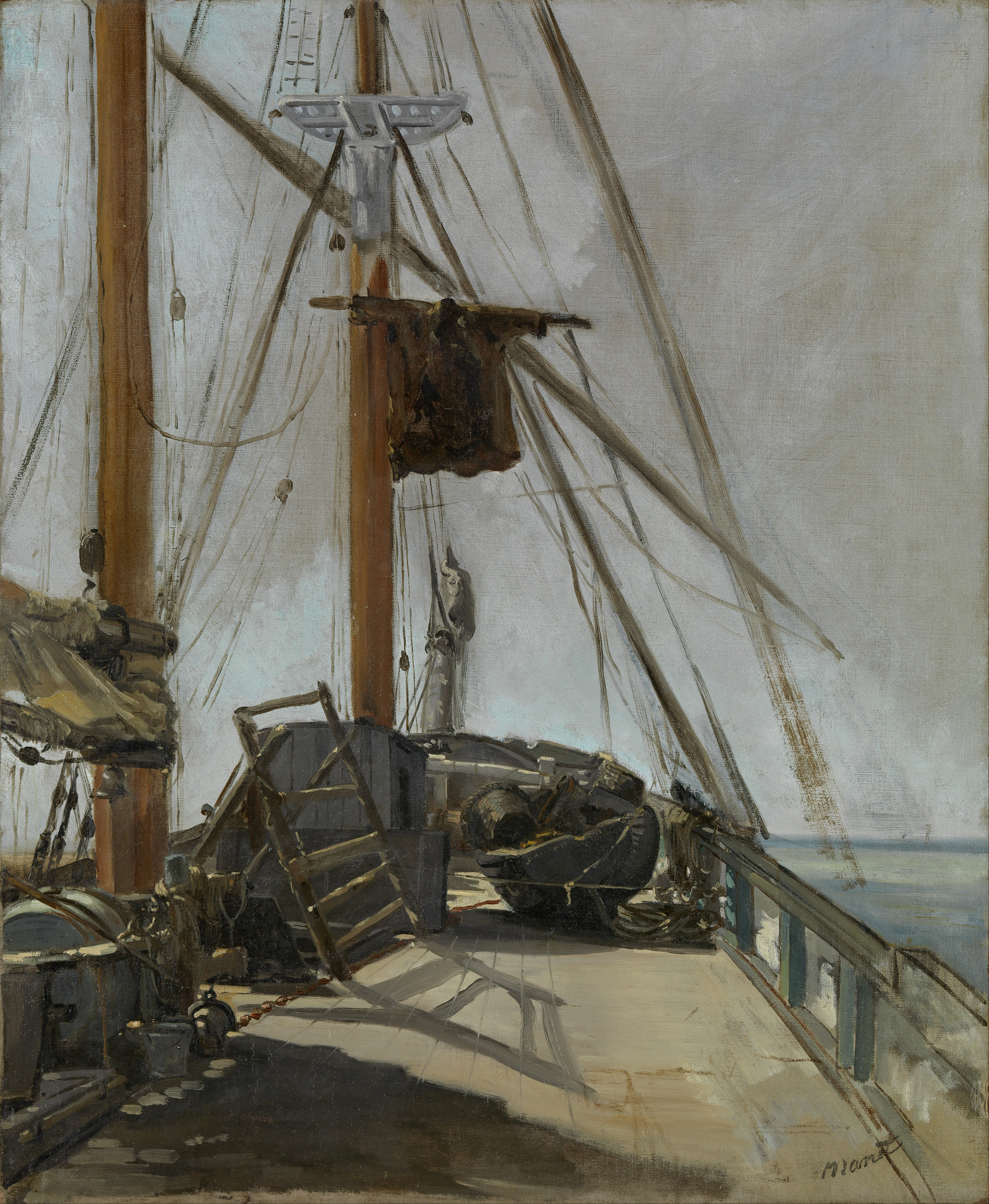





 deankyte.com